Best Time to Visit Seville: An Honest Local’s Guide
Search for the best time to visit Seville, and every travel site says the same thing: March to May, maybe September to October, and April if you can.
It’s not wrong, exactly. It’s just the answer you’d give if you’d never lived here.
April is warm, beautiful, and full of once-in-a-lifetime festivals. It’s also crowded, expensive, and surprisingly difficult for a first-time visitor who hasn’t planned around Semana Santa or Feria de Abril.
I’ve lived in Seville for years, including over two years in Barrio Santa Cruz. I’ve been here through every Feria, every August, and every quiet January.
The honest answer to the best month to visit Seville isn’t one month. It’s the month that matches the trip you actually want to take.
This guide breaks down the best time to visit Seville by weather, crowds, prices, festivals, budget, and travel style, with an honest month-by-month guide, the months I’d avoid, and what to book once you’ve picked your dates.

Some of the links on The Seville Guide are affiliate links. If you click through and make a purchase, we may earn a small commission. This allows us to create more helpful and honest guides that you can use for free. You can read our Disclosure Policy here. We appreciate your support, thank you.
Quick answer: when to visit Seville
- Best overall for first-timers: October, or March before Semana Santa.
- Best for festivals and atmosphere: April, with caveats.
- Best for budget travel: November, January, or February.
- Best for fewest crowds: mid-November to early-March, excluding Christmas week & school holidays.
- Worst time to visit Seville: mid-July to the end of August, or April if you hate crowds.
- The real Seville shoulder season: late September to mid-November, and mid-February to mid-March.
Have a Question?
Ask in The Seville Guide Community!
Connect with fellow travellers and locals, share tips, and get the latest insights on what’s happening in Seville.
What “best” actually depends on
Five things shape whether a month works for your trip: weather, crowds, prices, festivals, and daylight.
Most travel articles weigh the first one most heavily. That’s why they all give the same answer.
Take April. The weather is glorious, and Semana Santa and Feria de Abril are two of the biggest cultural moments of the Sevillian year.
But those same festivals are also why April is expensive, crowded, and surprisingly difficult for a first-time visitor who hasn’t planned around them. Streets close. Restaurants fill. The Alcázar sells out. Hotel prices jump.
April is “best” if you’re coming for Semana Santa or Feria. It isn’t best if you want to wander the Alcázar at your own pace, sit outside in Plaza Salvador with a beer, and not pay over the odds for a hotel.
When I ask my Spanish friends and neighbours their favourite time of year in Seville, they almost always say spring because of those festivals. But if you’re visiting from outside Spain and aren’t coming specifically for them, the whole calculation changes.
So the framework is simple: decide what kind of trip you want first. Then pick the month. Not the other way around.
SEVILLE ITINERARY REVIEW
Not sure if your Seville itinerary actually works?
Send us your rough plan, and we’ll check it from a local point of view.
We’ll look at timings, ticket slots, walking distances, neighbourhood order, and anything that might make your trip feel rushed or harder than it needs to be.
- Find out what to keep
- See what to swap or skip
- Fix awkward timings before you book
- Get honest local feedback by email
Best time to visit Seville by what you want
For perfect weather and easy sightseeing
Late March before Semana Santa. All of May. All of October. The first half of November.
These are the weeks where Seville is at its most walkable. Days sit between 18°C and 26°C (64°F to 79°F). Mornings are cool. Evenings are made for sitting outside.
May in particular always gets dubbed by every international travel writer I’ve read as being the overall best month. I somewhat disagree. The temperature is great, but May is still peak season here. Expect crowds and high prices. If you have flexibility and still want great weather, October is a better bet.
For festivals and Andalusian atmosphere
Two answers. Spring or Christmas.
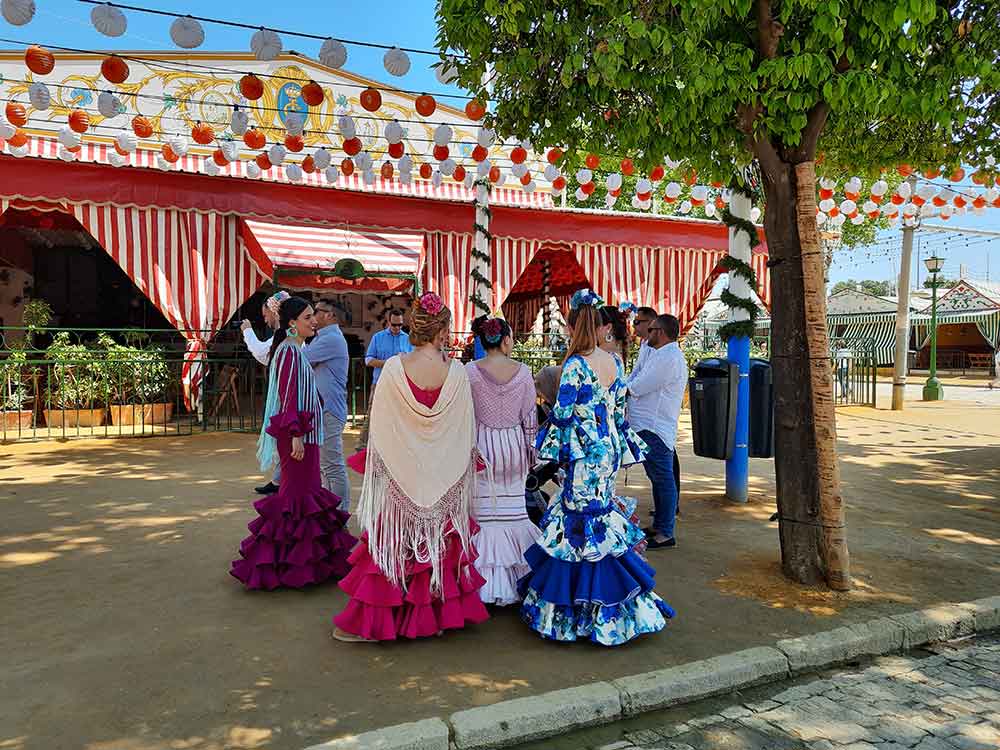
Spring means Semana Santa (the week before Easter) and Feria de Abril (usually two weeks after Easter). These are the cultural events of the year. They’re extraordinary. They’re also intense.
Christmas in Seville is the quieter alternative with its own rhythm.
And if you’re after something quintessentially Spanish, the Cabalgata de los Reyes Magos on 5th January is the show locals care about, not 25th December.

For budget travel and lower prices
The cheapest time to visit Seville is January after the 6th, February, and the first three weeks of November. You can also pick up some absolute bargains on accommodation in August, as most people are put off by the heat.
Hotel prices drop sharply. Flights from northern Europe are noticeably cheaper. A central hotel that costs £280 a night in April will go for £80 in February. Same room. Same view.
If value matters most, these are your months.
For avoiding the crowds
The Seville shoulder season at its quietest runs mid-November to mid-March, minus the week between Christmas and Three Kings Day on 6th January.
The Cathedral and the Alcázar still queue regardless. Everything else is calmer. You can walk into restaurants without a booking. Flamenco venues have space without weeks of notice. Streets in Santa Cruz are almost yours in the morning.
For first-time visitors specifically
Come in October. Not April.
The weather’s just as good as April. The city’s full but not crammed. Prices are about half. You can get into the Alcázar without a battle plan.
April is wonderful, but it has a steep learning curve because of the local festivals this month, and your first trip to Seville shouldn’t feel like work.
For repeat visitors
If you’ve already ticked off the Cathedral, the Alcázar, and Plaza de España, the quieter months reward you.
February for the bitter orange harvest. Late September as the city wakes up after summer. These are the months when Seville feels like itself, not a backdrop for visitors.
Honest month-by-month: what each month is actually like
January
Quiet. Cold mornings. Mild afternoons. After the 6th, you’ll find the cheapest hotel prices of the year.
Daytime highs hover around 15°C (59°F). The bitter orange trees are heavy with fruit. The first six days are still Three Kings season and book up. After that, you have the city to yourself.
Find out more about things to do in Seville in January.
February
Still cheap. Still quiet. Still mild.
Day of Andalucía on 28th February is a regional holiday with a relaxed local feel. Orange trees are at their fullest.
If you’re a vegetarian or someone who eats seasonally, February is when espinacas con garbanzos (spinach and chickpeas) is at its best. Fragrant, warming, not spicy. It’s one of the few traditional Andalusian dishes you can rely on across the city without it arriving with jamón on top.
March
The pivot month.
Mornings still bite. Afternoons climb into the high teens or low twenties. Orange blossom usually shows up in mid to late March.
The sweet spot is the week or two before Semana Santa. Warm enough to sit outside. No festival crowds yet. Prices haven’t surged.
If your dates can move and you want the spring weather without the spring chaos, this is your window.
April
The loaded month.
Semana Santa runs the week leading up to Easter Sunday and shapes the whole month. Honestly, living in the centre during it is a bit of a nightmare for going about normal life. Streets close for parades. Crowds clog the historic core. Getting around the city can be slow and frustrating.
My own routine? Errands before midday, then stay off the main streets. If you’re coming specifically for the processions, it’s extraordinary. If you’re not, you’ll spend a lot of energy navigating around them.
The catch is that prices stay near their April peak and the Alcázar and Cathedral still sell out. If your dates can move outside April altogether, do that. If you’re stuck with April, the in-between weeks are the compromise.

Insider Tip
There are two weeks between Semana Santa ending and Feria starting, and they’re noticeably more manageable than the festival weeks themselves. Feria takes place outside the historic centre on the Los Remedios fairground, so the city centre is calmer than during Holy Week.
May
The shoulder month nobody talks about.
The festivals are over. The weather in May is warm without being hot. The city has settled back into its everyday rhythm.
Cruces de Mayo in early May is a lovely, low-key local event. Daylight is generous. Prices drop sharply from their April peak.
If a friend asked me where to send their parents for a first trip with flexible dates, I’d say early to mid-May.
Find out more about things happening in Seville in May.
June
The first half is still beautiful. Warm afternoons. Long evenings. Locals out late.
The second half is when the heat starts to bite. Some years it kicks in as early as mid-May.
June still works if you adjust your pace. Out before 11 am. Indoor things in the afternoon. Out again after 7 pm. Just don’t try to power through full sightseeing days in the afternoon sun.
July
Hot.
The high 30s become normal in July. 40°C (104°F) shows up regularly. Locals are still around for the first couple of weeks, then start drifting to the coast.
Restaurants stay open. Terraces stay busy in the evening. Daytime sightseeing requires real planning.
Light evening dishes like gazpacho and salmorejo (the chilled tomato soups) come into their own. If you follow a meat-free diet, just check that they aren’t garnished with jamón, which is the default unless you ask.
August
The hottest month.
Locals leave en masse. Many independent restaurants and shops close for the whole month. The city is at its hottest. High 30s, with regular spikes in the mid-40s, with very little overnight cooling in the centre.
Despite it being peak holiday season in Europe, I’d describe August as Seville’s true off-season. That said, even during August in Seville, there’s quite a bit happening, and the bulk of the tourist attractions are still open like normal, just without the crowds.
The high temperatures and Spanish school holidays mean domestic tourism heads to the coast. Visit during this time, and you can expect peak heat and some reduced services, but a genuine off-peak feel.
Good To Know
My favourite time to photograph Seville is actually August at sunrise. The city is almost empty. The air is fresh. The light is beautiful. And it isn’t yet too hot. If you’re a photographer or an early riser, August has moments most visitors never see.
September
The first ten days still feel like summer.
The city wakes up from about mid-September. Schools and universities return. Locals come back from the coast. You can feel the wind-up happening week by week.
The last two weeks of September are excellent. Warm. Lively. Lower prices than October. None of the heat problems of August.
If you’re planning to visit this month, check out these events happening in September.
October
The locals’ month.
The temperature in October is perfect, and the light here is the kind that makes people pull over to photograph their own street. The Alcázar looks even more beautiful than normal. October also has a packed events calendar. You can eat dinner outside in a T-shirt.
If you asked me which single month to come for a first trip, I’d say this one without hesitating.
November
Underrated.
The first three weeks are autumn-perfect. Cool mornings. Mild afternoons. Light at its prettiest. Almost no crowds.
Hotel prices drop noticeably. The second half tends to bring more rain.
A note on Seville rain. It is not London rain. Most of the time it arrives as a short, heavy downpour that you wait out in a café before carrying on. Twenty minutes and you’re back outside. The winter of 2025 into spring 2026 was an exception, with months of it, but that’s not the usual, and honestly, the region’s reservoirs were thankful for it.
Find out more about the top things to do in November in Seville.
December
Cold mornings. Mild afternoons. Christmas lights from late November.
During the festive season in Seville, the atmosphere builds towards the Cabalgata de los Reyes Magos (the Three Kings parade) on 5th January, which locally is a bigger deal than 25th December.
The city is busy from about 20th December through 6th January. Families travel. Locals come out for the lights. Restaurants run festive menus.
Read more about Seville’s weather in December.
The First Time to Seville Guide Book

Want everything in one place?
The First Time to Seville Guide covers all the essentials in one practical ebook. Where to stay, what to book, how to structure your days, and what most visitors only find out after they arrive.
- Which neighbourhood to stay in
- What to book and when
- How to structure your days
- Mistakes to avoid
- Getting around the city
The worst time to visit Seville (and how to handle it if you have to)
If you genuinely hate the heat, the worst time to visit Seville is mid-July through the end of August. August is the harder of the two.
Daytime temperatures regularly sit in the high 30s. The historic centre, with its narrow streets and alleys, is designed for the heat, so it’s the best place to stay. Wide open spaces hold the heat well into the night.
Many independent restaurants and shops close for the month. The 2 pm to 7 pm window becomes a dead zone where even sitting in the shade is uncomfortable.
If August is the only window you have, it’s still doable. You just plan around the heat, not through it.
Here’s how I actually live through August:
- Out at sunrise. Sightseeing happens between about 6 am and 11 am. After that, the heat shuts you down.
- Midday and afternoon, find AC. I head to a coworking space with proper air conditioning. On weekends, the gym, because the gym’s AC is better than mine at home.
- Nap mid-afternoon if you can. You’ll be up early, you’ll be tired, and the city wants you to rest.
- Take time to cool off. I definitely recommend booking hotels with a rooftop pool to cool off.
- Lunch out? Not really. Most places I’d go are closed for the month, and the heat kills your appetite anyway. Gazpacho or salmorejo at home wins.
- Out again from 7 pm. Dinner properly late, locals’ hours.
If you want a break from the city, Cádiz is just under two hours by train and noticeably cooler. Be aware that the entire south coast has had the same idea, so it’s busy too.
Honest Take
If you struggle in heat, August is not the trip for you. Try a different Spanish city. San Sebastián in the north stays in the low 20s. Santiago de Compostela is similar. Either would be a happier week.

What to book first based on when you visit
The timing of your trip changes what you need to book and how far ahead.
Going during Semana Santa or Feria (April)
This is Seville’s peak season. Book accommodation at least six months ahead, and ideally more. Hotel prices can double or triple compared with February.
Book Alcázar tickets the moment they release for your dates. Book popular flamenco venues a few weeks ahead. Flights from northern Europe also jump in price for these weeks.

VIP Early Alcázar Access
Beat the crowds and visit the Alcázar before most people are up with one of the pre-entry tickets.
Going in May, late September, or October
Two to three months ahead for a good central hotel.
The Alcázar still sells out a week in advance in October. Popular flamenco shows and food tours fill up faster than people expect.
Going in June, July, or August
More flexibility on hotels, but the AC question matters. Confirm working air conditioning before you pay. Not every centre flat has it, and some that do have working AC still don’t cool well overnight.
At the start of June, expect big crowds in the historic centre for Seville’s Corpus Christi celebrations.
The Alcázar can still sell out seven to ten days ahead, even in summer, because cruise day-trippers all want the same morning slots.
There are also plenty of things happening in July, before the full summer shutdown.
Going in November, January, or February
The most flexible window. A few weeks ahead is often enough.
The exception is the week between Christmas and Three Kings Day, which behaves like a peak window, not a low-season one.
Common timing mistakes first-time visitors make
A few patterns I see again and again.
Assuming spring means quiet. April is the busiest, most expensive month of the year. If you want quiet spring weather, aim for mid-March or May.
Booking July or August without confirming AC. Centre flats without working air conditioning are honestly miserable in summer. Always check before you pay.
Treating winter as empty. January and February are quiet. The weeks around Christmas and Three Kings Day are not.
Trying to do Feria as a casual visitor. The private casetas need a personal invitation, and those invitations come from years of friendships. As a foreigner, dressing up in a flamenco dress can feel a bit awkward. I’ve hired one a couple of times. It’s beautiful, but it’s not my culture, and you can feel that.
Plan for the public casetas, the parade of carriages in the morning, and the funfair. Don’t plan on getting into the social heart of the fair.
Treating summer as peak season. Spanish school holidays in July and August mean the centre clears out as the locals escape the heat and head to the coast. The city can feel like a ghost town at times. Peak heat and has a genuine off-peak quiet feel.
Skipping November because “autumn” sounds dull. November is one of the most beautiful months of the year in Seville, especially for photography. Don’t write it off.

Best time to visit Seville: FAQs
When is the rainy season in Seville?
The wettest months run from November through March, with December and March usually getting the most rain. In a normal year, rain arrives as short, heavy downpours that pass quickly, not as all-day grey weather. The winter of 2025 into spring 2026 was a notable exception.
Is Seville too hot to visit in summer?
It depends on how you handle heat. July and August regularly hit the high 30s and can push past 40°C (104°F). Heat-tolerant travellers can make it work with careful planning. If heat floors you, this is not your trip.
What’s the cheapest month to visit Seville?
January, after Three Kings Day on 6th January, and February. The first three weeks of November are also strong for value, with better weather than mid-winter.
Is Seville worth visiting in winter?
Yes, especially if you want the city without the crowds. Daytime temperatures sit between 10°C and 17°C (50°F to 63°F). Christmas lights and markets run from late November. Three Kings Day on 5 January is one of the loveliest local events of the year. Pack layers and a light raincoat.
When should I book a Seville trip?
For Semana Santa, Feria, or Christmas week, book at least six months ahead. For May, October, and the festive period around Three Kings Day, book two to three months ahead. For mid-week or off-peak winter trips, a few weeks is often enough.
Have a Question?
Ask in The Seville Guide Community!
Connect with fellow travellers and locals, share tips, and get the latest insights on what’s happening in Seville.
So when should you actually visit Seville?
There’s no single best time to visit Seville. There’s the best time for the trip you want to take.
First-time visitor with flexible dates? October.
Coming for the festivals? April, but plan carefully and book early.
Chasing value? The depths of winter and early November.
Already done the headline sights? The quiet months let you see the city as it actually is.
Once you’ve narrowed down your month, the rest is easier.
Plan your trip from here
- Pick your specific month: browse our monthly what’s on Seville guides for everything to do, expect, and pack.
- Sort where you’ll stay: start with our where to stay in Seville guide, which breaks the neighbourhoods down by who they suit best.
- Plan the trip itself: see the best things to do in Seville, the one-day itinerary, the two-day version, or the three-day plan.
If you’d rather have the whole plan in one go, our first-timer’s guide to Seville pulls it all together. Where to stay, what to book, what to eat, what to skip. Written by locals who actually live here.
SEVILLE ITINERARY REVIEW
Not sure if your Seville itinerary actually works?
Send us your rough plan, and we’ll check it from a local point of view.
We’ll look at timings, ticket slots, walking distances, neighbourhood order, and anything that might make your trip feel rushed or harder than it needs to be.
- Find out what to keep
- See what to swap or skip
- Fix awkward timings before you book
- Get honest local feedback by email
Have a question? then don’t forget to join our free Facebook Group: Seville Things To Do and ask the community.
Want to discover more about Seville? then check out these other great articles to find out more.
Done-For-You Itineraries
- One Day in Seville Itinerary
- Two Days in Seville Itinerary
- Three Days in Seville Itinerary
- Five Days in Seville Itinerary
Things To See & Do In Seville
- Best Places to Watch Flamenco in Seville
- 21 Great Things to Do in Seville
- 18 Must-See Galleries and Museums in Seville
- Best Time to Visit Alcazar of Seville
- Things to Do in Seville for Free
- Best Artisan and Flea Markets in Seville
- 23 Best Day Trips From Seville
- Where’s The Nearest Beach to Seville? [Within a 2-Hour Drive]
- 34 Instagram Spots in Seville [+ Photo Location Map]
Food & Drink in Seville
- Eat Your Way Around Seville’s Top Food Markets
- Discover the Best Tapas in Triana Neighbourhood
- The Best Flamenco and Tapas Tour in Seville
- Can You Drink Tap Water in Seville?
- Where to Find the Best Breakfast in Seville
- Where to Find the Best Coffee in Seville
Seville Travel Tips
- How To Survive Seville In Summer
- Things to Do in Seville in the Rain
- What to Wear to Seville Cathedral
- What Is Seville Famous For?
- How Many Days in Seville Do You Really Need?
- How to get from Seville Airport to the City Centre
- Where to Stay in Seville, Spain: Best Neighbourhoods
- Why Visit Seville? 15 Reasons to Visit Seville


