
Seville in Summer: How to Survive (and Enjoy) the Heat
Seville in summer is not for the faint-hearted. The city regularly hits 40°C (104°F) and above, and on the worst days, it feels like someone cranked the oven up and forgot to open a window.
I’ve lived here for several years now, and I still feel it every July. But after multiple Seville summers, I’ve learned that the heat doesn’t have to ruin your trip. You just need to know when to stop, where to cool down, and how to plan your day around how the city actually works in summer.
Whether you’re planning ahead or already here wondering what to do in the heat, this guide covers everything you need to know about visiting Seville in summer, including when the heat peaks, which parts of the day to avoid, and the best ways to stay comfortable while still enjoying the city.

Some of the links on The Seville Guide are affiliate links. If you click through and make a purchase, we may earn a small commission. You can read our disclosure policy here. We appreciate your support, thank you.
Is Seville Too Hot in Summer?
Honestly, it depends on the person. Seville is one of the hottest cities in continental Europe, and summers here are no joke.
Temperatures in July and August regularly reach the high 30s to mid-40s Celsius (around 100 to 110°F). The record stands at 47.4°C (117.3°F), set on 14 August 2021. The heat is dry rather than humid, which does make it more bearable than coastal humidity, but it is still intense.
If you’re already here and finding it harder than expected, you’re not being dramatic. Most visitors struggle when they try to sightsee at a normal pace in Seville’s summer heat.
One thing most people don’t expect: the hottest part of the day is not midday. Temperatures continue rising through the afternoon, and the air is often at its worst between 5 pm and 7 pm. Plan around this, and summer becomes a lot more manageable.
Many locals leave the city in August, which makes Seville feel quieter than usual. If you can handle the heat, that can actually work in your favour: shorter queues, more space at major sights, and a bit more breathing room than you get in spring. Because so many people want to avoid the heat, it’s also one of the best times to visit Seville for hotel discounts.
One thing worth knowing if you’re visiting Seville in August: some local restaurants, smaller shops, and family-run bars close for two to four weeks as their owners head to the coast.
The main tourist attractions stay open, and there are plenty of restaurants that trade all summer, but if there is a specific place you have in mind, check before you go.
Have a Question?
Ask in The Seville Guide Community!
Connect with fellow travellers and locals, share tips, and get the latest insights on what’s happening in Seville.
Average Seville Temperature by Summer Month
Here’s a breakdown of average daytime highs and nighttime lows across the summer months:
| Month | Average Daytime High | Average Nighttime Low |
| June | 33°C (91°F) | 18°C (64°F) |
| July | 37°C (99°F) | 21°C (70°F) |
| August | 37°C (99°F) | 21°C (70°F) |
| September | 33°C (91°F) | 19°C (66°F) |
Average summer temperature in Seville, Spain
June and September are noticeably more comfortable than July and August, and they’re the summer months I’d choose first if you have flexibility.
For a full breakdown of what to expect each month, see the weather guides below:
- Seville weather in June
- Seville weather in July
- Seville weather in August
- Seville weather in September

How to Survive Seville in Summer
These are the habits that actually make a difference. Not the generic “stay hydrated” advice, but the things that change how your day goes.
Stay indoors between 1 pm and 7 pm.
The sun is strongest from midday, but the air temperature peaks later, typically around 5 pm to 7 pm. If you’re visiting Seville in June (and beyond), this window is not the time to be wandering around outside. Use it for lunch, a rest, museums, or somewhere with air conditioning.
Get up early and use the morning.
The best time to see outdoor sights is before 11 am. The air is cooler, the light is better, and the main attractions are usually quieter. Set your alarm and make it count.
Carry a refillable water bottle.
Seville has drinking water fountains throughout the city. You can top up for free almost anywhere. Bring a bottle and use it.
Eat light during the day.
The heat suppresses appetite anyway. A salad, a couple of tapas, and cold gazpacho will see you through until the evening, when you can eat properly.
Adjust to the local schedule.
Spaniards eat late, go out late, and sleep in the afternoon for a reason. It works. Try to align your day: morning activity, long lunch and rest, then back out from 8 pm onwards when the city wakes up again.
Be sensible about alcohol.
A cold beer in the shade at lunchtime is one of life’s great pleasures. But alcohol dehydrates you quickly in this heat, so pace yourself during the day and save the serious drinking for the evening.
Dress for the climate.
Lightweight, loose-fitting clothes in natural fibres make a real difference. A hat and sunglasses are not optional. If you’re visiting religious buildings, your shoulders may need to be covered, so bring a light layer.

Good to Know
At Seville Cathedral, enforcement of the shoulder-covering rule is inconsistent. I’ve gone in sleeveless before without anyone saying a word, and other times been asked to cover up. If you’re not sure what to wear at Seville Cathedral, and don’t want to chance it, I recommend carrying a lightweight scarf just in case; it takes no space and avoids the awkward conversation at the door.
Embrace the siesta.
The locals have been doing this for centuries, and they know what they’re doing. Two hours of rest in the early afternoon means you have energy for the evening, when the city genuinely comes alive.
Wear sunscreen and reapply it.
SPF 30 at minimum, higher if you burn easily. The spots people consistently forget: the tops of the ears, the back of the neck, and the backs of the hands. Carry a small bottle and reapply every couple of hours, or more often if you’re sweating. If you forget to pack some, pharmacies in Seville are well stocked with good Spanish brands.
Become a night owl.
Summer evenings are the reason I still like Seville in summer. It’s not uncommon to see families with young children in the parks at midnight. Outdoor cinemas, concerts, late-night tapas, and long drinks in the plazas. This is the part of the day that makes the heat feel worth it, and the perfect time to check out some of Seville’s trendy rooftop bars.
Local Tip
A realistic summer day in Seville looks like this: one outdoor sight early, one long indoor break in the afternoon, and one evening plan after sunset. If you’re already here and the heat has derailed your day, don’t try to catch up at 4 pm. Rest, reset, and go back out when the city feels human again.

Things to Do in Seville in Summer
The trick is doing the right thing at the right time of day. Mornings and evenings for outdoors. Afternoons for indoors.
For a more detailed look at a specific month, check out these month-specific articles.
- What to do in Seville in July
- Making the most out of August in Seville
Best Indoor Attractions to Escape the Heat
Real Alcázar de Sevilla
The Alcázar was designed for this climate. Even so, the best time to visit the Alcázar is early morning.
Originally built by the Moors in the 10th century and expanded over the following centuries, its rooms were built to stay cool: thick walls, shaded patios, trickling fountains, and narrow passageways that help air move through the building.
Even in the peak of summer, it feels noticeably cooler inside.
Don’t miss the Patio de las Doncellas, the Hall of Ambassadors, the underground Baths of Lady María de Padilla, and the gardens.

Early Morning Entry to the Alcazar
Even in summer, the crowds can build, so arrive when it opens or book the Exclusive Alone in the Alcázar tour for access before general opening.

Seville Cathedral and the Giralda
The Cathedral is enormous and stays cool and airy inside.
It’s the largest Gothic cathedral in the world, built on the site of a former mosque, and the Giralda tower was originally the mosque’s minaret.
The main things to see are the Giralda climb, the Tomb of Christopher Columbus, the Orange Tree Courtyard, and the huge main altar.
If you’re visiting Seville at the start of June, you’ll also see decorations and the pasos in preparation for the Corpus Christi processions.
Seville Cathedral and Girlada Entry
Skip the line tickets for the Cathedral of Seville


Casa de Pilatos
Built in the 16th century, Casa de Pilatos is a beautiful blend of Italian Renaissance and Mudéjar architecture with cool marble floors, shaded courtyards, and lush gardens.
It gets far fewer visitors than the Alcázar, so it usually feels much calmer.

Palacio de las Dueñas
This grand palace was home to the House of Alba and is filled with family heirlooms, shaded arcaded walkways, and peaceful gardens.
It’s an easy way to spend a hot afternoon without feeling like you’ve given up on sightseeing. A lot of people overlook this monument, but if you’re a fan of stately homes and want to see how a wealthy family lived in Seville, you’ll probably love Palacio de las Dueñas.

AIRE Ancient Baths
The restored Arab baths near the Cathedral are one of the better afternoon options in Seville in summer. You can soak in thermal pools at different temperatures, use steam rooms, and book treatments if you want something more indulgent.
It’s completely indoors, genuinely cooling, and fits the city’s Moorish history in a way that makes it feel like more than just a spa. It’s worth booking in advance to get the best time slots.
Museums and Galleries
Seville’s museums are underrated and air-conditioned, and another plus is that a lot of them have free entry as well.
These are the ones I’d look at first:
- Museo de Bellas Artes de Sevilla: One of Spain’s finest fine arts museums, with a strong collection of Baroque painting, including Murillo and Zurbarán.
- CaixaForum Sevilla: A modern cultural centre with changing exhibitions and a good café.
- Centro Andaluz de Arte Contemporáneo: Contemporary art in a converted monastery on Isla de la Cartuja.
- El Antiquarium: Underground Roman and Moorish ruins beneath Las Setas. A good quick stop if you’re already nearby and need to get out of the heat.
- Museo de Artes y Costumbres Populares: Traditional Andalusian culture in a gorgeous building inside María Luisa Park.
Local tip
There are dozens of great museums in Seville. If you only need one easy heat escape, I’d choose the Museo de Bellas Artes for a classic option, CaixaForum for something modern and low-effort, or El Antiquarium if you’re already near Las Setas and just need a short indoor stop.
In the peak of the summer heat, I wouldn’t walk to CaixaForum Sevilla or Centro Andaluz de Arte Contemporáneo. I’d take a bus from the centre.

Other Indoor Options
When you just want something low-effort and in a cool environment: the glow-in-the-dark indoor mini golf near the centre is genuinely fun, Museum of Illusions is good for families, and you can find VOSE (original language with Spanish subtitles) screenings at several cinemas.
A flamenco show is also a good way to save a day that’s been ruined by the heat. Most take place in small, intimate venues: sometimes a shaded courtyard, sometimes a small theatre.
The good shows can still book up in summer, so I wouldn’t leave it until the last minute.

Outdoor Spaces Worth the Early Start
Plaza de España
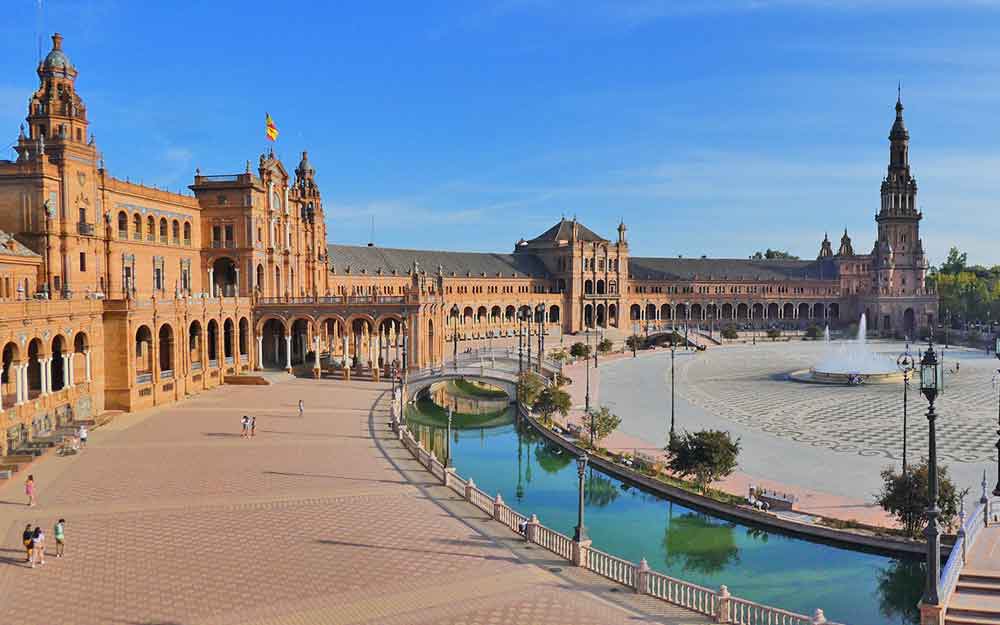
Built for the 1929 Ibero-American Exposition, Plaza de España is one of those places that really does live up to the photos. The semi-circular building, tiled alcoves, canal bridges, and central fountain are extraordinary at any time of day.
The problem is that there is almost no shade here. Even the alcoves trap heat. Go first thing in the morning or after dark when the fountain is lit up, and you can stand close enough to catch the spray.
Going at midday in August is a genuine endurance test.
Good To Know
Because this is one of Seville’s most iconic landmarks, it’s 100% worth seeing. However, I would only do this at midday if it’s your only chance to see it. Otherwise, save Plaza de España for early morning or after dark.
Parque de María Luisa
Right next to Plaza de España, María Luisa Park is the most beautiful green space in the city. Enormous trees, fountains, winding paths, flower-covered pergolas, and shaded benches throughout.
Because of the tree cover, you can visit at almost any time of day and find a shaded spot to rest. It can still work in the afternoon if you just want somewhere shady to sit, not somewhere to march around ticking things off.

Barrio Santa Cruz
The old Jewish quarter is one of the most pleasant neighbourhoods to explore in summer.
Its narrow streets and tall buildings were designed centuries ago to block out the sun, and they do the job well. It stays noticeably cooler than the main avenues, even in the middle of the day.

Las Setas (Metropol Parasol)
Up until March 2025, this was the world’s largest wooden structure. It stands in Plaza de la Encarnación.
Underneath there’s a market and the Antiquarium museum. The rooftop walkway has great views over the city, but there is no shade up there, so visit early in the morning or in the evening to catch one of the best sunset views in Seville.
Planning Tip
Check the sunset time in before you book tickets for La Setas and arrive on the roof about an hour before. You get the city views in good light, then stay to watch the colour light show once it gets dark. Two experiences in one trip up.

The Guadalquivir River
The riverbank paths on both sides are pleasant for a walk in the morning or early evening. You can also hire paddleboards or kayaks, take a short river cruise, or find a shaded spot for a picnic.
On the water, there’s no escape from the sun, so morning or early evening is the time for this.

Calle Sierpes
The main shopping street in the centre is covered with enormous shade sails during summer, stretched between the buildings.
It’s still warm, but the shade makes a real difference. It’s useful if you want a short wander without fully committing to being outside.
Summer Evenings in Seville
This is what makes visiting Seville in summer worth it.
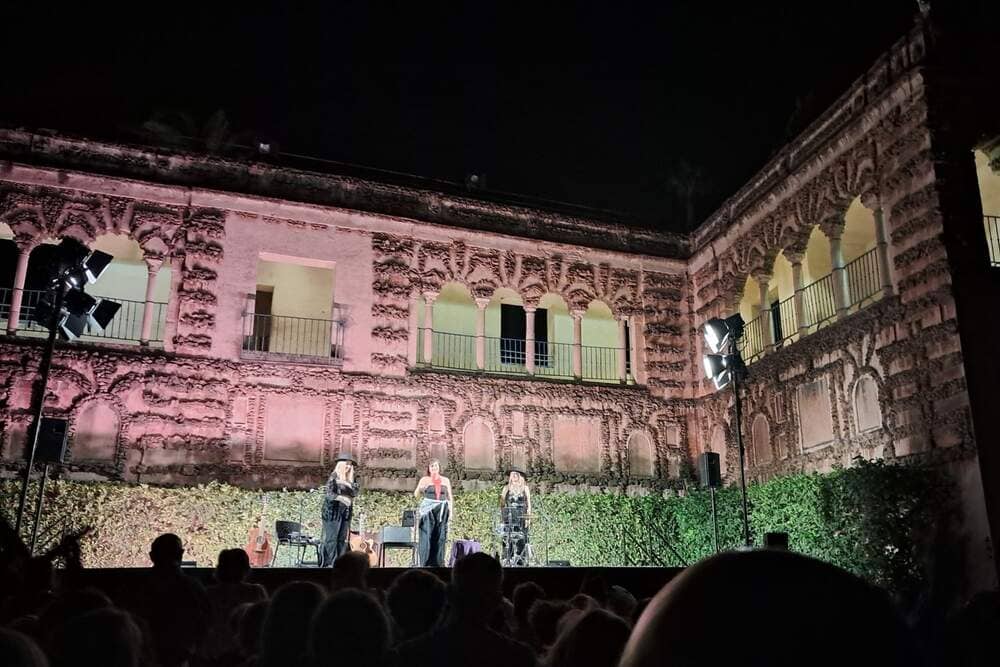
- Nights at the Alcázar: From June to September in Seville, live concerts take place in the Alcázar gardens. Book ahead if you can.
- Alamillo Park: This park in the north of Isla de la Cartuja has family-friendly outdoor events in July and August, including cinema, theatre, and live performances.
- Cine de Verano at the Diputación de Sevilla: An outdoor cinema showing a mix of Spanish and international films. Look for VOSE listings for films in their original language with Spanish subtitles.
- Calle Betis, Triana: The riverfront street on the Triana side is one of the best places to be on a summer evening. The bars spill out onto the street, the views back across to the Torre del Oro are excellent, and it stays lively well into the night.
- Rooftop bars: Several of Seville’s rooftop bars stay open into the early hours in summer and catch whatever breeze is moving above the city. For a full guide, see our Seville rooftop bars roundup.
Local Tip
One more evening ritual worth adopting: the late-night gelato stop. Many traditional heladerías (ice cream shops) and sweet shops stay open until midnight or later in summer. A cold scoop on the walk home is one of those small things that makes the whole sweltering day feel worthwhile.
Food and Drink in Seville’s Summer Heat
Eating differently makes summer in Seville much easier.
Keep lunches light. A salad, gazpacho, or a few tapas is enough during the heat of the day. Save the main meal for the evening when your appetite returns and the temperature drops.
Try the cold Sevillian classics
- Gazpacho: A cold tomato-based soup. Exactly what you want in this heat.
- Salmorejo: Thicker and creamier than gazpacho, usually served with jamón and hard-boiled egg on top.
- Ensalada Mixta: A simple mixed salad with tuna, egg, and vegetables.
- Ensalada de Tomate: Sliced fresh tomatoes, olive oil, salt. That’s it. So much better than it sounds.
What to Drink
- Cruzcampo: The local beer. Order a caña (small glass) to keep it cold before it warms up. Don’t be surprised if it arrives in a large glass only half-filled. That’s normal here. Cruzcampo is the most popular beer here, but Seville has some great craft beer bars if you’re after something more niche.
- Tinto de Verano: Red wine mixed with soda water or lemonade, served with ice. Lighter and more refreshing than you’d expect.
- Horchata: A cold, slightly sweet drink made from tiger nuts. Not common in Seville but worth trying if you find it.
- Iced coffee: Usually served as two glasses, one with hot espresso and one with ice. Pour it yourself.
- Fresh juices: Cafes that specialise in breakfast in Seville often have freshly blended juices. A good morning option.
Good To Know
Skip the sangria unless you really want it. It’s aimed at tourists. Locals drink Tinto de Verano. Order that instead, and you’ll immediately feel less like you’re at a package holiday resort.


Seville in Summer with Kids
If you’re in Seville with kids in summer, you need a few heat-proof options.
Isla Mágica and Agua Mágica
Isla Mágica is a full theme park on the Isla de la Cartuja, built on the site of the 1992 Expo.
The rides are themed around 16th-century Spanish exploration. The big ones are El Jaguar (a high-speed roller coaster with 360-degree turns), Iguazú (a river rapids ride through a jungle waterfall), and El Desafío, a 68-metre free fall that you can hear from outside the park.
Agua Mágica is the water section inside Isla Mágica. It is not a separate park. You access it through the same entrance, and tickets can be bought as a combination covering both.
The water area has pools, slides, a wave pool, a lazy river, a zip line over the main pool, and a separate children’s area.
As of 2026, Agua Mágica also sells tickets for independent admission for the first time, so if you only want the water park, you no longer need to buy a full Isla Mágica ticket.
Agua Mágica runs from roughly June to early September.
Planning Tip
Agua Mágica sells out on heatwave days and summer weekends. I would not count on getting tickets at the gate. Book online before you travel, and make sure your confirmation specifically mentions Agua Mágica. Bring swimwear, flip-flops, and budget for locker hire if you want a base for the day.
Guadalpark
Guadalpark is a separate water park in the eastern part of Seville, open from late May to early September. It has more than 15 attractions including a wave pool, lazy river, the Kamikaze and Black Hole slides, and a children’s zone with smaller slides and play areas.
It’s a good option if you want water slides without doing the whole Isla Mágica theme park day.
A note of honesty: A lot of the ride queues require renting a float (at extra cost), and food and lockers are expensive once inside. It’s worth going in knowing those things so they don’t come as a surprise.
Seville Aquarium
Indoor, air-conditioned, and genuinely good. The shark tunnel at Seville Aquarium is the highlight, and it’s one of the easier options if you have younger children, want something calmer than a water park or a somewhere out of the sun.
Day Trips from Seville in Summer
Getting out of the city for a day is a smart move, especially in August.
These are the options I’d look at first:
Beaches Near Seville
Seville has no beach of its own, but there are several beaches near Seville close enough for a day trip:
- Matalascañas: The closest, about an hour away. Long sandy beach, clear water, busy in summer.
- Chipiona and Rota: Popular family beaches with good facilities.
- Cádiz beaches (Playa de la Victoria, Cortadura): The best option if you don’t have a car. Cádiz is well connected by regular direct trains from Seville, takes just over an hour, and the beaches are excellent.
- El Portil, Huelva: Quieter and more natural, so better if you want to avoid the busiest beach towns.
Insider Tip
If you don’t have a car, Cádiz is the easiest beach day from Seville. If you do have a car, Matalascañas is convenient, but I’d choose it for ease rather than because it’s the prettiest beach.

Cooler Inland Destinations
If you want a break from the heat rather than more of it, the mountain and forest regions around Seville offer noticeably lower temperatures:
- Sierra Norte de Sevilla: About 1 hour 15 minutes’ drive. Green, quiet, and several degrees cooler.
- Sierra de Grazalema: About 1 hour 45 minutes. Dramatic scenery and good hiking, if you start early.
- Ronda: Famous for its clifftop setting, the impressive Puente Nueve. Also worth combining with the nearby white villages.
For the full picture, take a look at our guide to the best day trips from Seville.

Where to Stay in Seville in Summer
Your hotel matters a lot in Seville in summer.
A few things to look for:
- Individual air conditioning units, not centrally controlled ones. Central systems often go off at night or are set to a fixed temperature you can’t adjust.
- Ground floor rooms: They stay naturally cooler than upper floors.
- Hotels with interior patios: Many old Sevillian townhouses have been converted into hotels and still have their original internal courtyard. These are shaded, quiet, and tend to stay cool even in the height of summer.
- A rooftop pool: Lovely if you can get one, but less common than you might expect. Worth checking before you book if this matters to you.
Despite there being hundreds of great places to stay in Seville, in summer, I’d prioritise strong air conditioning over charm, views, or even location. A beautiful room is not worth much if you can’t sleep properly after a 40°C day.
Looking for a Pool?
Surprisingly few hotels have pools, if you want somewhere to cool off in the heat, start with our hand-picked hotels in Seville with rooftop pools.

Seville in Summer FAQs
Is it worth visiting Seville in the summer?
Yes, if you plan around the heat. Seville in summer is quieter, often cheaper, and lovely in the evenings, but the afternoons are intense. It suits travellers who are happy to sightsee early, hide indoors during the hottest part of the day, and go back out after sunset.
What are the average summer temperatures in Seville?
Average daytime highs are around 33°C in June and September, and around 37°C in July and August. Heatwaves can push temperatures into the low or mid-40s. Nights are usually more comfortable, with lows around 18°C to 21°C.
Is Seville too hot in July?
July is very hot, with daytime temperatures often around 37°C and sometimes higher. It is manageable if you avoid sightseeing in the afternoon, book early attraction slots, and plan indoor breaks. If you want mild weather, July is not the best month for Seville.
Is Seville too hot in August?
August is usually the hottest and quietest month in Seville. It can work well if you have strong air conditioning, use mornings and evenings for sightseeing, and plan museums, pools, water parks, or beach trips during the day. It is not ideal for a packed walking itinerary.
When is the best time to visit Seville?
The best time to visit Seville is usually spring or autumn, especially March to May and September to October. Within summer, June and September are the easiest months for heat. July and August are doable, but you need to plan around the hottest part of the day.
Have a Question?
Ask in The Seville Guide Community!
Connect with fellow travellers and locals, share tips, and get the latest insights on what’s happening in Seville.
More Seville in Summer Guides to Help You Stay Cool
Now that you know how to survive Seville in summer, you can plan the rest of your trip around the heat instead of letting it ruin your day.
When it’s too hot to wander, hide in a museum. When you need a proper break, head to the beach. And when the sun finally drops, that’s when Seville starts to feel fun again.
- Best Beaches Near Seville
- Hotels with Swimming Pools in Seville
- What to Do in Seville at Night
Have a question? then don’t forget to join our free Facebook Group: Seville Things To Do and ask the community.
Want to discover more about Seville? then check out these other great articles to find out more.
Done-For-You Itineraries
- One Day in Seville Itinerary
- Two Days in Seville Itinerary
- Three Days in Seville Itinerary
- Five Days in Seville Itinerary
Things To See & Do In Seville
- Best Places to Watch Flamenco in Seville
- 21 Great Things to Do in Seville
- 18 Must-See Galleries and Museums in Seville
- Best Time to Visit Alcazar of Seville
- Things to Do in Seville for Free
- Best Artisan and Flea Markets in Seville
- 23 Best Day Trips From Seville
- Where’s The Nearest Beach to Seville? [Within a 2-Hour Drive]
- 34 Instagram Spots in Seville [+ Photo Location Map]
Food & Drink in Seville
- Eat Your Way Around Seville’s Top Food Markets
- Discover the Best Tapas in Triana Neighbourhood
- The Best Flamenco and Tapas Tour in Seville
- Can You Drink Tap Water in Seville?
- Where to Find the Best Breakfast in Seville
- Where to Find the Best Coffee in Seville
Seville Travel Tips
- How To Survive Seville In Summer
- Things to Do in Seville in the Rain
- What to Wear to Seville Cathedral
- What Is Seville Famous For?
- How Many Days in Seville Do You Really Need?
- How to get from Seville Airport to the City Centre
- Where to Stay in Seville, Spain: Best Neighbourhoods
- Why Visit Seville? 15 Reasons to Visit Seville


