Seville Flamenco and Tapas Tour Review with Devour Tours
Seville is known for its incredible culture, especially its flamenco and tapas. After living in the city for years, I finally joined a Seville tapas and flamenco tour with Devour Tours to see whether it was actually worth booking or just another touristy night out.
Previously, I had only seen flamenco in the streets, pop-up shows, and even Disneyland. And honestly, I was never a huge fan. A lot of this had to do with the fact that I didn’t really understand it.
But this tour changed everything for me.
The whole evening was superb, combining passionate flamenco performances with some of the best authentic tapas in Seville.
As someone who’s quite driven by food, I’m always interested in discovering new places to eat delicious locally-produced dishes.
If you’re looking for the best tapas and flamenco tour in Seville, this one is genuinely hard to beat. Here’s my honest guide about so you know what to expect, and why it’s worth it.

Some of the links on The Seville Guide are affiliate links. If you click through and make a purchase, we may earn a small commission. You can read our disclosure policy here. We appreciate your support, thank you.
Is the Tapas and Flamenco Tour with Devour Worth It?
My quick verdict: Yes, I think Tapas & Flamenco Tour with Devour Tours is worth it, especially if you want to understand flamenco rather than just watch a show. It is not the cheapest way to see flamenco in Seville. Still, the combination of a knowledgeable local guide, small group, authentic tapas bars, and a genuinely moving performance made it feel worth the premium price.
Best for: first-time visitors, food-focused travellers, couples, culture lovers, and anyone who wants a more meaningful flamenco experience.
Probably skip it if: you only want the cheapest flamenco ticket, or you prefer a fully independent night out.
Have a Question?
Ask in The Seville Guide Community!
Connect with fellow travellers and locals, share tips, and get the latest insights on what’s happening in Seville.
Seville Flamenco And Tapas Tour: A Quick Overview
This short video gives you a quick look at what to expect on this flamenco and tapas tour, from the food stops to the evening flamenco show.
Why Go On a Tapas and Flamenco Tour in Seville
Experiencing flamenco in Seville is a must because the city is one of the most important places in Andalucía to see this passionate art form.
As I mentioned earlier, one of the main reasons I was never really won over by flamenco was because I didn’t understand it.
I likened it to going to a modern art gallery. At first glance, I always find it hard to appreciate, but with some explanation, a whole new dimension opens up. The same thing happened with my initial thoughts on flamenco.
A large part of this tour was focused on explaining the art form. Its origins, the roles of the guitar player, dancers and singers, and the different parts of the performance. Knowing all this before we watched the show gave me a much deeper appreciation for it.
Seville also has over 3,000 tapas bars. Some are excellent, some not so much.
So, how can you be sure you’re experiencing genuine, authentic tapas? Because you’re with a local expert as your guide, you’ll be taken to small family-owned places serving top-notch tapas.
This flamenco and tapas tour in Seville brings together the best of the city’s food scene and flamenco heritage in a single, unforgettable evening.
The tapas and flamenco tour with Devour Tours sells out regularly, especially during peak season. It’s worth securing your spot early, particularly if you’re visiting in spring or autumn.

Why I Chose This Devour Tours Seville Experience
If you’re reading this, then you’ve probably learned that there are an insane number of tours in Seville which twin together flamenco and tapas.
So, how do you choose the right one?
I have done several tours with Devour before, as well as their sister company, Walks, all over Europe. I’ve always been impressed with what they do.
- Devour Tours is consistently well reviewed, and this specific experience is one of the most popular premium tapas and flamenco tours in Seville.
- Group sizes are purposely kept small. Our tour had a capacity of 12, but we were only a group of 6.
- You know what you’re getting is truly authentic. Devour Tours supports locally owned and often family-run businesses. Many of these places have stood the test of time and have been firm favourites for generations.
- The guides are passionate locals who make you fall in love with their city and its culture, history and food, giving you tons of insider information.
- All tours are offered exclusively in English.
For me, the biggest selling point was that it did not feel like a generic food tour with a flamenco ticket tacked on. The guide connected everything together, so the food, neighbourhood, and performance all made more sense.
Still not convinced? Then read more reviews of Devour Tours here.
Tapas and Flamenco Tour in Seville
- Small Group (Max of 12 People)
- 4 Hours
- Evening Tour
- English Speaking Guide
- 8+ Different Tapas 3 Drinks
Other Food Tours in Seville
The tour I’m referring to in this article is called the Tapas & Flamenco Tour.
If the flamenco part is not important to you, these other Devour food tours in Seville may be a better fit.
Dietary Requirements for The Tour
I’ve been a vegetarian my whole life. Even in this jamón-heavy region of Spain, there are plenty of vegetarian tapas options in Seville.
I was the only vegetarian in our group. I still felt like I had proper alternatives throughout the evening, not just side dishes or afterthoughts.
While many traditional dishes feature pork and seafood, there are still lots of options for those with dietary restrictions. However, this tour isn’t suitable for vegans or people with celiac disease.
When you book, make sure to mention any dietary requirements. Additionally, you’ll be asked about any food restrictions at the start of the tour.
“This tour is adaptable for vegetarians, pescatarians, gluten-free (not coeliacs), dairy-free, non-alcoholic options, and pregnant women. We love providing delicious options for those with dietary needs. If you have a dietary requirement or food allergy, please note it when booking. This tour is not recommended for vegans and, due to the risk of gluten cross-contamination, this tour is not recommended for those with celiac disease.”
Devour Tours
Can I Do a Self-Guided Tapas and Flamenco Tour in Seville?
Yes, of course. Nothing is stopping you from doing a self-guided tour.
There are plenty of options for places to watch a flamenco show in Seville. Just walk in and buy a ticket.
And as I said, there are so many places to eat tapas in the city. You can visit any of the spots I mention in this article.
The downside of doing it independently is missing out on the interesting bits of information about traditional food and flamenco, as well as the local spots in the Barrio Santa Cruz neighbourhood that you’d never stumble across alone.
Plus, it’s nice to have someone else handle the organisation and ordering, especially if you’re not familiar with the menu or language.
With a guided tour, you can relax, chat with others in your group, and simply enjoy the experience.

Good To Know
If you are comfortable planning the evening yourself, a self-guided version is possible. But if you want the context, restaurant choices, ordering help, and flamenco explanation handled for you, I think the guided tour is the better experience.

My Experience on This Tapas and Flamenco Tour
1. Casa Plácido
Casa Plácido is said to be over 200 years old, though no one knows exactly how old it is. Basically, it’s been here for a long time.
This fairly small tapas bar is on the corner in the narrow pedestrian part of Barrio Santa Cruz.
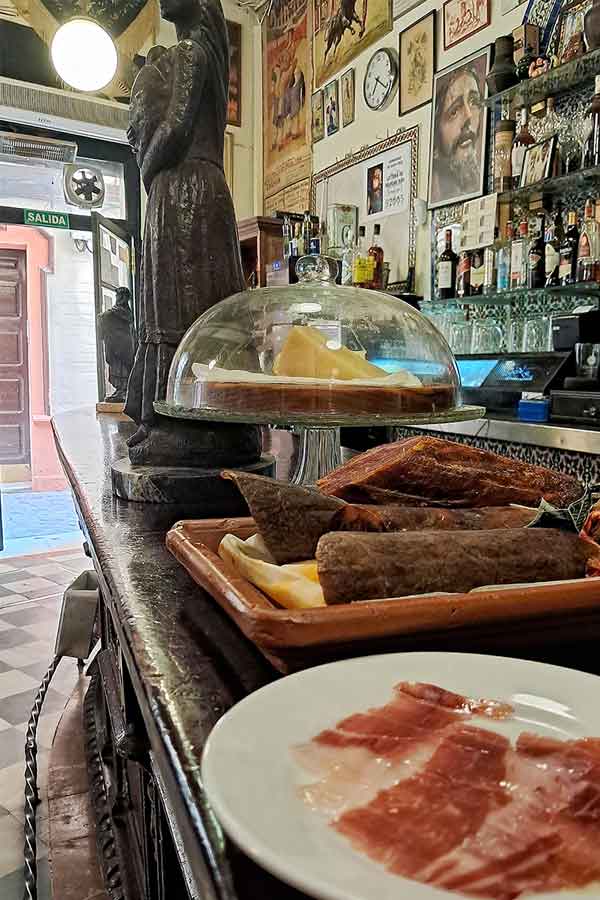
It has an incredible interior! The walls are plastered top to bottom with posters of past Seville events, bottles of wine, and jamones hanging from the ceiling. I adored the eclectic mix of decorations, showcasing decades of Spanish history.
While we were eating and drinking, Sophie, our guide, told us everything we needed to know about the food we were eating, and of course, flamenco.


What We Drank at Casa Plácido
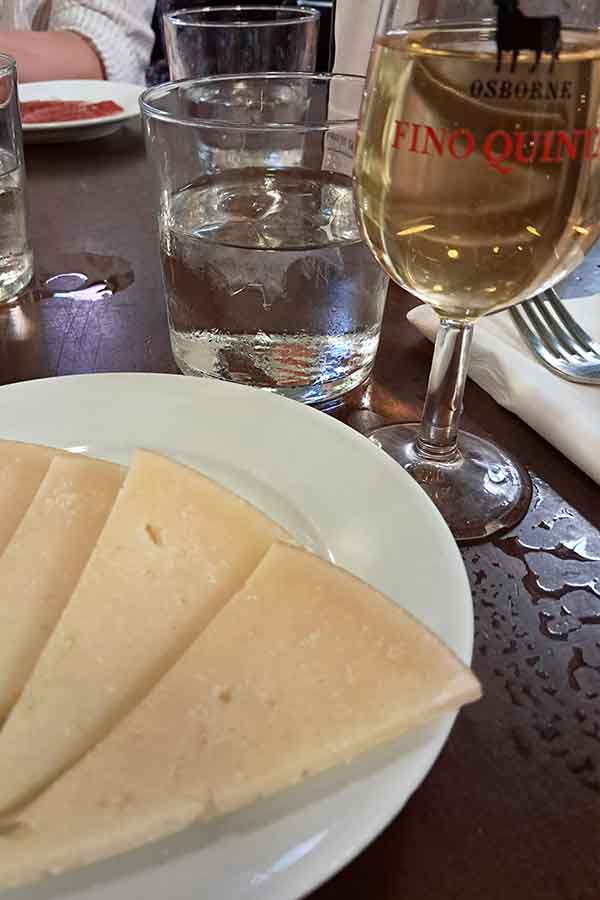
Our first drink of the evening was Manzanilla, which is a dry sherry.
Sherry comes from Jerez de la Frontera, often referred to as Jerez. The word translates to sherry in English. Vino de Jerez can range from very dry to very sweet.
Manzanilla is only produced in Sanlúcar de Barrameda.
This town’s high humidity is due to its location near the river and coast. This causes a thin layer of yeast called flor to form on top of the wine, protecting it from oxidising.
This results in a very pale and dry sherry.
While Manzanilla can be a bit too dry on its own, it pairs really well with salty foods like cheese and jamon.
What We Ate at Casa Plácido
The meat eaters in the group started with thin slices of Jamón Ibérico de Bellota.
This is the best and most expensive ham in the world.
Jamon comes from the hind leg and is the fattiest part of the pig.
The pigs used for this jamon are free range and live for at least 2 years on the land. Each pig gets about 1 hectare of land, some up to 5 acres! They eat acorns, bellotas in Spanish, hence the name of the meat.
I had Queso Viejo, which translates to old cheese. The one I had was a sheep’s cheese cured for 3 years. I liked the saltiness of the cheese, which balanced out the Manzanilla nicely.
The others in the group then got to try two types of croquetas: Croquetas de Jamón and Croquetas de Puchero.
These bite-sized treats are made from pork mixed with a broth of carrots, onion, and leeks, all combined into a creamy béchamel sauce. They are then coated in breadcrumbs and fried to perfection.


The two vegetarian options were a Croqueta de Espinaca (spinach croquette) and Papas Aliñás.
I really enjoyed the Papas Aliñás, which is a potato salad. Unlike the typical British potato salad, which is coated in mayonnaise and can be quite heavy, this one was light. The potatoes are covered with extra virgin olive oil and served with parsley.
Then everyone had a small dish of Espinacas y Garbanzos. This popular Andalusian dish is a hearty stew made of spinach and chickpeas. Quite a lot of food in Andalucia is influenced by North Africa, which dates back to when the region was under Moorish rule.
This is one of my favourite Andalusian dishes, especially in the winter when it feels like comfort food. The stew is seasoned with garlic, cumin, paprika, and occasionally a touch of chilli.


Verdict: This was the stop that immediately made the tour feel different from just choosing a random tapas bar myself. I would have walked past Casa Plácido without knowing what to order, but having Sophie explain the food, wine, and flamenco context made it feel much more special.
2. La Casa Del Flamenco
La Casa de Flamenco is set in an old 15th-century palace. The performance takes place in the central patio.
The venue opened around 15 years ago, by two brothers who first opened a hotel in this building, but then wanted guests to only experience good flamenco.
The intimate venue seats up to 75 viewers. They run up to 4 shows a day, each lasting an hour. Every show is different.
Our guide, Sophie, has been leading this tour for several years. During that time, she’s seen over 500 shows here. She said every one of them has been different.
No cameras were allowed during the performance. You can only take photos at the end.


Things to Know About Flamenco Dancing in Seville
These were the details Sophie explained before the show that made the biggest difference to my experience.
- Traditional Flamenco Elements: Flamenco includes singing, dancing, and guitar playing. Most people think only of dancing, but singing is the most important part. It’s meant to express pain and often sounds like crying, chanting, or wailing.
- Performers: Flamenco performers aren’t a fixed group. They are solo artists who come together to perform. During our visit, there were five performers. They improvise their performances without choreography or microphones.
- Attitude: You don’t need a dress, fancy flowers in your hair, or special shoes, but you do need the right attitude. Performers often look serious or even angry; it’s part of the show.
- Dance Style: The dances are usually solo, except for the Seviliana, a partner dance. They might start with a Seviliana, but the rest will be solo performances.
- Venue: The venue is small and intimate. Even if you’re in the front row, you won’t be called onto the stage. There is no audience participation.
- Improvisation: Flamenco is mostly improvised. Performers here are well-renowned and often travel the world to teach and perform. There are about 50 different styles, called palos, each with its own mood, rhythm, and structure. They decide which ones to perform just before the show and follow strict rules for each style.
- Communication: Watch all the performers during the show, not just the dancers. The singers, dancers, and guitarists constantly communicate with each other through their performances and will often be cheering each other on.
- Language: The singing is in Spanish and can be hard to understand, even for locals. It includes some Gypsy slang and long verses. The verses are random, but they follow the style of the song.
- Emotion and Story: Every show is different, 100% improvised, and the performers inspire each other. You can follow the “story” through the emotions they express.
- Clapping: It’s best not to clap along because the performers have their own rhythm. Applauding is fine, but saying “ole” is even better when you want to show appreciation for a dramatic pose or performance.

With all the useful knowledge and insights Sophie shared with us before the show, I absolutely loved watching the performance. In fact, I enjoyed it so much that I’d definitely go again.
After the performance, our group gathered in a small plaza close to Casa del Flamenco to discuss what we’d seen, sharing our experiences and what we enjoyed.
We compared it to what we had imagined, and many of us found it even more captivating and emotional than expected.
It was great to hear different perspectives and learn what aspects others appreciated most.
Verdict: This was the moment the tour really became worth it for me. I had seen flamenco before, but understanding what to watch for made the performance far more emotional and impressive.
3. Vinería San Telmo
As a total contrast to the first tapas restaurant we visited, this restaurant is only about 20 years old. Opening its doors in 2004, it was the first restaurant to serve gastro tapas in Seville. Tapas with a twist, essentially.
The diversity in the food here comes from the owner’s heritage. He was born in Argentina and has one Russian parent and Italian grandparents.
What We Drank at Vinería San Telmo
We could choose our drinks in this restaurant, so the others in the group opted for things like Tinto de Verano or a local beer (Cruzcampo).
I always gravitate towards red wines, so for something different, I opted for a white wine here.
I tried the Zalema wine. This dry white wine is native to Southern Spain and comes from nearby Huelva. The winery this particular bottle came from is owned by two sisters, one of the few wineries owned exclusively by women.
It had a very refreshing and sharp taste and complemented my food well.
After that, I had a glass of Rioja, which is always my wine of choice.


We also had a glass of Pedro Ximénez to accompany our dessert.
It is often described as one of the sweetest wines in the world.
I love this dessert wine. To me, it tastes like alcoholic prune juice, has a rich consistency and is very sticky. It goes down way too easily!
Despite being a deep brown colour, Pedro Ximénez is actually made from a white grape. After harvest, they leave grapes on a mat in the sunshine until they turn into raisins. That’s where the flavour and colour come from.
What We Ate at Vinería San Telmo
We each tried three savoury dishes here, with vegetarian alternatives for me.
The meat eaters in the group started with Paté de Ave al Oloroso, sherried chicken liver paté served with a sweet tomato jam. My veggie option was Hummus al Comino con Pan Pita, hummus with olive tapenade. It was a very smooth hummus!


Our second tapa was Espaguetis a la Tinta de Sepia con Vieiras, Langostinos y Gula, black spaghetti with squid ink, garlic pesto sauce, mussels, shrimps and gulas, which is the name of the brand that makes fake baby eels. They are actually made from fish.
My veggie option was a vegetable stack: Rascacielos de Tomate, Berenjena y Queso de Cabra. This was made from layers of tomato, aubergine and goat cheese. The regular version comes with smoked salmon, but mine came with a thin layer of slightly smoky cheese melted on top. It was really good!


The third dish was Cola de Toro, an oxtail stew wrap which came with fried egg mayonnaise and Pluma Ibérico, grilled steak with roasted butternut sauce.
My option was a Tortilla de Patatas, a Spanish omelette made with egg, onion and potato.

To finish, we each had a small dessert called Tocino de Cielo, an egg-based dessert invented by nuns.
In the past, egg white was used by the wineries to clarify the wine. So the leftover egg yolk was donated to the local convent. They mixed the egg yolk and sugar and cooked it in a water bath (bain-marie) until it set.
The name Tocino de Cielo translates to fat from the sky, and it’s exactly that! It’s sweet, smooth and tastes like a super-rich Crème Caramel. It was delicious!


And this wrapped up our evening. We’d learnt so much about the history of flamenco and Seville’s food culture, and got to taste plenty of amazing food along the way.
With our bellies full, our tour came to an end.
Verdict: I liked that the evening ended somewhere more modern because it stopped the tour from feeling like a history lesson. You get traditional Seville first, then a more creative look at the city’s food scene.
Tapas and Flamenco Tour in Seville
- Small Group (Max of 12 People)
- 4 Hours
- Evening Tour
- English Speaking Guide
- 8+ Different Tapas 3 Drinks
Seville Tapas and Flamenco Tour FAQs
Is the Tapas and Flamenco Tour with Devour Tours Worth the Price?
I think it is worth the price if you want more than just a flamenco ticket. The value comes from the local guide, the tapas stops, the wine pairings, the small group, and the explanation before the show. If you only want the cheapest flamenco performance, you can book a standalone ticket instead.
Where Can I See the Best Flamenco Show in Seville?
You’ll find plenty of options to watch flamenco dancing in Seville. One of the most authentic venues is Casa del Flamenco in Barrio Santa Cruz.
What Food Is Seville Known For?
Seville is known for its delicious tapas, including dishes like jamón ibérico, espinacas con garbanzos, and croquetas.
Where Are the Best Tapas Bars in Seville?
Some of the best tapas bars in Seville are found in the historic neighbourhoods of Santa Cruz, Triana, and El Arenal. There are lots along Avenida de la Constitución, although try to go a few streets back for better options.
How Much Will I Eat on This Seville Tapas Tour with a Flamenco Show?
During this Seville tapas tour with a flamenco show, you’ll enjoy more than 8 tapas throughout the evening, which was enough for a full meal for me. I would not book a separate dinner afterwards.
Can Vegetarians Join This Seville Food Tour?
Yes, vegetarians can join this tour. I’m a vegetarian and had proper alternatives throughout the evening, not just sad side dishes. Just make sure to add your dietary needs when booking, and mention them again at the start of the tour.
Have a Question?
Ask in The Seville Guide Community!
Connect with fellow travellers and locals, share tips, and get the latest insights on what’s happening in Seville.
Would I Recommend This Tapas and Flamenco Tour?
If you want one memorable evening that combines Seville’s food culture with a flamenco show, you will actually understand. I would book the Devour Tours Tapas & Flamenco Tour. It is one of the rare tours I would happily do again, even as someone who lives in Seville.
Check availability for the Tapas & Flamenco Tour with Devour here.
Planning your trip to Seville? Then read some of these other useful articles:
- Eat your way around Seville’s best food markets
- Discover the best places to watch flamenco in Seville
- Find more things to see in Seville’s Old Town
Have a question? then don’t forget to join our free Facebook Group: Seville Things To Do and ask the community.
Want to discover more about Seville? then check out these other great articles to find out more.
Done-For-You Itineraries
- One Day in Seville Itinerary
- Two Days in Seville Itinerary
- Three Days in Seville Itinerary
- Five Days in Seville Itinerary
Things To See & Do In Seville
- Best Places to Watch Flamenco in Seville
- 21 Great Things to Do in Seville
- 18 Must-See Galleries and Museums in Seville
- Best Time to Visit Alcazar of Seville
- Things to Do in Seville for Free
- Best Artisan and Flea Markets in Seville
- 23 Best Day Trips From Seville
- Where’s The Nearest Beach to Seville? [Within a 2-Hour Drive]
- 34 Instagram Spots in Seville [+ Photo Location Map]
Food & Drink in Seville
- Eat Your Way Around Seville’s Top Food Markets
- Discover the Best Tapas in Triana Neighbourhood
- The Best Flamenco and Tapas Tour in Seville
- Can You Drink Tap Water in Seville?
- Where to Find the Best Breakfast in Seville
- Where to Find the Best Coffee in Seville
Seville Travel Tips
- How To Survive Seville In Summer
- Things to Do in Seville in the Rain
- What to Wear to Seville Cathedral
- What Is Seville Famous For?
- How Many Days in Seville Do You Really Need?
- How to get from Seville Airport to the City Centre
- Where to Stay in Seville, Spain: Best Neighbourhoods
- Why Visit Seville? 15 Reasons to Visit Seville
Similar Posts
Barrio Santa Cruz, Seville: Jewish Quarter Guide
Most visitors to Barrio Santa Cruz in Seville follow the same route: Cathedral, Alcázar, a quick wander through the prettiest lanes, a photo under the orange trees, and then back to the hotel. I get why. Santa Cruz looks exactly how people imagine Seville will look: narrow shaded streets, whitewashed walls, tiled patios, orange trees,…
Can I Drink the Tap Water in Seville, Spain?
I see people asking the question of can I drink the tap water in Seville come up a lot in the travel forums for the city. The answer I give everyone is yes, you can! Seville’s tap water is 100% safe to drink. I’ve lived in the city for quite some time, and have always…
Vegetarian Tapas in Seville: What to Order and Where to Go
Finding vegetarian tapas in Seville can be challenging, especially with Andalusia’s reputation for running on jamón. That reputation is largely deserved. What rarely gets mentioned is that some of the city’s oldest, most-loved tapas are vegetarian by tradition, not as an afterthought. We see this question a lot in our Facebook community: where can you…
Seville for Christmas: 20 Unmissable Things to do
Heading to Seville for Christmas? You’re in for something truly special. But with so many events, traditions, and festive foods to try, it’s easy to feel a bit lost — especially if it’s your first time visiting in December. I’ve spent the holidays wandering Seville’s decorated streets, sharing tapas under fairy lights, and getting swept…
Seville in January: 22 Best Things to Do
Looking for things to do in Seville in January? You might be surprised by how much is still happening after New Year’s Eve. From the candy-filled parades of Kings Day to the last glow of Christmas lights, January in Seville is full of concerts, markets, flamenco fashion shows, and cosy winter food tours. As someone…
Where to See the Best Christmas Lights in Seville
Discover the magic of Christmas Lights in Seville! From dazzling streets to illuminated landmarks, explore the city’s top festive displays and holiday highlights. Every year, the Christmas lights in Seville transform the city into a magical winter wonderland. During the festive season, the streets glow with some of the most beautiful displays you’ll ever see,…