
The History of Flamenco in Seville: 3,000 Years of Rhythm and Passion
When you think of Spain, chances are flamenco isn’t far from your mind. The stamping heels, the soulful singing, and the strumming of guitars are woven into the very identity of Andalusia. But here’s what most people don’t realise: the history of flamenco stretches far deeper than the polished performances you see in Seville’s tablaos today.
This art form didn’t just “appear” a few centuries ago. Its origins in Seville and Andalusia go back more than 3,000 years, shaped by waves of migration, empire, and resistance. And far from being frozen in time, flamenco is always evolving—absorbing, blending, and transforming with each generation.
In this article, we’ll trace flamenco’s roots from Phoenician ports to modern fusion stages, uncovering how Seville became its heartbeat—and why every heel strike still echoes with history.

Some of the links on The Seville Guide are affiliate links. If you click through and make a purchase, we may earn a small commission. This allows us to create more helpful and honest guides that you can use for free. You can read our Disclosure Policy here. We appreciate your support, thank you.
The Golden Triangle: Where Flamenco Was Born
Flamenco may be known across Spain, but it truly belongs to one place. Its spiritual home lies in what’s often called the “Golden Triangle”—the cities of Seville, Cádiz, and Jerez de la Frontera.
These three Andalusian cities were once hubs of trade, migration, and cultural exchange. In their smoky taverns, sun-drenched patios, and working-class barrios, the origins of flamenco in Seville and its neighbours began to take shape.
To this day, when you hear flamenco in Seville, you’re listening to the soul of the region. This is where Andalusian folk traditions, Romani influence, and Moorish echoes met—and where they still live on in every song, every stomp, every wail of the guitar.
Phoenicians and the First Notes (1000 BC)
Flamenco’s story doesn’t begin in theatres or tablaos. Its earliest threads trace back to around 1000 BC, when the Phoenicians sailed from the eastern Mediterranean and settled in what is now Cádiz.
These ancient traders brought with them musical instruments, including a precursor to the castanets—small handheld clappers that originated in Crete. In the port city of Gadir, music and movement became part of daily life, especially among the working classes and enslaved communities.
While these sounds might feel far removed from modern flamenco music and dance, they planted some of the oldest roots of rhythm and storytelling through movement.
Over time, these early influences would blend with other traditions to help form what we now recognise as Andalusian folk culture.
Moorish Andalucía: Music of Empire (8th–15th Century)
In 711 AD, the Moors arrived in southern Spain from North Africa and Damascus, ushering in nearly 800 years of Islamic rule in Al-Andalus. During this time, the region became a cultural crossroads, where architecture, poetry, science – and music- flourished side by side.
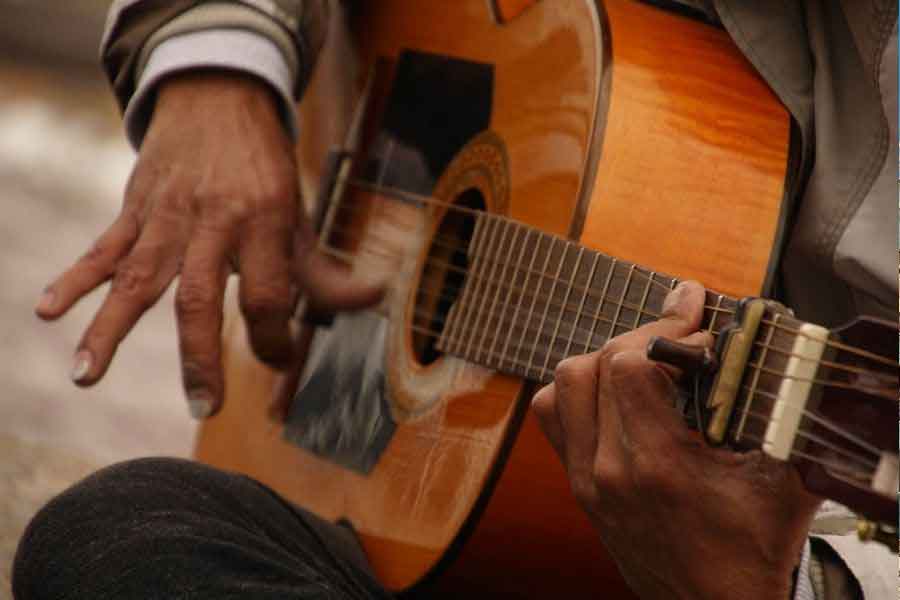
One of the most lasting influences on flamenco music and dance was the oud, a fretless Arabic lute. Its deep, resonant tones shaped what would eventually become the Spanish guitar, laying the groundwork for the history of flamenco guitar as we know it today.
The Moors also introduced melismatic singing—those long, ornamented vocal phrases that still define the cante jondo (deep song) of flamenco. These vocal traditions, full of emotional complexity, still echo in every soul-stirring wail on a Seville stage.
Just as their arches, tiles, and courtyards transformed Seville’s skyline, their music laid deep foundations for what would evolve into Andalusian folk traditions—and ultimately, flamenco.
The Arrival of the Gitanos (15th Century)
If the Moors brought the instruments, the Gitanos—Spain’s Roma communities—brought the soul. Arriving in Andalusia in the 15th century, their origins trace back to Persia and northern India.
What they carried with them was a profound tradition of movement, rhythm, and …expressive storytelling—something that would transform flamenco music and dance into a deeply personal art form.
The gypsy flamenco history begins here, in the backstreets and barrios of Andalusia, where Gitanos passed down their songs, dances, and oral traditions through generations. Their style was raw and improvisational, shaped not by formal training but by lived experience—celebration, survival, and sorrow.
They introduced the fluid arm movements, wrist rolls, and proud postures that define flamenco dance today. Unlike the rigid formality of European court styles, Gitano expression was unfiltered and emotional. It turned dance into a form of catharsis, and song into a way to process pain and joy alike.
From this point on, flamenco was no longer just sound—it became embodied emotion. The Gitanos gave flamenco its unmistakable body language, its most intimate gestures, and its fiercest pride.
New World Rhythms and Flamenco’s Pulse (16th–20th Century)
The discovery of the Americas in 1492 didn’t just transform Spain’s empire—it reshaped its soundscape. As ships returned to Seville, the empire’s main port, they carried more than silver and spices. They brought rhythm.
From Cuba, the Caribbean, and West Africa, new musical patterns made their way into Andalusia. These Afro-Cuban influences brought looser, more polyrhythmic beats to what had previously been a more solemn style. Slowly, flamenco absorbed these sounds—becoming bolder, freer, and more passionate.
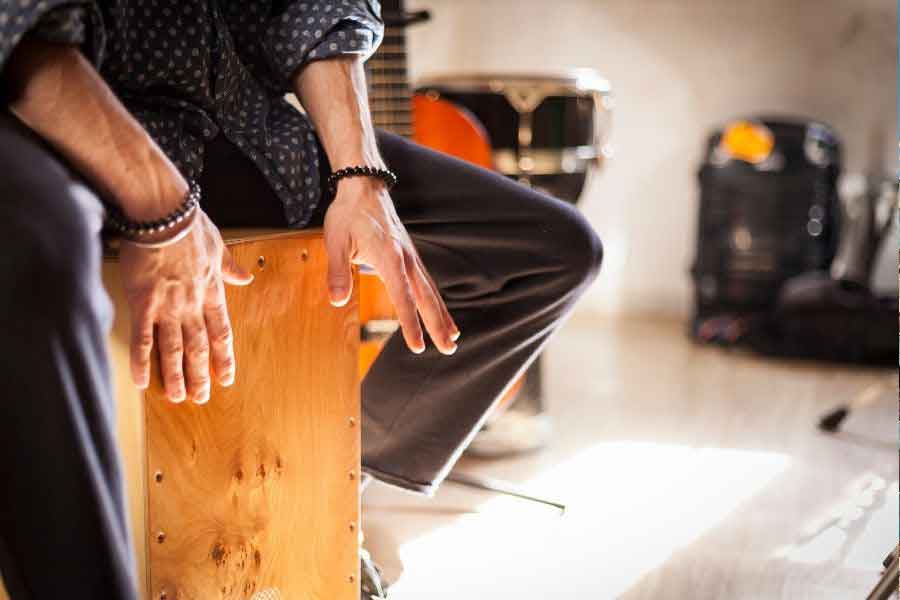
One of the most powerful symbols of this exchange is the cajón flamenco. Though originally a Peruvian box drum, it was adopted into flamenco by Paco de Lucía in the 1970s after hearing it on a tour in Peru. Today, it’s impossible to imagine a live flamenco show without its pulsing heartbeat.
This period marked a major turning point in the flamenco evolution—proof that the art form has always thrived on fusion and transformation, never standing still.
Escuela Bolera and the Birth of Zapateado (18th–19th Century)
By the late 1700s, European dance styles were sweeping across Spain. In Seville and beyond, a formal tradition known as the Escuela Bolera—full of pirouettes, pointed toes, and balletic flourishes—began to merge with flamenco’s raw intensity.
This fusion brought refinement to the rhythm. Flamenco dancers adopted the upright posture and graceful arm positions of Bolera while keeping the fire of their own traditions. It was a meeting of elegance and earthiness, stagecraft and soul.
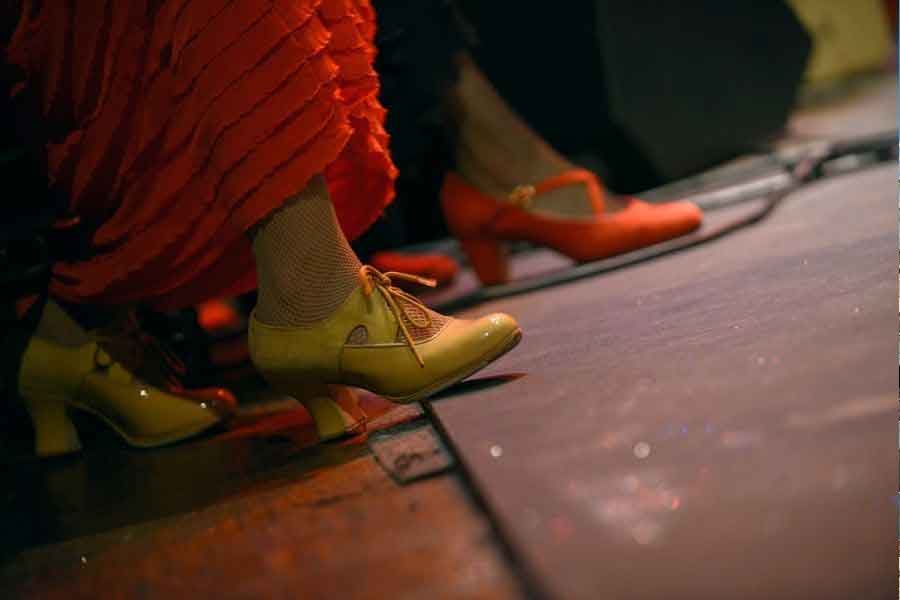
Around the same time, something changed underfoot. Dancers began modifying their shoes—adding nails to the soles and heels. These hybrid shoes turned footwork into percussion. The result was the zapateado: a percussive, rhythmic stomping that became one of the defining elements of flamenco in Seville.
Some call it Spain’s answer to tap dance—but while tap glides and flicks, flamenco stamps, drives, and declares. With each heel strike, dancers weren’t just keeping time—they were sounding out centuries of Andalusian identity.
When Flamenco Took the Stage: The Cafés Cantantes (1850–1910)
Before the mid-19th century, flamenco lived in the shadows—shared in courtyards, whispered through wedding songs, and danced in Gypsy fiestas away from the public eye. But everything changed with the arrival of the Cafés Cantantes, or singing cafés.
These venues began popping up across Andalusia, and flamenco culture was never the same. The very first—and most influential—was Café Silverio on Calle Sierpes in Seville, opened by singer Silverio Franconetti. For the first time, flamenco had its own spotlight.
Audiences came not just to drink, but to feel. They watched singers pour out their sorrows, dancers hammer stories into the floor, and guitarists weave emotion through strings. And for the first time, flamenco artists could earn a living from their passion.
This era didn’t tame flamenco—it honed it. It marked a new phase in the history of flamenco: one where the streets met the stage, and the private became profoundly public.
Flamenco Goes Global: Lorca, Film, and the Modern Guitar (20th Century)
The 20th century marked a transformation in the evolution of flamenco—from a local tradition to a global symbol of Spanish identity.
Poets like Federico García Lorca declared flamenco to be the raw voice of Spain’s soul, while avant-garde artists like Salvador Dalí helped stage surreal flamenco performances that blurred the line between folklore and fine art.
Flamenco was also being recorded for the first time, thanks to early phonographs and collectors eager to preserve its sound. These rare recordings—often scratchy but powerful—helped document the earliest voices of the cante jondo tradition.
By the 1970s and 80s, flamenco had burst onto the silver screen. Dancers like Antonio Gades and Cristina Hoyos starred in films such as El Amor Brujo, showing the world that flamenco was more than regional art—it was high drama, high art, and high emotion.
Meanwhile, guitarist Paco de Lucía revolutionised the instrument’s role, bringing it out of the shadows and into the spotlight. He fused jazz, Latin, and classical influences, reshaping the history of flamenco guitar forever.
Where Does the Word “Flamenco” Come From?
The history of flamenco is long and layered—but even its name remains a mystery.
No one can say with certainty where the word “flamenco” comes from, but several theories have become part of the story.
- One traces it back to Spanish soldiers who fought in Flanders (Flandes) in the 16th century. Their nickname, flamencos—meaning Flemish—was associated with boldness, flair, and swagger. Over time, those traits became linked with the flamenco dancer’s confident posture and energy.
- Another theory suggests an Arabic origin: felah-mengu, meaning “wandering peasant.” This would make the name a nod to the Gitanos (Roma people), whose nomadic way of life and marginalisation shaped so much of gypsy flamenco history.
- A final, more poetic idea connects the name to the flamingo bird—with its proud stance, long lines, and dramatic flair. Anyone who’s watched a dancer hold their arms aloft in a moment of stillness will see the resemblance.
Each theory brings its own flavour to the story—and all reflect the blend of influences that make up flamenco culture in Andalusia.
Flamenco Today: Fusion, Tradition, and UNESCO Recognition
Flamenco today lives in two overlapping worlds.
On one hand, it dazzles on stage in tablaos across Seville—polished, choreographed, and designed to stir tourists and locals alike.
On the other, it still lives quietly in backstreet patios, neighbourhood peñas, and family kitchens—raw, improvised, and full of soul.
This tension between stage and street is part of flamenco’s power. Artists now blend old rhythms with new sounds, creating bold flamenco fusión by mixing in jazz, rock, or even electronic music.
Yet even when reimagined, the essence remains unchanged:
- A voice that aches (cante)
- A rhythm that commands (compás)
- A movement that remembers (baile)
In 2010, UNESCO recognised flamenco as part of the Intangible Cultural Heritage of Humanity—an honour that validates what so many already knew: flamenco isn’t just entertainment. It’s living history, pulsing through the streets of Seville.
Where to Find the Best Flamenco in Seville
Seville isn’t just a city where flamenco is performed—it’s where flamenco is lived. If you want to feel its heartbeat, here are the best ways to experience it firsthand.
Tablaos (Flamenco Venues)
These are intimate performance spaces where professional dancers, singers, and guitarists perform traditional shows.
Some of the most iconic flamenco venues in Seville include:
- Museo del Baile Flamenco (Flamenco Museum)
- La Casa del Flamenco (Barrio Santa Cruz)
- Casa de la Memoria (central Seville)
👉 Insider tip: Earlier shows at Casa de la Memoria tend to attract more serious flamenco fans. The late-night ones can feel looser and more playful—almost like you’re watching a rehearsal with flair.
Peñas Flamencas
These are local flamenco clubs, often non-profit and community-based. They host performances for members, but sometimes open to visitors.
Check out:
- Peña Torres Macarena
- Peña Flamenca Niño de la Alfalfa
Wander the Streets
If you want to experience flamenco for free in Seville, check out neighbourhoods like Triana and La Macarena, where flamenco spills from balconies, doorways, and courtyards—especially during spring festivals and local fairs.
👉 Time-saving tip: If you’re short on time, head to the Flamenco Museum. It gives you a solid cultural foundation in under an hour—and the live show packs more passion than most big-stage productions.
Have a Question?
Ask in The Seville Guide Community!
Connect with fellow travellers and locals, share tips, and get the latest insights on what’s happening in Seville.
What Will Flamenco Sound Like to You?
The story of flamenco is far from finished. It’s still being written—on backstreet patios, in buzzing tablaos, and in the hearts of every dancer, guitarist, and singer who calls Seville home.
Whether you’re drawn to its ancient echoes, its modern fusions, or the raw power of a single voice in a darkened room—flamenco has a way of meeting you where you are.
So… what will flamenco sound like to you?
- If you’re ready to feel it for yourself, start with our guide to the best flamenco shows in Seville.
- Or discover how to pair an unforgettable performance with tapas on this local-led tapas and flamenco tour.
Have a question? then don’t forget to join our free Facebook Group: Seville Things To Do and ask the community.
Want to discover more about Seville? then check out these other great articles to find out more.
Done-For-You Itineraries
- One Day in Seville Itinerary
- Two Days in Seville Itinerary
- Three Days in Seville Itinerary
- Five Days in Seville Itinerary
Things To See & Do In Seville
- Best Places to Watch Flamenco in Seville
- 21 Great Things to Do in Seville
- 18 Must-See Galleries and Museums in Seville
- Best Time to Visit Alcazar of Seville
- Things to Do in Seville for Free
- Best Artisan and Flea Markets in Seville
- 23 Best Day Trips From Seville
- Where’s The Nearest Beach to Seville? [Within a 2-Hour Drive]
- 34 Instagram Spots in Seville [+ Photo Location Map]
Food & Drink in Seville
- Eat Your Way Around Seville’s Top Food Markets
- Discover the Best Tapas in Triana Neighbourhood
- The Best Flamenco and Tapas Tour in Seville
- Can You Drink Tap Water in Seville?
- Where to Find the Best Breakfast in Seville
- Where to Find the Best Coffee in Seville
Seville Travel Tips
- How To Survive Seville In Summer
- Things to Do in Seville in the Rain
- What to Wear to Seville Cathedral
- What Is Seville Famous For?
- How Many Days in Seville Do You Really Need?
- How to get from Seville Airport to the City Centre
- Where to Stay in Seville, Spain: Best Neighbourhoods
- Why Visit Seville? 15 Reasons to Visit Seville
