What Is Seville Famous For? Your Complete Guide
Planning a trip to the Andalusian capital and wondering what is Seville famous for? You’ve come to the right place!
TLDR: Seville is famous for its diverse history, stunning architecture, the passionate art of flamenco and of course Seville oranges! But there’s a whole lot more that the city is known for.
I’ve lived in Seville for years, exploring every nook and cranny, and I still can’t get enough. That’s why The Seville Guide was born- to share my insider knowledge and the experiences of others who have also come to call this city home.
Seville, Spain, is bursting with experiences, from awe-inspiring landmarks like the Alcázar and the Giralda Tower to the vibrant culture that fills its streets.
Let us show you what makes this city so special and answer why is Seville, Spain famous. Let’s go!

Some of the links on The Seville Guide are affiliate links. If you click through and make a purchase, we may earn a small commission. You can read our disclosure policy here. We appreciate your support, thank you.
What is Seville Famous For?
- Beautiful Architecture
- Interesting History
- Vibrant Culture and Traditions
- Arts and Crafts
- Food and Drink
- Green Spaces
Have a Question?
Ask in The Seville Guide Community!
Connect with fellow travellers and locals, share tips, and get the latest insights on what’s happening in Seville.
Beautiful Architecture
There’s no denying that Seville has gorgeous architecture. It’s one of the most beautiful cities in Europe, and we’re going to stick our necks out and say it’s one of the most captivating cities in the world.
While there are countless beautiful places to see in the city, here are the most iconic landmarks in Seville.
Famous Buildings in Seville To Visit
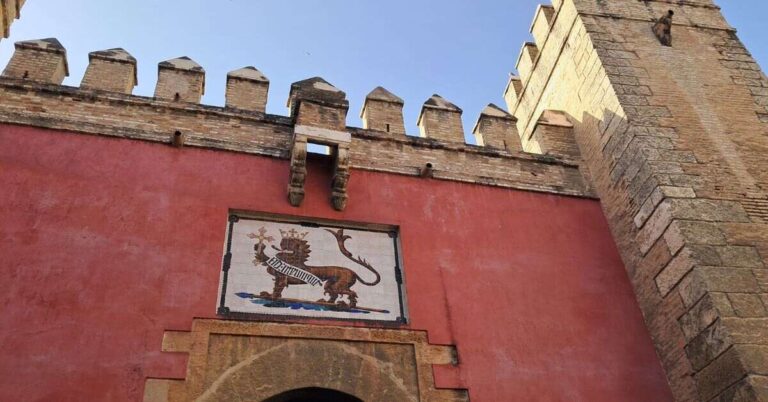
Real Alcázar
One of the most important historical places in Seville is the Real Alcazar and a must-see for anyone visiting.
It was originally built by the Moorish rulers of Spain in the early eighth century and later expanded by the Catholic Monarchs after they took over Seville.
This palace is a beautiful mix of Moorish and Christian styles, known as Mudéjar architecture. It’s considered one of the best examples of this style in the world.
The Alcázar is a UNESCO World Heritage Site. It’s recognised as a place of great historical and architectural value.
Some of our favourite things to see at the Alcazar are:
- Patio de las Doncellas (The Maidens’ Courtyard)
- Salon de Embajadores (Ambassadors’ Hall or the Throne Room)
- Baños de Doña Maria de Padilla (Bathhouse of Doña Maria de Padilla)
If you’re a Game of Thrones fan, you’ll love this: the Real Alcázar was used as the setting for the Water Gardens of Dorne. Its amazing gardens and stunning architecture made it perfect for the show.
Getting the Most Out of Your Alcázar Visit
To get the most out of your Alcázar visit, try to go early in the morning to avoid the crowds.
Because this is one of the most popular tourist sites in Seville, Spain, it gets busy. Tickets are limited to 7000 each day, which sounds like a lot, but they do sell out.
We highly recommend booking the Exclusive Early Access Tour: Alone in the Alcazar, which lets you enter with just a small group before it opens to everyone else.
If that’s not possible, then make sure to book a regular ticket in advance. Guided tours are great because you learn so much more about the place.


SEVILLE ITINERARY REVIEW
Not sure if your Seville itinerary actually works?
Send us your rough plan, and we’ll check it from a local point of view.
We’ll look at timings, ticket slots, walking distances, neighbourhood order, and anything that might make your trip feel rushed or harder than it needs to be.
- Find out what to keep
- See what to swap or skip
- Fix awkward timings before you book
- Get honest local feedback by email
Seville Cathedral & La Giralda
Seville Cathedral and La Giralda are two must-see Seville landmarks.
The cathedral, completed in 1506, is the world’s largest Gothic cathedral and was designated a UNESCO World Heritage Site in 1987. Originally, it was a mosque, but after the Christians took control of Seville, it was converted into a cathedral.
The architecture is stunning, with its massive size and intricate Gothic details. Inside, you can find famous artworks by Goya and Murillo (we mention more about them later). It’s also the resting place of Christopher Columbus.
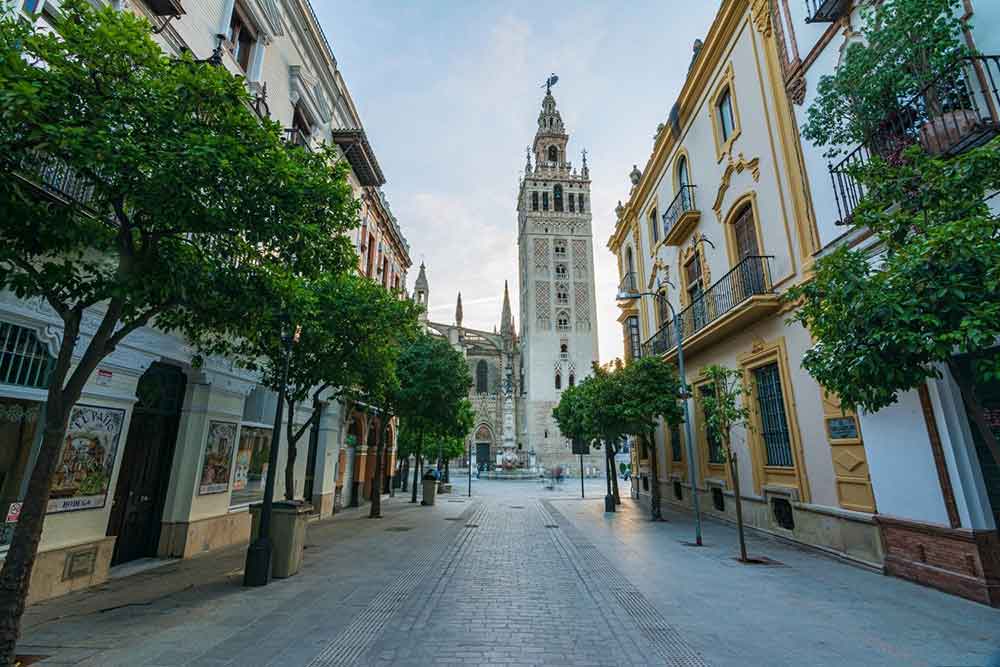
Don’t miss climbing the Giralda Tower, which used to be the minaret when the building was a mosque. The climb is worth it for some of the best views of the city. It’s a fantastic spot to really take in the beauty of historic Seville from above.
Getting the Most Out of Your Seville Cathedral Visit
To get the most out of your Seville Cathedral visit, we suggest going early in the morning to avoid the crowds. Also, make sure you’re dressed appropriately for the Cathedral.
Like the Alcázar, it gets really busy.
Different tickets are available, and booking in advance is a good idea.

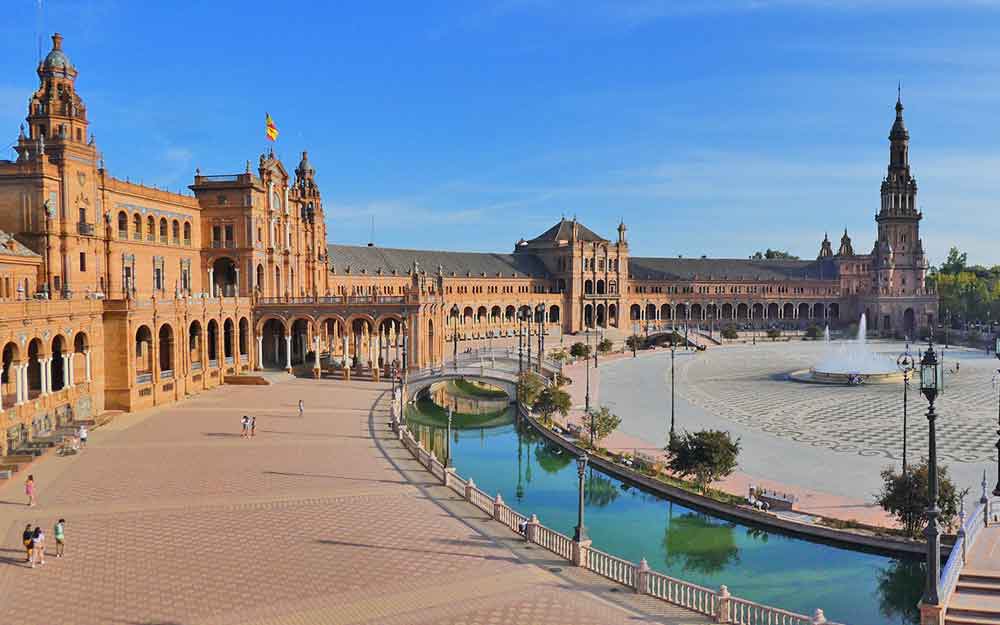
Plaza de España
Not only is Plaza de España one of the most iconic places in Seville, but it’s also one of the most famous landmarks of Spain!
Built in 1928 for the Ibero-American Exhibition of 1929, it’s popular with both tourists and locals.
The landmark features an ornate semi-circular building with towering structures, a collonaded walkway, and a beautiful canal. Along the inside edge of the plaza, there are decorative alcoves with colourful tiles.
Each of the 48 alcoves pays homage to each of Spain’s other provinces – except for the Canary Islands which wasn’t a Spanish province in 1928.
You can rent small boats to row along the canal, giving the plaza its nickname, the Venice of Seville.
While most buildings are government offices and not open to the public, you can visit the Military History Museum housed here.
While you’re here, also allow a couple of hours to explore the adjoining Maria Luisa Park. If you’re looking to see things in Seville without spending money, we recommend heading here.
Las Setas (Metropol Parasol)
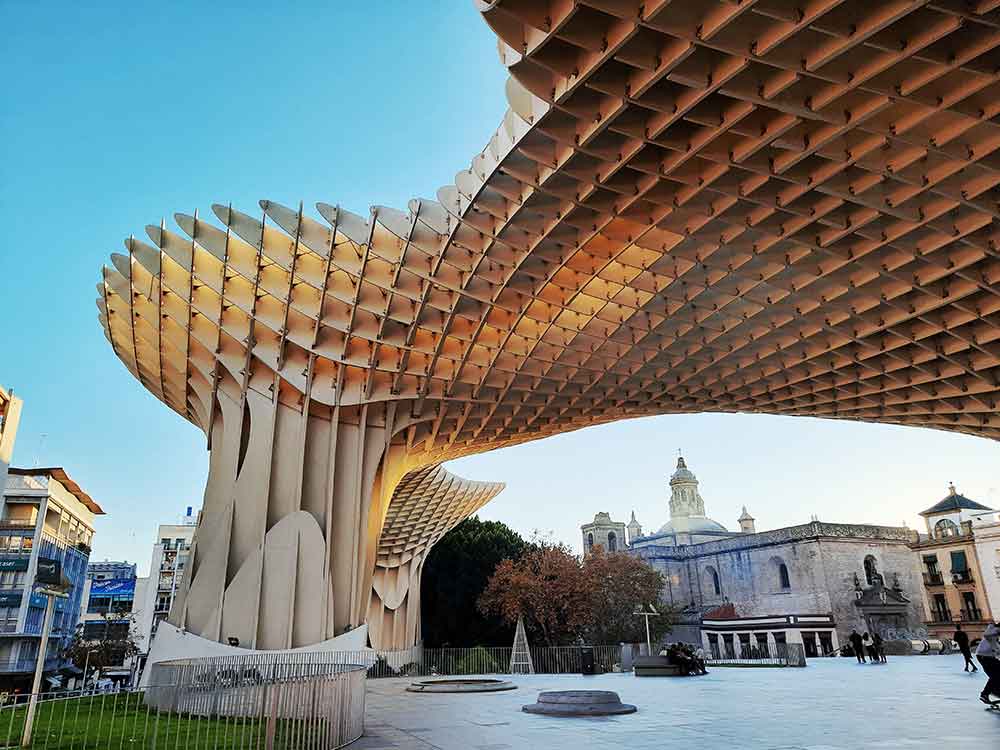
The Metropol Parasol, affectionately known as Las Setas (the mushrooms) thanks to their organic shape is the world’s largest wooden structure that sits over Plaza de la Encarnación.
This plaza was a commercial hub back in Roman times – ruins were discovered during excavations during the planning stage of redevelopment. And it’s still a commercial hub today.
The plaza is home to one of Seville’s popular markets – Mercado de la Encarnacion. The market and ancient ruins both sit beneath the structure.
On top of Las Setas, you’ll get fabulous panoramic views of the city.
We recommend heading here in the late afternoon to watch the sunset and then stay for the aurora light show.
Archivo General de Indias (The India Archives)
The Archivo General de Indias is another building that makes up Seville’s UNESCO historic centre, along with the Alcazar and the Cathedral we’ve mentioned earlier.
This building is home to documents that detail the colonial history of the city and ‘Las Indias,’ or the New World.
Inside, you’ll find more than 10 kilometres of bookshelves filled with records from the sixteenth to the nineteenth centuries.

Torre del Oro
Torre del Oro was originally part of the Moorish city wall in the 12th century and connected the Alcazar Palace to the river.
Over the years, this 36-meter-high, 12-sided tower has served many purposes, including being used as a prison. Today, it houses a maritime museum.
You can also take the spiralling stairs up to the roof for gorgeous views along the river and across to the Triana neighbourhood.

Other Palaces and Historical Houses
Here are a few other palaces and historical houses in Seville that you should check out:
- Casa de Pilatos: A beautiful 16th-century palace with a mix of Italian Renaissance and Spanish Mudéjar styles. It’s filled with stunning tiles and lovely gardens.
- Palacio de las Dueñas: A grand palace that dates back to the 15th century, known for its charming courtyards, beautiful art collections, and gardens.
- Palacio de la Condesa de Lebrija: Often called the “best-paved house in Europe,” this palace is famous for its Roman mosaics and unique blend of architectural styles
- Hospital de los Venerables: Originally a hospital for elderly priests, this 17th-century building now houses a cultural centre and art museum. It’s known for its Baroque architecture and beautiful chapel.
- Casa de los Pinelo: A 16th-century mansion that showcases classic Sevillian architecture. It’s now home to the Royal Academy of Fine Arts.

Interesting History
Seville’s history is truly fascinating, shaped by Roman, Moorish, and Christian influences.
The city has witnessed many key events, such as Moorish and Christan conquests, and the discovery of the Americas.
Barrio Santa Cruz: The Old Jewish Quarter
One of the prettiest historical places in Spain is Barrio Santa Cruz.
Located in the heart of the city, it was once the Jewish Quarter and is known for its narrow, winding streets, whitewashed houses, and beautiful plazas. This is one of the most photogenic places in Seville.
The area is rich in history, with roots dating back to medieval times. The district’s narrow alleys are lined with orange trees, and you’ll find plenty of cosy tapas bars and artisan shops along the way.
This neighbourhood is also one of the most popular areas to stay in Seville.

Discovery of the Americas
Seville played an important role in the discovery and colonisation of America. It was from Seville’s port that Christopher Columbus set sail on his voyages.
After the discovery of America, Seville became Spain’s main gateway to the New World. This brought immense wealth and prosperity to the city.
The influx of gold, silver, and other goods from South America helped shape Seville into a major economic and cultural hub. You can still see this period’s impact in the city’s grand buildings today.
La Cartuja
La Cartuja is an island in the Guadalquivir River where you’ll find a mix of old and new.
It’s home to the Monastery of Santa Maria de las Cuevas, a historic site with roots going back centuries – today it’s home to the Contemporary Art Museum (Centro Andaluz de Arte Contemporaneo).
This island was also the site of Expo ’92, a world fair that brought modern developments to the area.
If you’re a fan of abandoned places or want to discover some of Seville’s hidden gems, then we recommend spending a few hours exploring La Cartuja.

Italica
The Ruins of Italica is an important historical site located just on the outskirts of Seville.
The city was founded in 206 BC and became a significant Roman settlement, known for being the birthplace of Roman Emperors Trajan and Hadrian.
Here you can delve into Seville’s Roman past and explore the well-preserved amphitheatre, which once held 25,000 spectators, as well as beautiful mosaics and ancient streets.

Vibrant Culture and Traditions
The Home of Flamenco
If you’re wondering why is Seville famous for flamenco, it’s because the city has played a central role in its development and preservation.
Flamenco originated in the Andalusian region of Spain, and Seville is home to numerous flamenco shows, schools, and festivals like the Velá de Santa Ana, where you can experience the powerful combination of singing, dancing, and guitar playing.
The annual Seville Flamenco Biennial is one of the most important flamenco events in the world, attracting top artists and fans from everywhere.
Related Articles:

Semana Santa (Holy Week)
Semana Santa, or Holy Week, is one of the most important events in Seville. This tradition dates back to the Middle Ages and is deeply rooted in the city’s culture.
During Semana Santa, elaborate processions fill the streets with a team of Costaleros carrying large, beautifully decorated floats – called a paso – which depict scenes from the Passion of Christ. These processions are accompanied by sombre music and the scent of incense.
Semana Santa in Seville is particularly special because of its grand scale and the deep devotion of the people.
Expect to see thousands of locals and visitors gathered to watch the processions, which last from Palm Sunday to Easter Sunday. The city pretty much comes to a standstill during this week.


Feria de Abril (April Fair)
This vibrant festival is a highlight in the Seviliano calendar and has roots going back to the 1800s.
Feria de Abril, or the April Fair, was originally a livestock fair, but today it has evolved into a week-long celebration filled with traditional dress, dancing sevillanas (a regional dance), colourful casetas (tents), and parties that go well into the early hours.
It starts two weeks after Easter with the lighting of the portada (the giant entry gate). This week of fun kicks off on Saturday night and features daily parades of carriages packed with beautifully dressed Sevillanos.
There’s also a modern fair with rides and games.
The first night, Noche del Pescaíto, is a tradition where people eat fish and celebrate the alumbrao, the switching on of the feria lights whilst drinking rebujito (Manzanilla or Fino mixed with lemonade).
The festival finishes one week later with a huge fireworks show.

Siesta Time
This old tradition in Spain dates back centuries.
It’s a short nap or break taken in the early afternoon, usually after lunch, to rest during the hottest part of the day. If you’re ever visiting Seville in July or August, you’ll 100% understand why it’s so important.
During siesta, you’ll find shops and businesses close from around 2 pm to 5 pm, and the city feels like a ghost town.
When I first arrived in Seville, I found it really hard to adjust to siesta time. Because it’s so hot during the day, you’ll find that people have their evening meals and socialise with friends much later at night when it’s more comfortable.
Having such late nights and still having to function normally the next day gets tough after a few days, so now I totally embrace siesta time. Taking a break in the afternoon makes it easier to enjoy the late-night lifestyle and stay refreshed during the day.
Arts and Crafts
Azuljo Tiles
Azulejo tiles have a long history in Seville, dating back to the Moorish times.
These beautifully decorated ceramic tiles are a big part of the city’s artistic heritage. The Triana neighbourhood is especially famous for its ceramics and has been the centre of tile production for centuries.
If you’re looking for authentic souvenirs and wondering what is Seville famous for producing, it’s definitely these stunning tiles.


Operas
Seville is the setting for two famous operas.
“Carmen” by Georges Bizet tells the passionate and tragic love story between the soldier Don José and the fiery gipsy Carmen, with scenes linked to the Royal Tobacco Factory of Seville.
“The Barber of Seville” by Gioachino Rossini is a comic opera that follows the clever barber Figaro as he helps Count Almaviva win the heart of Rosina.
Works of Art
The city is home to some of Spain’s greatest artists. The most famous two are Velázquez and Murillo.
Diego Velázquez, a significant painter of the Spanish Golden Age, was born here. To see his works, visit the Velázquez Center at the Focus Abengoa Foundation. There’s also a statue of him at the statue in Plaza del Duque.
Bartolomé Esteban Murillo, another prominent Baroque painter from Seville, is known for his religious works and depictions of everyday life. You can find Murillo’s paintings at the Museum of Fine Arts (Museo de Bellas Artes de Sevilla) and the Hospital de La Caridad.

Film Locations
Seville has been featured in many popular movies and TV series, making it a favourite for filmmakers around the world.
Plaza de España, for instance, appeared in Star Wars II, Lawrence of Arabia, and the slightly controversial film The Dictator starring Sacha Baron Cohen.
The Royal Alcázar and Italica Ruins were used in Game of Thrones.
Food and Drink
Tapas Culture
Tapas are small, tasty dishes that are a big part of Seville’s food culture.
There are hundreds of little tavernas in the city to find tapas in Seville. If you’re not sure where to start, then join a small group traditional tapas tour where you’ll get to try some of the best tapas in Seville.
You can also check out some of the local food markets and hop from stall to stall – I recommend Triana Market, which is one of the best for this!
Tapas do tend to be a bit on the meat or fish-heavy side. If you’re not a veggie, then some must-try dishes include:
- Jamón ibérico (Iberian ham)
- Gambas al ajillo (garlic prawns)
- Solomillo al whisky (pork loin in whisky sauce)
I’m a veggie, so I can’t eat the majority of what’s on a typical tapas menu. However, there are a few veggie-friendly options:
- Patatas bravas (potatoes with a spicy sauce)
- Espinacas con garbanzos (spinach with chickpeas)
- Pimientos de padrón (fried green peppers) 👈 these are my favorutie!
- Tortilla española (Spanish omelette)

Seville Oranges
Seville is famous for its oranges – the caveat is that you can’t eat them. Well you can, but they are insanely bitter – Yes! As every curious visitor does, I tried to eat one.
However, these oranges are used to make a delicious drink called vino de naranja (orange wine), which I 100% recommend trying.
If you’re wondering is Seville famous for sherry? No. Sherry comes from the nearby city of Jerez. BUT if you like sweet sherry, then you’ll probably like the orange wine too.

Green Spaces
Orange Trees
Throughout the city, Seville’s streets are lined with orange trees – over 40,000 of them! Seville is famous for these bitter Spanish oranges, which are often used to make marmalade.
These trees have leaves all year round, and the fruit appears from late autumn, but they are green.
They get their vibrant orange colour in the winter, so one of the things you’ll see in January in Seville is the orange trees being harvested – be careful walking under any trees, as this is when they start to fall off. Then in February and March, the orange blossoms are in bloom, making the city smell divine.

The City’s Parks
One of the best ways to get around Seville is on foot. Seville has 28 parks and gardens, along with 11 tree-lined promenades, making it a city with plenty of green spaces and ideal for exploring on foot.
Here are our favourite ones:
- Parque María Luisa: Located next to the iconic Plaza de España, this park is home to beautiful fountains, statues, and ornate pavilions.
- Parque del Alamillo: A large green space perfect for picnics, sports, and family outings.
- Jardines Murillo: Offers shaded walkways, historic monuments, and some of the largest trees in the city.

The Guadalquivir River
The Guadalquivir River has always been important to Seville. Historically, it was a valuable access route for trade. Today its main use is recreational.
You can do kayaking, try stand-up paddleboarding (SUP), go rowing, or take a relaxing boat tour. Riverside walks are also popular, a pedestrian-only path follows the river on both sides.

Useful Seville Travel Information
Best Time to Visit Seville
The best time to visit Seville is in spring (March to May) or autumn (September to November). This is when the weather is pleasant.
Although the weather in April is usually good if you’re not a fan of crowds, then we recommend avoiding visiting Seville during Semana Santa and Feria de Abril – you’ll pay a premium on accommodation then.
How Many Days Do You Need In Seville?
You’ll need about three to four days to fully experience Seville.
This will give you enough time to explore major attractions like the Alcázar, Seville Cathedral, and Plaza de España, as well as a day trip from Seville – see the section further below for some great ideas.
Best Neighbourhood To Stay In Seville
It really depends on what you’re after, there are loads of great areas to stay in Seville.
However, one of the most popular neighbourhoods to stay in Seville is Santa Cruz. It’s centrally located, full of charming narrow streets, historic landmarks, and lots of tapas bars. You’ll be close to major attractions like the Alcázar and Seville Cathedral, making it convenient for sightseeing and soaking up the city’s atmosphere.
Getting Around Seville
- The city is very walkable with plenty of cycle lanes.
- For longer distances, use ride-share apps, or the efficient bus and tram systems.
- Getting to and from the airport is easy with the convenient Aerobus service.
- Seville’s main bus and train stations are well-connected for trips beyond the city.
Day Trips From Seville
- Córdoba: Explore the stunning Mezquita-Catedral, a unique mosque-cathedral, and wander through the charming Jewish Quarter.
- Ronda: Visit this picturesque town known for its dramatic cliffs, historic bridges, and some of the oldest buildings in Spain.
- Jerez de la Frontera: Discover the famous sherry wineries, watch an Andalusian horse show, and enjoy the local flamenco culture.
- Cádiz: Relax on beautiful beaches, explore the historic old town, and visit the impressive Cádiz Cathedral.
- Doñana National Park: Experience one of Europe’s most important wetlands, home to diverse wildlife, including the endangered Iberian lynx.
Explore more of southern Spain with these great day trips from Seville.

What Is Seville, Spain Best Known for: FAQs
What Is Seville Known For?
Seville is known for its diverse history, stunning architecture, flamenco, and vibrant festivals Famous landmarks include the Alcázar, Seville Cathedral, and Plaza de España. The city is also renowned for its delicious tapas and Seville orange trees.
What Food Is Seville Famous For?
Seville is famous for its tapas, including dishes like jamón ibérico (Iberian ham), gambas al ajillo (garlic prawns), and solomillo al whisky (pork loin in whisky sauce). Popular vegetarian options include espinacas con garbanzos (spinach with chickpeas), tortilla española (Spanish omelette), and pimientos de padrón (fried green peppers).
Why Is Seville Famous for Oranges?
There are over 40,000 orange trees which line the city’s streets. These oranges are primarily used to make marmalade and other products. Their fragrant blossoms bloom in spring, filling the air with a delightful scent.
When Is Seville Orange Blossom Season?
Seville’s orange blossom season is in spring, typically from late March to early April. For a couple of weeks, the Spanish city’s streets are filled with the fragrant scent of blooming orange flowers. They smell the strongest in the evenings.
What Is Seville Famous for Making?
Seville is famous for making azulejo tiles. These beautifully decorated ceramic tiles are a big part of the city’s artistic heritage and are primarily in the Triana neighbourhood.
Wrapping up What Is Seville Famous For
As you’ve just read Seville is a city packed with rich history, culture, and vibrant traditions.
From its famous flamenco performances and beautiful azulejo tiles to the delicious tapas and iconic landmarks like the Alcázar and Plaza de España, there are so many things Seville is known for.
So now you know what is Seville most famous for why not start planning your stay? Check out our other useful articles to discover more of what Seville has to offer!
SEVILLE ITINERARY REVIEW
Not sure if your Seville itinerary actually works?
Send us your rough plan, and we’ll check it from a local point of view.
We’ll look at timings, ticket slots, walking distances, neighbourhood order, and anything that might make your trip feel rushed or harder than it needs to be.
- Find out what to keep
- See what to swap or skip
- Fix awkward timings before you book
- Get honest local feedback by email
Have a question? then don’t forget to join our free Facebook Group: Seville Things To Do and ask the community.
Want to discover more about Seville? then check out these other great articles to find out more.
Done-For-You Itineraries
- One Day in Seville Itinerary
- Two Days in Seville Itinerary
- Three Days in Seville Itinerary
- Five Days in Seville Itinerary
Things To See & Do In Seville
- Best Places to Watch Flamenco in Seville
- 21 Great Things to Do in Seville
- 18 Must-See Galleries and Museums in Seville
- Best Time to Visit Alcazar of Seville
- Things to Do in Seville for Free
- Best Artisan and Flea Markets in Seville
- 23 Best Day Trips From Seville
- Where’s The Nearest Beach to Seville? [Within a 2-Hour Drive]
- 34 Instagram Spots in Seville [+ Photo Location Map]
Food & Drink in Seville
- Eat Your Way Around Seville’s Top Food Markets
- Discover the Best Tapas in Triana Neighbourhood
- The Best Flamenco and Tapas Tour in Seville
- Can You Drink Tap Water in Seville?
- Where to Find the Best Breakfast in Seville
- Where to Find the Best Coffee in Seville
Seville Travel Tips
- How To Survive Seville In Summer
- Things to Do in Seville in the Rain
- What to Wear to Seville Cathedral
- What Is Seville Famous For?
- How Many Days in Seville Do You Really Need?
- How to get from Seville Airport to the City Centre
- Where to Stay in Seville, Spain: Best Neighbourhoods
- Why Visit Seville? 15 Reasons to Visit Seville