What to Wear to Feria de Abril: A Practical Dress Code Guide
Planning what to wear to Feria de Abril and not sure where to start? Honestly, this is one of the things people panic about most before they go. I live in Seville and have been to the Feria plenty of times, and it’s also one of the questions I get asked most.
Here’s the honest answer: you do not have to wear a flamenco dress, but you’ll probably have a better time if you do.
The dress code is informal in theory, but in practice, most women at the fair, especially later in the day, are in full traditional dress. You can absolutely turn up in normal clothes, but you may feel a bit like you’ve shown up to a wedding underdressed.
I’ll walk you through what women and men actually wear, whether hiring a dress is worth it, what shoes work best, and how to stay comfortable once you’re there.

Do You Have to Dress Up for the Feria de Abril?
Short answer: no. There’s no dress code enforced at the entrance, and you won’t be turned away for wearing normal clothes.
But here’s the honest version: the Feria de Abril dress code is one of the most traditional in Spain. Seville takes its fair more seriously than almost any other city.
The dresses, the accessories, the whole look is treated with real care and pride.
If you want to feel like a participant rather than a spectator, dressing up makes a genuine difference. That sounds dramatic, but it’s true. I’ve been to the fair dressed up and not fully dressed up, and the experience does feel noticeably different.
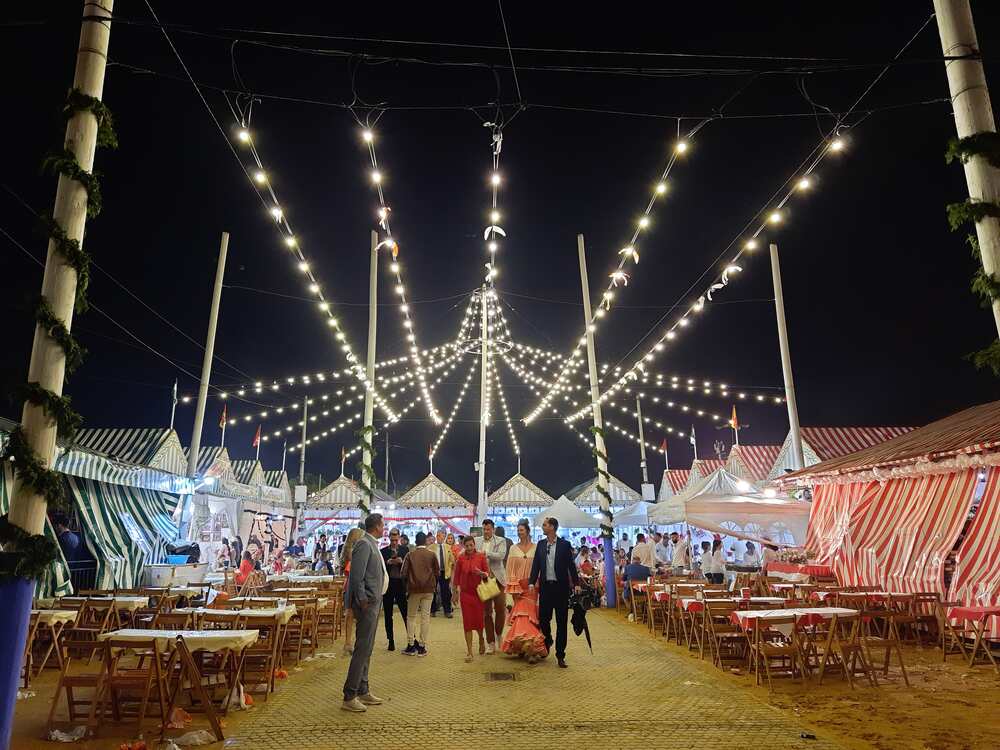
During the day, smart casual is acceptable for both men and women. In the evenings, the bar rises noticeably. That’s when the fairground fills up, and the traditional dress really dominates.
If you’re planning to spend time at the fair after 8 pm, a traje de flamenca for women and smart clothes for men will help you fit in and enjoy the atmosphere much more.
The good news: wearing a flamenco dress as a tourist or expat is completely normal and genuinely welcomed by Sevillanos. Nobody will look at you sideways. They’ll usually be delighted you’ve made the effort.
Have a Question?
Ask in The Seville Guide Community!
Connect with fellow travellers and locals, share tips, and get the latest insights on what’s happening in Seville.
Women’s Dress Code: The Traje de Flamenca
The traje de flamenca, sometimes called a traje de gitana, is the traditional women’s dress worn at the Feria. It’s a fitted, full-length dress with ruffled flounces at the hem and sleeves.
It is not a dancing costume, but a proper outfit that takes real thought to put together well.
What a traje de flamenca actually looks like
These are the types of dresses you will have seen if you’ve seen a flamenco show in Seville.
The dress is fitted through the body and flares out below the knee into tiered ruffles. It typically has short, ruffled sleeves or is sleeveless, and the neckline varies widely by year and style.
The silhouette is deliberately form-fitting. This is not a forgiving cut, but it is also much more flattering on most body shapes than people often expect when it fits properly.
What makes it look right is the fit. A dress that hangs off the body or pulls in the wrong places will look awkward.
If you’re hiring, make sure you try it on and adjust accordingly.
I would not hire one unseen unless you have no other choice, because the fit makes such a difference. If you’re buying off the rack, look for shops that do alterations.
Colours and patterns: what’s in style for 2026
Feria fashion moves fast. Each year, certain colours and prints dominate, and Sevillanas follow the trends closely.
For 2026, rich terracotta, soft sage, dusty rose and bold cobalt blues are all showing up strongly alongside the perennial classic: polka dots in every size and colour combination imaginable.
That said, there is no wrong colour. And the dresses are just as varied as the colourful casetas you’ll see.
Solid colours, florals, geometric prints and stripes are all legitimate.
What matters most is that the dress is vibrant, well-fitted and properly accessorised.
Unless you’re deep in Sevillian fashion circles, nobody expects you to get the exact trend palette right. For most visitors, getting the overall look right matters much more than choosing the most current print of the season.
If you’re hiring, the shop will have current stock and can guide you towards what’s popular this season.
Essential accessories: flowers, earrings and the peineta
The dress alone doesn’t make the look. Accessories are non-negotiable at the Feria de Abril.
The basics you need:
- A flower or flowers in your hair, either a single large bloom or a cluster, usually on one side. Fresh flowers are traditional, but artificial ones are widely used and entirely acceptable.
- Large earrings, usually chandelier or hoop styles in gold or silver. This is not the occasion for small studs.
- A mantoncillo, which is a fringed shawl worn over the shoulders. It adds elegance and is genuinely useful in the evenings when temperatures drop.
- A peineta, which is optional. It is a decorative comb worn high in the hair. Not everyone wears one, but it does elevate the look.
If you’re unsure how far to go, it is usually better to wear proper Feria accessories than to underdo it. The mistake most visitors make is stopping halfway and ending up looking like they were not sure whether to commit.
Most hire packages include accessories.
If you’re buying separately, Calle Sierpes and the streets around it have loads of shops selling flowers, earrings and shawls at reasonable prices.
Budget around €15 to €40 for a basic set of accessories on top of the dress. A flower, statement earrings and a shawl will usually get you most of the way there without overthinking it.

Where to Hire a Flamenco Dress in Seville
In my experience, this is the bit people leave too late. They decide they do want the full Feria look, then realise they have no clue where to hire a dress from.
Most visitors hire a dress rather than buy one, and that’s completely sensible.
A quality flamenco dress usually costs €200 to €500 or more to buy, so if you’re only attending once, hiring is the practical choice.
Recommended hire shops in Seville
Hire shops are concentrated in two areas: the city centre, around Calle Sierpes and Calle Cuna, and the Triana neighbourhood, which has a strong flamenco tradition and several good rental options.
Current hire prices start from around €100 for a basic outfit, depending on the shop and the quality of the dress. Most packages include the dress, a flower, basic earrings and sometimes a mantoncillo. Shoes are usually hired separately or not included.
Shops worth checking
- Casa de la Flamenca (Triana): one of the best-known hire options for tourists, with a good range of sizes and styles. Staff are used to working with non-Spanish customers.
- Flamenco & Co: central location, decent selection at mid-range prices.
- Galerías Madrid (Calle Cuna, 42): primarily a shop for buying dresses and fabric, but worth visiting to understand the range available. It is also good for accessories.
Prices and stock change, so always check directly with the shop before going.
Even in good shops, stock can look very different depending on when you go, so I would focus less on chasing one exact dress and more on finding the best fit and colour for you.
How far in advance to book
Book as early as possible, ideally at least four to six weeks before the fair.
Popular sizes sell out fast, and the closer you get to Feria week, the fewer good options remain. Every year, people assume they can sort it once they arrive in Seville, and every year that turns out to be much more stressful than they expected. This is not something to leave until you arrive in Seville.
If you’re planning to attend the fair and you’re reading this in late April, call ahead before assuming anything is still available.
What’s usually included in a hire package
Standard hire packages typically include:
- The dress itself
- Basic flower or hair accessory
- Earrings
- Sometimes a mantoncillo, or shawl
Shoes and a peineta are usually extra, or not available at all.
Don’t assume shoes are included, and honestly, I’m fine with that. I prefer to choose something comfortable as you’ll spend a lot of time standing. Check what’s included when you book.
Hiring vs buying: when does it make sense to buy?
If you’re living in Seville and planning to attend multiple years, or a visitor who’s fallen in love with the whole thing, buying makes sense.
A decent dress bought in Seville will last years with proper care.
The practical advice: buy in January or February if you can.
Feria season sees prices spike in dress shops across the city, and the most popular styles sell out weeks before the fair. Buying off-season means better prices and a calmer shopping experience.

Where to Buy a Flamenco Dress in Seville
If you want to keep it, the main shopping streets for flamenco dresses in Seville are Calle Sierpes, Calle Tetuan and Calle Cuna in the city centre. There are also good options in Triana.
Walking between these streets, you’ll pass multiple boutiques with dresses in the windows, and it does not take long to get a sense of the range available.
If you have never shopped for one before, it is worth walking the area first before committing, because the price and quality range is wider than many visitors expect.
Best streets and shops for flamenco dresses
The stretch around Calle Sierpes and up toward the Alfalfa neighbourhood is where the density of specialist flamenco boutiques is highest.
This is also where you’ll find accessory shops selling flowers, shawls, earrings and shoes separately. This is especially useful if you already have a dress and just need to finish the outfit without spending a fortune.
Calle Feria, in the north of the city, has a more eclectic mix, including vintage and second-hand options. It is worth a look if you want something with character at a lower price.
Price guide: what to expect at different budgets
- Under €100: Basic cotton or lycra dresses. Perfectly wearable, especially for a first Feria. They will do the job, even if they are not the most striking option.
- €100 to €200: Mid-range ready-to-wear. Good fabrics, better fit options, and a wider choice of current styles.
- €200 to €400: Quality dresses, good construction, proper fabrics. This is where most people who are buying to keep end up.
- €400+: Bespoke or high-end ready-to-wear. The dresses that Sevillanas commission from their own dressmakers tend to fall here.
Second-hand dresses are also an option. Ask around, or check local Facebook groups and marketplaces in the weeks before the fair.
For a one-off visit, most people do not need to spend at the top end unless they really want the experience of owning one.
Buying online before you arrive
If you want to sort your Feria de Abril outfit before landing in Seville, Etsy has a good range of sellers offering trajes de flamenca for international shipping. Be careful with sizing, because flamenco dresses are fitted and sizes vary significantly between makers.
Order with enough lead time to allow for alterations if needed.
Personally, I would only do this if you already know your measurements well and have enough time for alterations once you are here.

Men’s Dress Code at the Feria de Abril
Men usually have the same uncertainty; they just tend to ask it later.
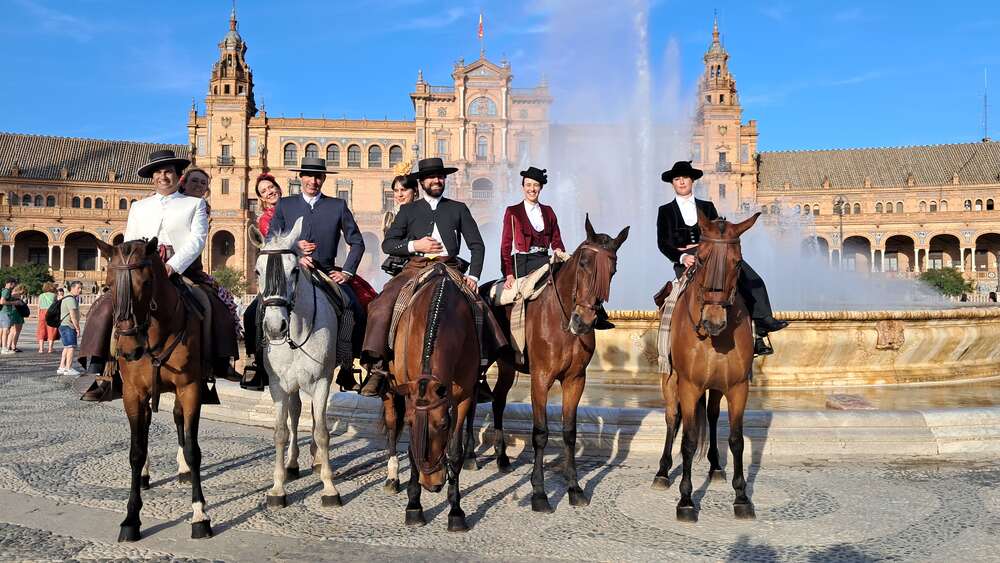
The traditional male outfit is the traje corto: a short jacket, high-waisted trousers, riding boots, and a sombrero cordobés, which is the wide-brimmed hat.
It is a handsome look, and you’ll see it on horsemen parading through the fairground during the day.
Prices for a full traje corto run from around €150 to €300 for hire, and it is less commonly worn by tourists than the women’s equivalent.
The traje corto: what it is and where to hire one
The traje corto is the equestrian-rooted male fair outfit. It consists of high-waisted, fitted trousers, usually in grey or beige, a short tailored jacket, riding boots, and the distinctive cordobés hat.
It is elegant and recognisably Sevillano. It looks fantastic when done properly, but it is not something most visitors need to feel pressured into.
If you want to hire one, the same shops that offer women’s dress hire often carry men’s options, so call ahead to confirm availability and sizing. The hat alone is worth hiring or buying if you want the full look.
Smart casual alternatives that work just as well
Most male tourists and many Sevillano men who do not own a traje corto wear smart casual. This works well, and nobody will bat an eyelid.
What works:
- Linen suit, which is an excellent choice for the heat
- Blazer and chinos with a button-up shirt
- Smart shirt and tailored trousers
- Loafers or leather-soled shoes
The general rule is: neat, smart, no sportswear.
A properly ironed shirt and decent trousers are entirely respectable for the fair. If in doubt, aim for summer wedding guest rather than holiday dinner. That is usually the easiest benchmark.
What men should definitely avoid
- Shorts, especially in the evenings
- Trainers or sports shoes
- Casual T-shirts
- Anything you’d wear to the beach
Daytime is more relaxed, but if you’re going in the evening, dress up. The evening fair feels noticeably smarter, even when it is crowded and messy.
The Shoe Question (More Important Than You’d Think)
Nobody warns you about this, and then the blisters start.
The Feria takes place on the real fairground, or el real, in the Los Remedios neighbourhood. You’ll come across a mix of tarmac areas, compacted sand and cobblestones.
But getting there from the city usually involves plenty of pavements and uneven surfaces, and you will be on your feet for hours.
This is the part people underestimate most, especially if they are more focused on getting the outfit right in photos.
Should you wear heels to Feria de Abril?
This is where I opt for comfort.
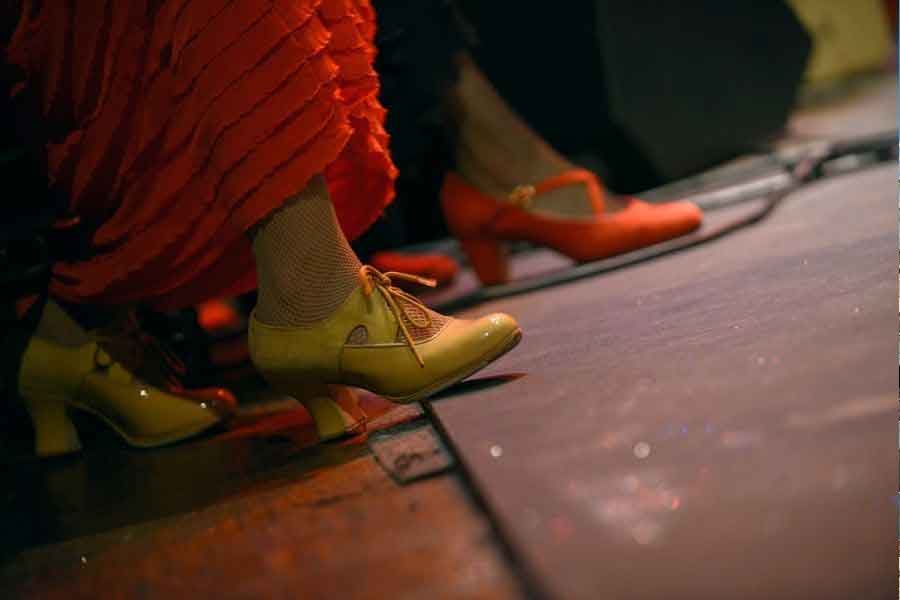
Flamenco shoes, which are the traditional heeled shoes with a stacked heel and a leather sole, look beautiful with a traje de flamenca. They are also not that comfortable unless you wear them regularly. If you have never walked in a heel like this for eight hours, do not start at the Feria.
I mean that sincerely. A pretty shoe that lasts forty minutes is not a good Feria shoe.
A block heel or a wedge is perfectly manageable and looks good. A stiletto will sink into the ground and destroy your evening.
Best shoe options for comfort and style
For women:
- Block-heeled shoes or boots, which are the most practical compromise between style and comfort
- Wedge heels, which are popular, stable, and work well with the dress
- High-heeled espadrilles, which are a traditional and very practical option, and usually much more comfortable than leather-soled flamenco shoes for long days
- Flat sandals, which are acceptable during the day and less so in the evenings
If I had to give one default recommendation for most visitors, it would be a block heel or a wedge that you already know you can walk in comfortably.
For men: leather-soled dress shoes or loafers are ideal. Avoid rubber-soled trainers, because they look wrong with the rest of the outfit.
The flat sandal swap: a widely used survival tactic
You’ll see Sevillanas doing this at around midnight: the heels come off, a pair of flat sandals appears from a bag, and life becomes significantly better.
There is no shame in this.
Honestly, it is one of the most sensible Feria decisions you can make. Pack a small pair of foldable flats if you’re planning a long night.
Practical Tips: Heat, Hair and Staying Comfortable
The Feria de Abril runs in late April, and it can be surprisingly warm during the day, regularly hitting 25 to 30°C (77 to 86°F) or higher.
A flamenco dress is also a lot of fabric. Thinking ahead about comfort will make the difference between enjoying yourself and suffering through it. The outfit is always much easier to manage when you plan for the practical side in advance, rather than treating it like a normal dressed-up evening.
Staying cool in a flamenco dress
Lightweight fabrics like cotton, cotton-blend, or light viscose are genuinely worth the extra cost if you’re buying.
Polyester and Lycra dresses are fine for a few hours, but can get uncomfortable in the afternoon heat. If you are going during the hottest part of the day, this matters much more than people realise.
If you’re hiring, you generally will not have much control over the fabric, but you can choose a lighter colour and a style without too many layers at the torso.
Drink water. Seville’s tap water is perfectly fine to drink.
This sounds obvious, but the combination of rebujito, which is the classic Feria drink made with sherry and lemonade, dancing, heat and all that fabric can dehydrate you faster than you expect.
It is very easy to feel fine, then suddenly not fine at all once the heat, alcohol and dancing catch up with you.
The abanico (fan): buy one, use it constantly
Buy a fan. This is not a souvenir suggestion; it is practical advice.
A hand fan, or abanico, is genuinely useful at the Feria, and you will see everyone using them. They are sold everywhere at the fair and in the city centre for a few euros.
It makes a real difference. It also helps you look less obviously like someone who has just realised how hot the Feria gets.
Hair and make-up: practical over perfect
Hair up is cooler and keeps the flower or hair accessory visible. A low bun or chignon works well with the traditional look and holds up better than a blowout after a few hours of dancing.
A hairstyle that survives heat and movement is worth more than one that only looks good when you first leave the house.
For make-up, the heat and dancing mean anything high-maintenance will need touching up. Keep it relatively simple and bring what you need for a refresh mid-evening.
Feria de Abril Dress Code FAQs
Can tourists wear a flamenco dress to the Feria de Abril?
Yes, absolutely. Wearing a traje de flamenca as a tourist or non-Spanish woman is entirely normal and welcomed. You do not need to be Sevillana to dress up for the fair. In fact, people usually appreciate the effort.
How much does it cost to hire a flamenco dress in Seville?
Hire packages from Seville rental shops usually start from around €100, depending on the quality of the dress and what is included. Most packages cover the dress and basic accessories. Book well in advance, because popular sizes go fast.
What do men wear to the Feria de Abril?
The traditional outfit is the traje corto: a short jacket, high-waisted trousers and a cordobés hat. In practice, most male tourists and many local men wear smart casual, such as a linen suit, blazer and chinos, or a button-up shirt with tailored trousers. Avoid shorts, trainers, and casual T-shirts in the evening.
Can I wear normal clothes to the Feria de Abril?
You can, and nobody will stop you. But most women at the fair, especially in the evenings, are in traditional dress. Smart casual is acceptable during the day. If you want to feel part of the fair rather than like you are watching from the sidelines, dressing up makes a real difference.
Where can I buy a flamenco dress in Seville?
The main shopping area for flamenco dresses is around Calle Sierpes and Calle Tetuan in the city centre, with further options in Triana. Prices range from under €100 for basic styles to €400 or more for high-quality or custom-made dresses. For the best choice and prices, shop in January or February before Feria season begins.
Have a Question?
Ask in The Seville Guide Community!
Connect with fellow travellers and locals, share tips, and get the latest insights on what’s happening in Seville.
Now You Know What to Wear, Plan the Rest of Feria
Now you know what to wear, the next step is planning the rest of your Feria experience.
Start with our full guide to Feria de Abril for everything you need to know before you go, from how the fair works to the best times to visit.
If getting into a private caseta is on your list, read our guide to how casetas work at Feria de Abril next. And if you are mapping out the rest of your trip, check out our other Seville guides for ideas on where to eat, what to book, and what else to do while you’re here.
Have a question? then don’t forget to join our free Facebook Group: Seville Things To Do and ask the community.
Want to discover more about Seville? then check out these other great articles to find out more.
Done-For-You Itineraries
- One Day in Seville Itinerary
- Two Days in Seville Itinerary
- Three Days in Seville Itinerary
- Five Days in Seville Itinerary
Things To See & Do In Seville
- Best Places to Watch Flamenco in Seville
- 21 Great Things to Do in Seville
- 18 Must-See Galleries and Museums in Seville
- Best Time to Visit Alcazar of Seville
- Things to Do in Seville for Free
- Best Artisan and Flea Markets in Seville
- 23 Best Day Trips From Seville
- Where’s The Nearest Beach to Seville? [Within a 2-Hour Drive]
- 34 Instagram Spots in Seville [+ Photo Location Map]
Food & Drink in Seville
- Eat Your Way Around Seville’s Top Food Markets
- Discover the Best Tapas in Triana Neighbourhood
- The Best Flamenco and Tapas Tour in Seville
- Can You Drink Tap Water in Seville?
- Where to Find the Best Breakfast in Seville
- Where to Find the Best Coffee in Seville
Seville Travel Tips
- How To Survive Seville In Summer
- Things to Do in Seville in the Rain
- What to Wear to Seville Cathedral
- What Is Seville Famous For?
- How Many Days in Seville Do You Really Need?
- How to get from Seville Airport to the City Centre
- Where to Stay in Seville, Spain: Best Neighbourhoods
- Why Visit Seville? 15 Reasons to Visit Seville