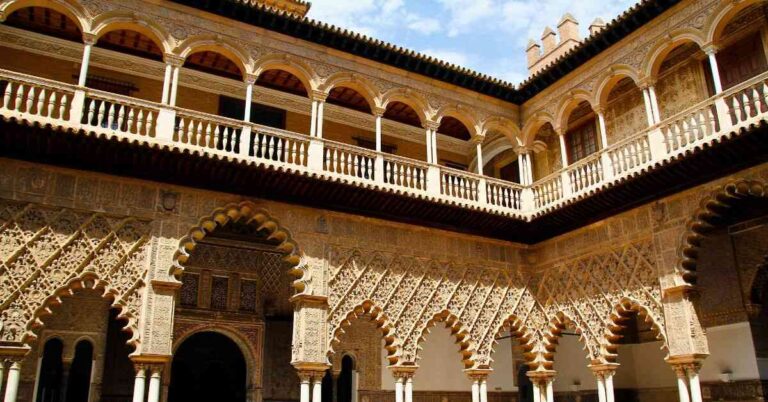
Inside the Real Alcazar of Seville: The Complete Section-by-Section Guide
So, you’ve decided to visit, but you’re not quite sure what’s inside the Real Alcazar of Seville, and how to make the most of your time here.
Most first-time visitors see three or four rooms, spend most of their time in the main courtyard, and walk straight past two of the most interesting spaces in the palace without knowing it.
One is over 200 years older than everything else in the Alcazar. The other drops several degrees in temperature the moment you walk in.
I live in Seville. I’ve visited the Alcazar in every season, at every time of day, and for the after-hours events most visitors never find out about. I still find something new each visit.
This guide covers every section inside the Real Alcazar: what to prioritise if time is tight, and the spots most people walk straight past.
On my first visit, I missed at least three of the spaces in this guide. I didn’t know they existed.
Some of the links on The Seville Guide are affiliate links. If you click through and make a purchase, we may earn a small commission. You can read our disclosure policy here. We appreciate your support, thank you.
What’s Inside the Real Alcazar of Seville: Quick Guide
- The Mudéjar Palace of Don Pedro: The 14th-century centrepiece. The Patio de las Doncellas, Salón de Embajadores, and Patio de las Muñecas are all here.
- The Gothic Palace (Salones de Carlos V): A completely different architectural style running alongside the Mudéjar rooms. Often rushed through.
- The Admiral’s Quarters: Contains the Virgin of the Navigators, one of the oldest known paintings to reference Columbus. Most visitors walk straight past it.
- The Gardens: Formal and wilder sections, the Mercury Pond, a maze, and the Galería del Grutesco walkway. Allow 45 minutes minimum.
- The Baños de Doña María de Padilla: Underground cisterns beneath the gardens with a significant temperature drop. The entrance is easy to miss entirely.
- Cuarto Real Alto: The working royal apartments, available via a separate guided tour at €21. Not essential for most first visits, but worth adding if you want to see the living palace.
If you have under 2 hours: Patio de las Doncellas, Salón de Embajadores, and at least a walk through the gardens.
Have a Question?
Ask in The Seville Guide Community!
Connect with fellow travellers and locals, share tips, and get the latest insights on what’s happening in Seville.
Getting Inside the Real Alcazar of Seville
The main entrance is the Puerta del León: a 19th-century tiled mural of a crowned lion above the gate, set into the outer wall of the Alcazar. It’s a decent photograph and the last moment of calm before the courtyard inside fills up.
Through the gate is the Patio del León, the first open courtyard.
Most people head straight ahead towards the Patio de la Montería and the main palace. Before you do that, take the left fork. It leads to the Patio del Yeso, the oldest surviving part of the Alcazar.
If you skip it now and plan to come back, you probably won’t. Most people don’t.
The route broadly runs: Admiral’s Quarters first, then the Mudéjar Palace (Patio de las Doncellas, Salón de Embajadores, and the rooms off it), then the Gothic Palace, then out to the gardens.

Easy to Miss
The Patio del Yeso is a short spur right at the start. Take the left fork before you do anything else. The Baños de Doña María de Padilla are underneath the gardens, near the Gothic Palace end. Budget for both, or you’ll miss them.
The Alcazar is not a single building. It’s a complex of palaces, courtyards, and gardens built up over more than a thousand years.
You turn a corner and move from 12th-century plasterwork to Renaissance ceilings to 20th-century garden redesigns. It’s layered in a way you have to pay attention to.
The Spanish royal family still use the upper apartments when they visit Seville. It’s a working palace that happens to be open to the public.
Large bags and backpacks must go in a locker at the entrance (€1, bring a coin). Tripods are not permitted.
Good to know
Alcazar tickets sell out regularly, especially in spring and autumn. Book as soon as your dates are confirmed. If you’ve left it too late, here’s what you can try.
Real Alcazar of Seville Map

Inside the Admiral’s Quarters (Cuarto del Almirante)
Before reaching the main palaces, you pass through the Admiral’s Quarters: a section built in the early 16th century for the administration of Spanish voyages to the Americas.
The most important room here is the Sala de Audiencias.
It contains a 16th-century altarpiece depicting the Virgin of the Navigators, one of the oldest known paintings to reference Christopher Columbus and the Americas. Columbus himself may appear in it, though historians debate which figure represents him.
I walked straight past it on my first visit. Most visitors move through this section too quickly to notice it properly. Stop here for a few minutes.
There’s also a permanent collection of the distinctive blue and white Triana ceramics Seville is known for, which most people don’t register as worth slowing down for. It is.
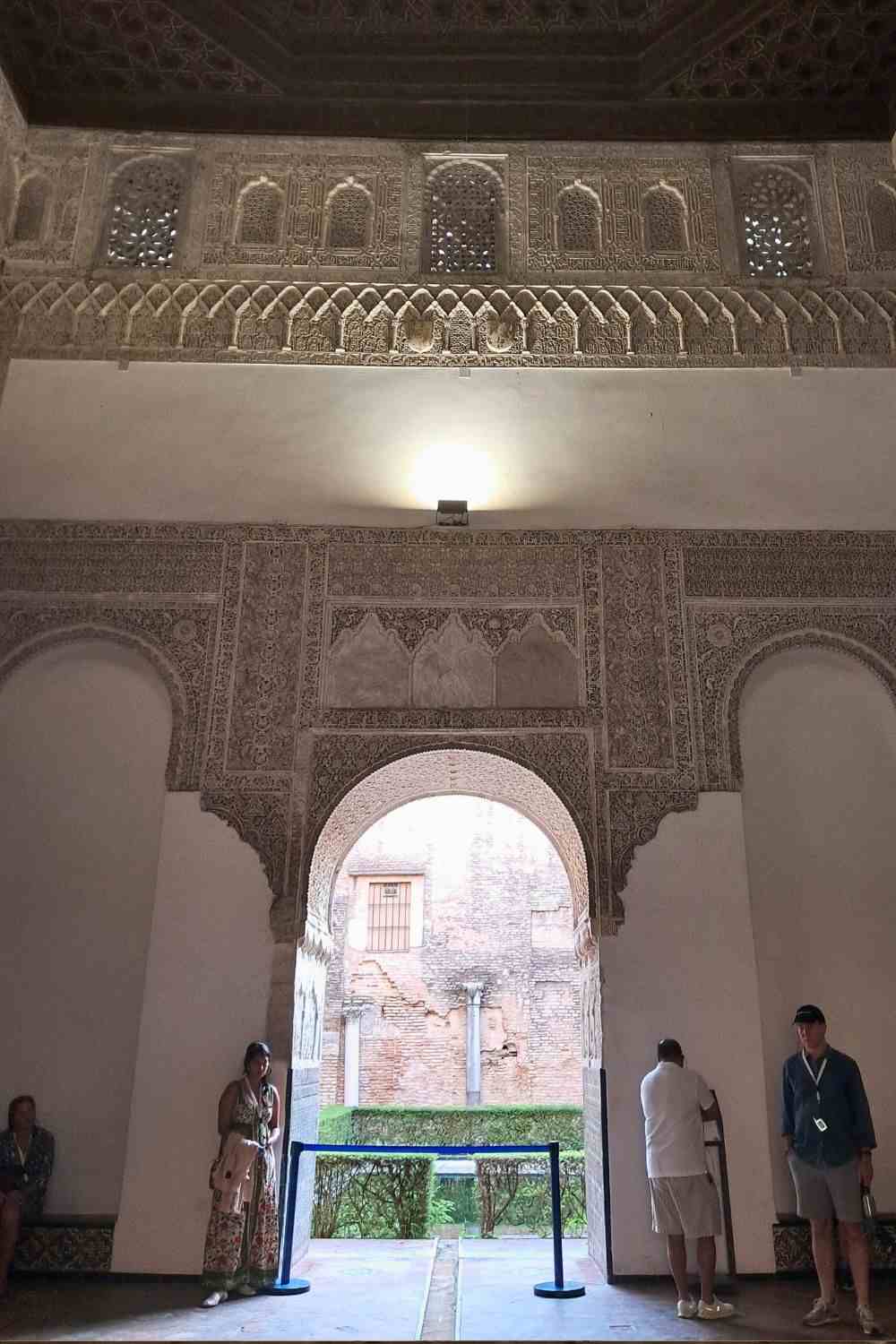

Inside the Mudéjar Palace of Don Pedro
This is the centrepiece of the Alcazar: the section most people come to see, built for King Pedro I of Castile in the mid-14th century using craftsmen from Granada and Toledo.
It’s why the architecture feels so closely related to the Alhambra.
The Patio de las Doncellas
The most photographed courtyard in the Alcazar: a long central pool flanked by carved arches and detailed tilework.
At peak times, it’s also one of the most crowded spots in Seville.
I’ve been here when the famous reflection spot was completely blocked, selfie sticks everywhere, tour groups four deep around the water. You simply can’t stop and look properly.
Go at 9:30 am when the gates open. The morning light comes in from the east. The pool is perfectly still.
How to Visit the Alcazar without the crowds
The early-access Alone in the Alcazar tour gets you into this courtyard a full hour before anyone else arrives. I’ve been twice. It looks completely different and is totally worth the extra price for the experience.
One detail most people walk past: the sunken garden beds flanking the pool were paved over after Pedro I’s death and stayed that way for centuries.
Archaeologists only rediscovered them in the early 2000s and restored them to their original depth. The courtyard you’re looking at is more complete now than it’s been in five hundred years.
Several of the Alcazar’s most photographed spaces appeared in Game of Thrones, including the Patio de las Doncellas. In fact, there are dozens of GoT filming locations in the Alcazar and around Seville.
Alcazar of Seville VIP Access

Alone in the Alcázar Exclusive Entry
Get exclusive early access to Seville’s Royal Alcázar before it opens to the public. Skip the queues, explore with a small group, and see the palace and gardens with an expert English-speaking guide.
- Early access before opening
- Skip-the-line Alcázar tickets included
- Expert local guide
- Royal Alcázar and gardens
- Small group experience
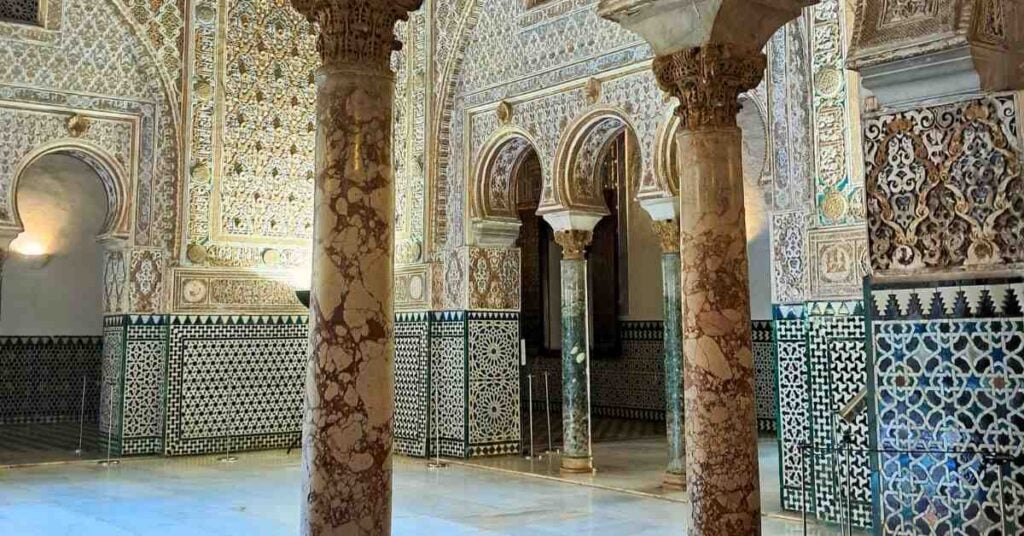
The Salón de Embajadores (Hall of Ambassadors)
Walk in. Look up. That’s all you need to do first.
The gilded dome above you is made from hundreds of interlocking wooden pieces, carved and covered in gold. Every time you look back up, you notice something new. The walls around it are covered in carved plasterwork from floor to ceiling.
This is the most spectacular room in Seville. Most people stop mid-sentence when they walk through the door.
I’ve been in here when the guide’s voice was the only sound in the room, and at 11 am in April with the space buzzing with cameras and conversation.
The dome looks different when you can stand still and look at it. In near-silence, early in the morning, it’s a completely different experience from walking in behind a tour group with everyone talking over each other.
Don’t rush through it.

The Patio de las Muñecas (Courtyard of the Dolls)
A smaller, more intimate courtyard off the main rooms. The name comes from tiny carved faces hidden in the decorative arches. Most people walk through without ever knowing they’re there.
Finding them takes a few minutes of looking. They’re easier to spot if you know where to look: in the spandrels on the lower arcade, at roughly eye height. Worth the search.
This was the private, domestic heart of the palace rather than the ceremonial one. Quieter and less photographed, which is part of what makes it worth stopping in.
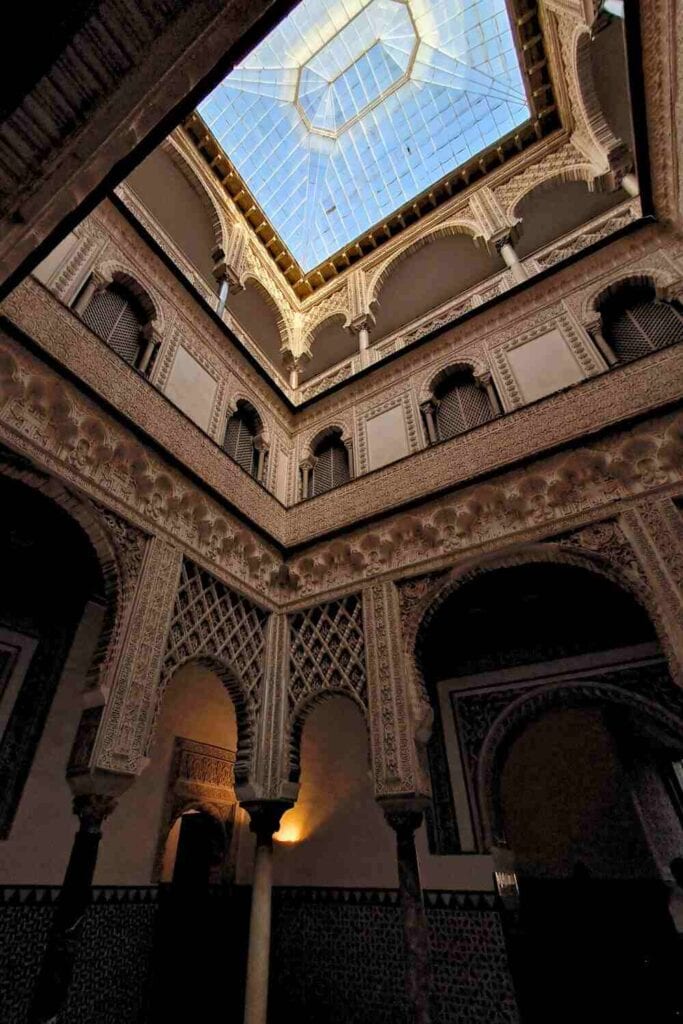
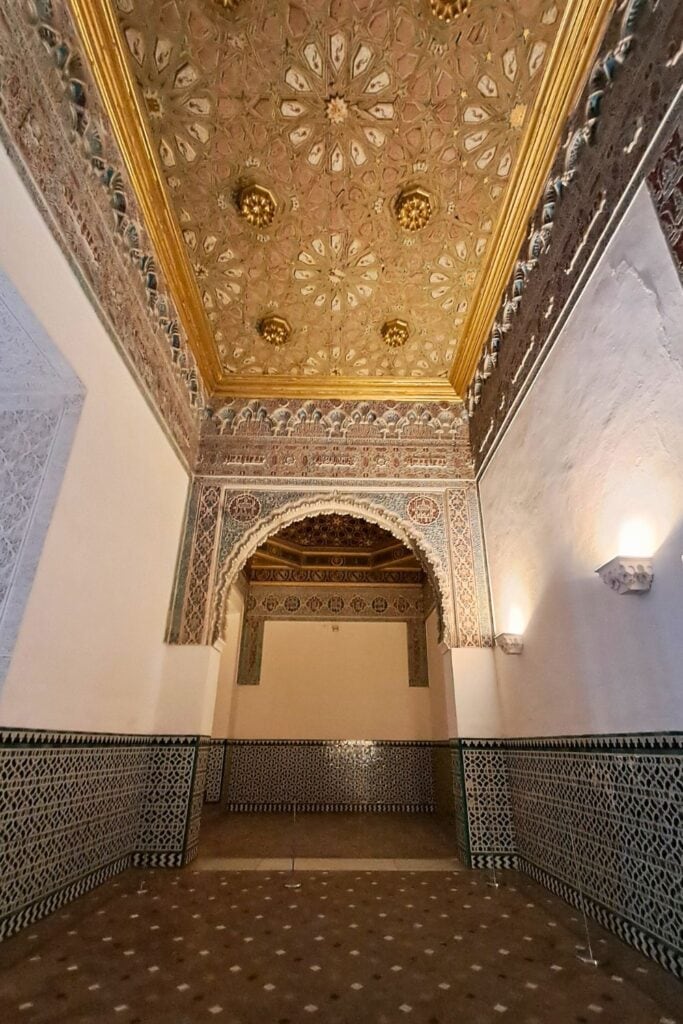
The Cuarto del Príncipe (Royal Bedroom)
Off the Patio de las Muñecas, the Cuarto del Príncipe is the private royal bedroom.
There’s no furniture inside now, but the wooden ceiling is the reason to stop: geometric, detailed, made to look like a night sky.
Most people have walked past it before they realise what they missed. They’ve just come through the Salón de Embajadores and stopped noticing ceilings.
This one is worth looking up for.
Inside the Gothic Palace (Salones de Carlos V)
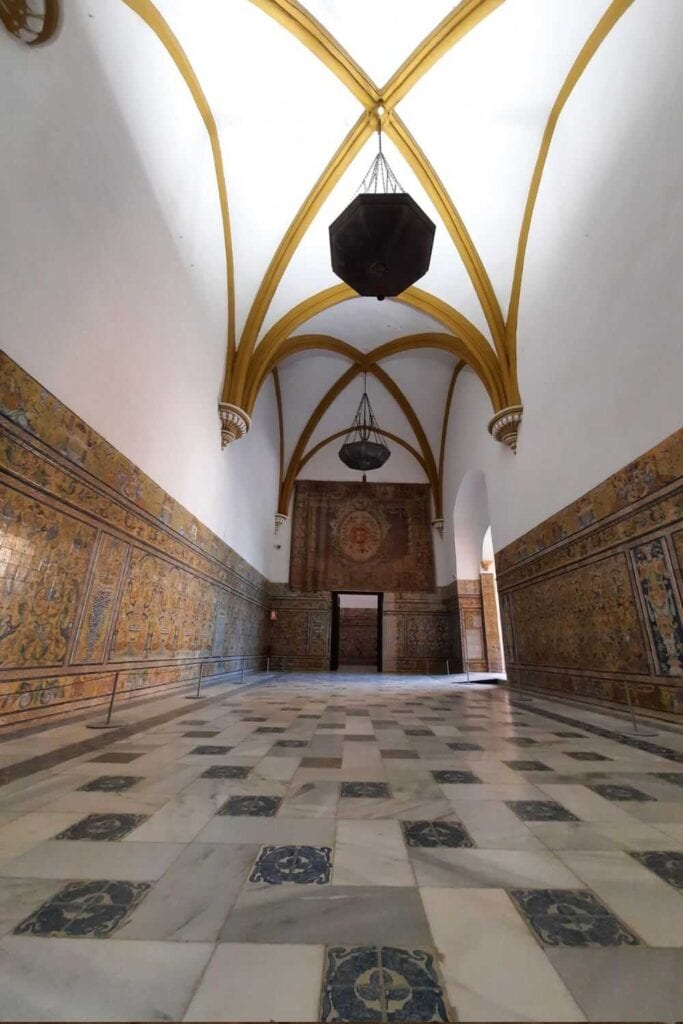
The Gothic Palace sits alongside the Mudéjar Palace in a completely different style: vaulted stone ceilings, Renaissance-era decoration, and one room most visitors move through too quickly.
The Salón de los Tapices contains a series of enormous Flemish tapestries depicting Carlos V’s military campaign in Tunis. Floor-to-ceiling, jewel-coloured, detailed. The scale stops you mid-step if you let it.
The shift in atmosphere is the thing worth sitting with.
You’ve just come from carved plasterwork and gilded domes, and suddenly you’re in something colder, larger, more formally European. Same complex, different century, different world entirely.
The Gothic Palace also contains a Chapel with an altarpiece of the Virgin de la Antigua, a copy of the original in Seville Cathedral. The ribbed yellow ceiling is worth a look up.
Most visitors move through this entire section quickly to get back to the Mudéjar rooms. I did too, for several visits.
The tapestries are what eventually made me stop. The scale of them doesn’t register from the doorway. You have to step in to get it. Give it five minutes. The contrast is the point.
The Patio del Yeso: The Oldest Space Inside the Real Alcazar
Easy to miss, and most visitors do. This is one of the oldest parts of the Alcazar still standing, dating from the 12th-century Almohad period, predating the Mudéjar Palace by around 200 years.
The carved plasterwork here is the original. Restored, but what you’re looking at is medieval. There’s something different about standing in front of work that old and understanding that it came before everything else you’ve just walked through.
Look for the signs pointing to it from the Patio del León on your way in. Five minutes to find, worth every one.

The Alcazar Gardens: What to See (and Hear)
The gardens take up more of the Alcazar than most visitors realise.
Many people spend all their time in the palace rooms and arrive at the gardens with fifteen minutes left. They deserve at least an hour on their own.
They’re not laid out in a single style.
Different sections were designed in different periods: formal Renaissance gardens with clipped hedges and stone fountains, wilder areas with orange trees and winding paths.
The Mercury Pond is the large central pool on the main garden path, worth a photograph in the morning before the light shifts.
The hedge maze is near the south of the gardens. It’s not difficult to get through, but it tends to be quieter than the main paths and is easy to walk past without noticing the entrance.
Keep your eyes open for peacocks. Several of them live in the gardens and tend to turn up in the quieter, more wooded sections in the afternoon. You’re likely to hear them before you see them.
The Galería del Grutesco
An elevated walkway along the top of the old Moorish wall in a central part of the gardens. One of the best viewpoints in the complex and a surprisingly quiet spot in the whole Alcazar. Most visitors have already started heading for the exit by the time they reach it.
Don’t be one of them.
The Fuente de la Fama (Fountain of Fame)
Keep your ears open as you walk the gardens.
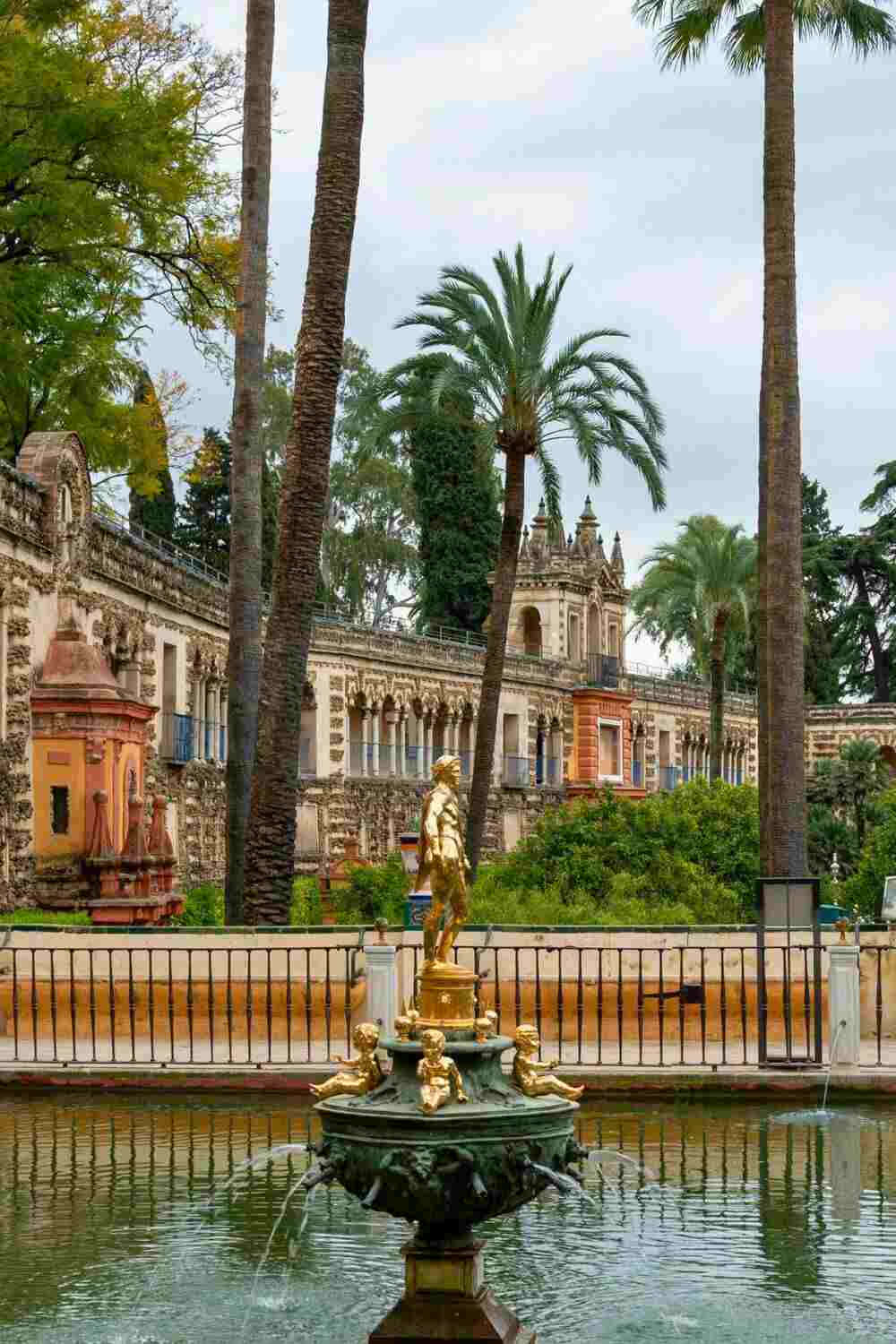
On the hour, a brief burst of music comes from this 17th-century hydraulic organ fountain: water pressure forces air through pipes inside the base, making the bronze figure above appear to play a trumpet. It runs slightly late, usually around five minutes after the hour.
It’s one of only three such mechanisms left in Europe. Still works. Discovering it by accident is one of the small pleasures of the gardens.
You’ll know you’re at the right place because there are rows of benches in front of the foundation.
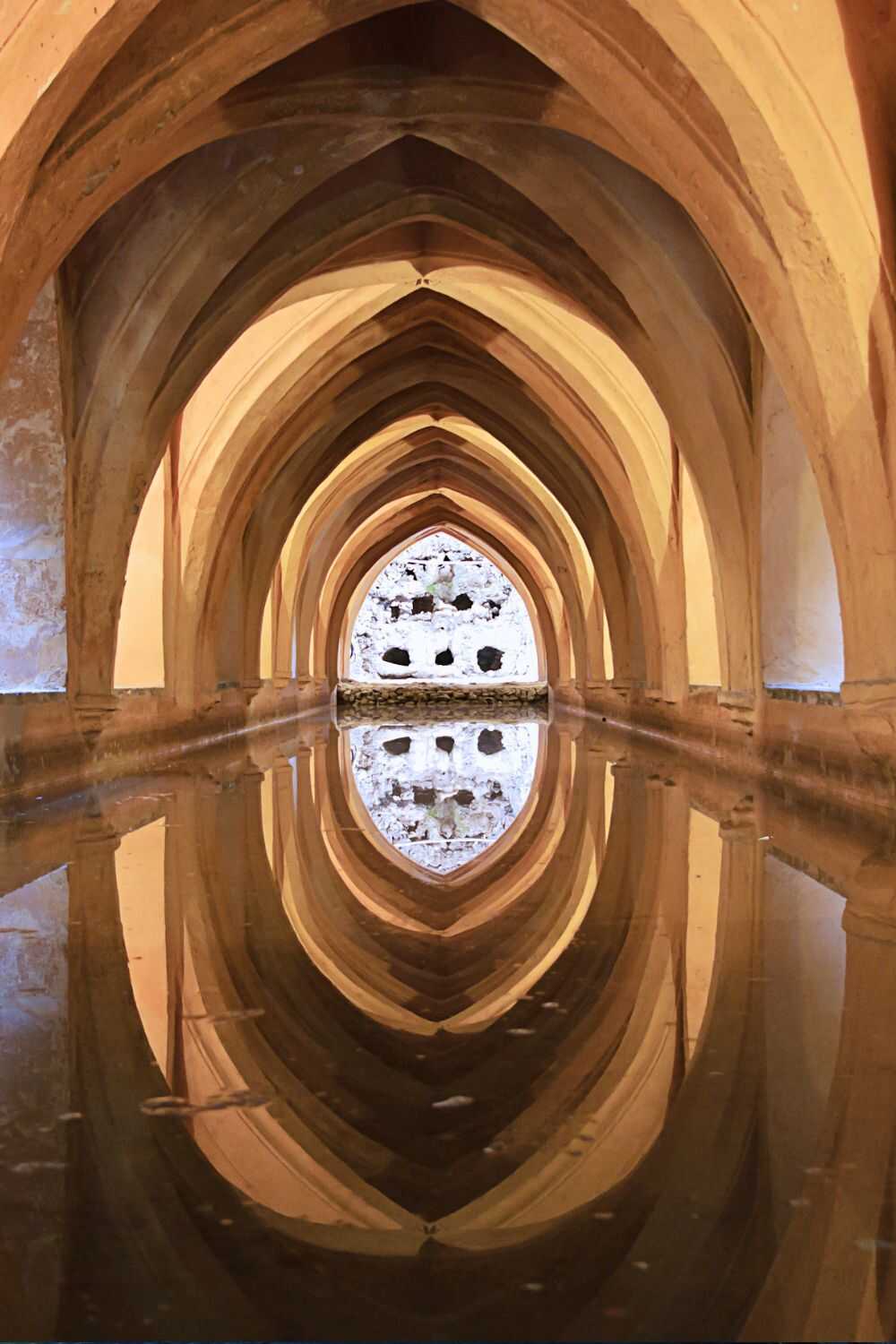
The Baños de Doña María de Padilla: The Most Overlooked Space in the Alcázar
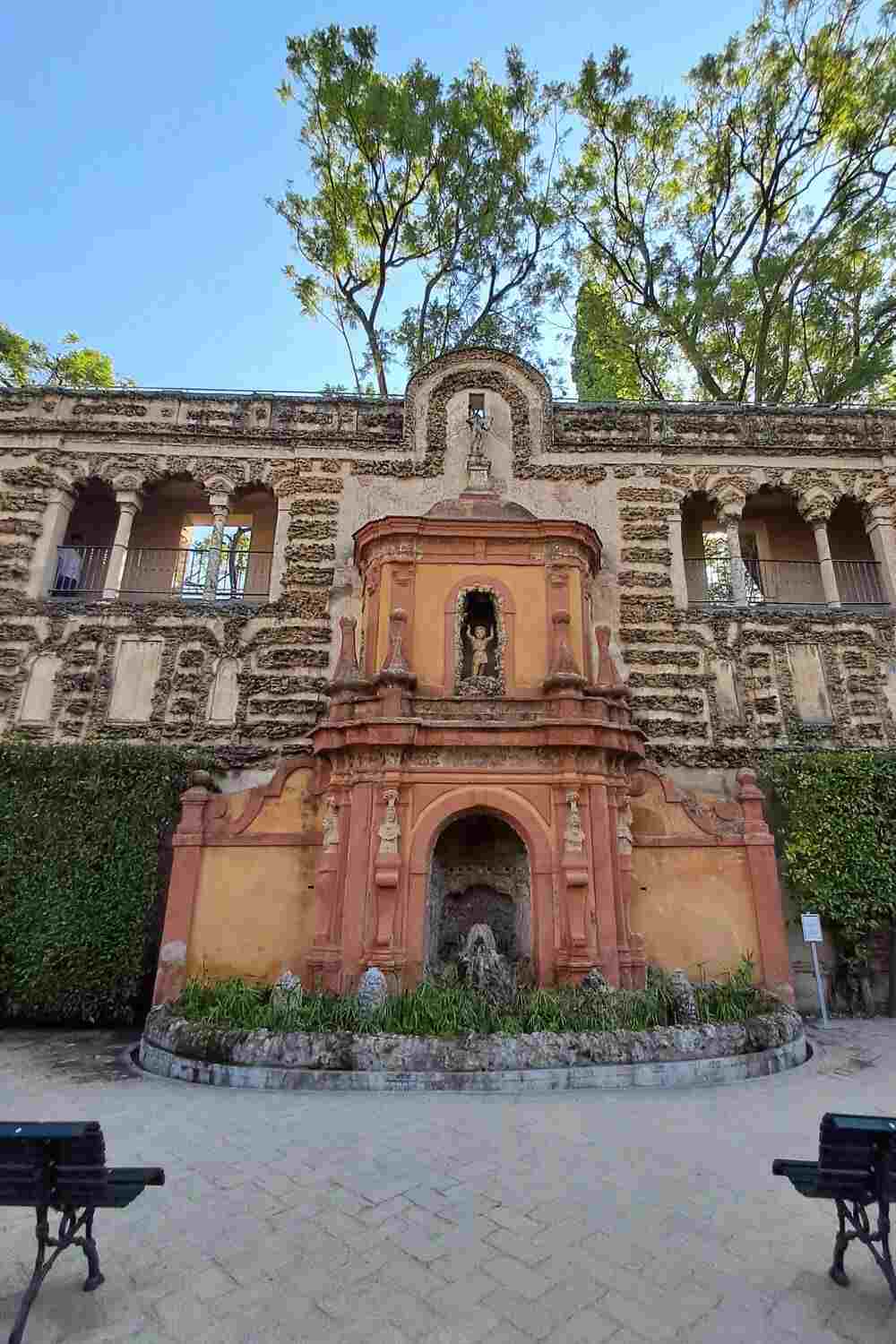
Underground vaulted cisterns beneath the complex, named after Pedro I’s mistress.
The entrance is not signposted in any overly obvious way: a small alcove off the gardens, then a ramp and steps leading down.
Once you’re inside, the temperature drops completely. It’s especially a highlight in the inferno summer heat, when the palace is hot and the gardens are in full sun; the cool air hits you the moment you step in. You understand exactly why these rooms existed.
The architecture is completely unlike anything else in the Alcazar: low brick vaulting, still water, filtered light.
The Baths also appeared in Game of Thrones seasons 5 and 6, as the Water Gardens of Dorne. Without a crowd blocking the sight lines, the setting is clear.
The entrance is near the garden side of the Gothic Palace. Budget five minutes to find it.
The Cuarto Real Alto: The Alcazar’s Working Royal Apartments
The upper floor contains the private apartments still used by the royal family when they visit Seville.
They are only accessible via a separate guided tour at €21 rather than the standard €15.50. Tours run at set times with limited capacity. Book the slot when you buy your general admission ticket, not on the day.
The rooms are furnished and in active use. You’re not looking at a preserved historic interior. You’re looking at rooms someone actually sleeps in. Photos are not permitted on the tour.
Worth adding if you want that layer. Not essential for a first visit.
Why the First Hour of the Day Changes the Whole Visit
My preferred way to visit the Alcazar is to be one of the first people through the gate at 9:30 am.
The Patio de las Doncellas, with no one in it, looks like something from a different century. The Salón de Embajadores in near-silence, with nothing between you and that dome, is a different experience from walking in behind a tour group.
By 10 am, the crowds build noticeably. By 11 am, the main rooms are insanely busy.
If you want the ultimate experience, there’s an early-access tour that gets you in a full hour before the gates open to the public. I’ve done it twice, and the Patio de las Doncellas alone is worth it. Completely empty. Perfect morning light. No one in your shot.
You can read our detailed guide on if the Alone in the Alcazar early-access tour is worth the price here.
Alcazar of Seville VIP Access

Alone in the Alcázar Exclusive Entry
Get exclusive early access to Seville’s Royal Alcázar before it opens to the public. Skip the queues, explore with a small group, and see the palace and gardens with an expert English-speaking guide.
- Early access before opening
- Skip-the-line Alcázar tickets included
- Expert local guide
- Royal Alcázar and gardens
- Small group experience
Alcazar Seville Special Events: What to Know Before You Visit
The Alcazar runs events outside normal hours that most visitors never find out about. Worth planning around if you’re here at the right time.
Summer concerts: On summer evenings, the gardens open for live music after the day visitors have gone home. I saw a band called SWAMP, a folk group doing covers of 70s and 80s American classics, and it was one of the best nights I’ve had in Seville. The temperature had dropped, the gardens were quiet, and the setting was extraordinary.
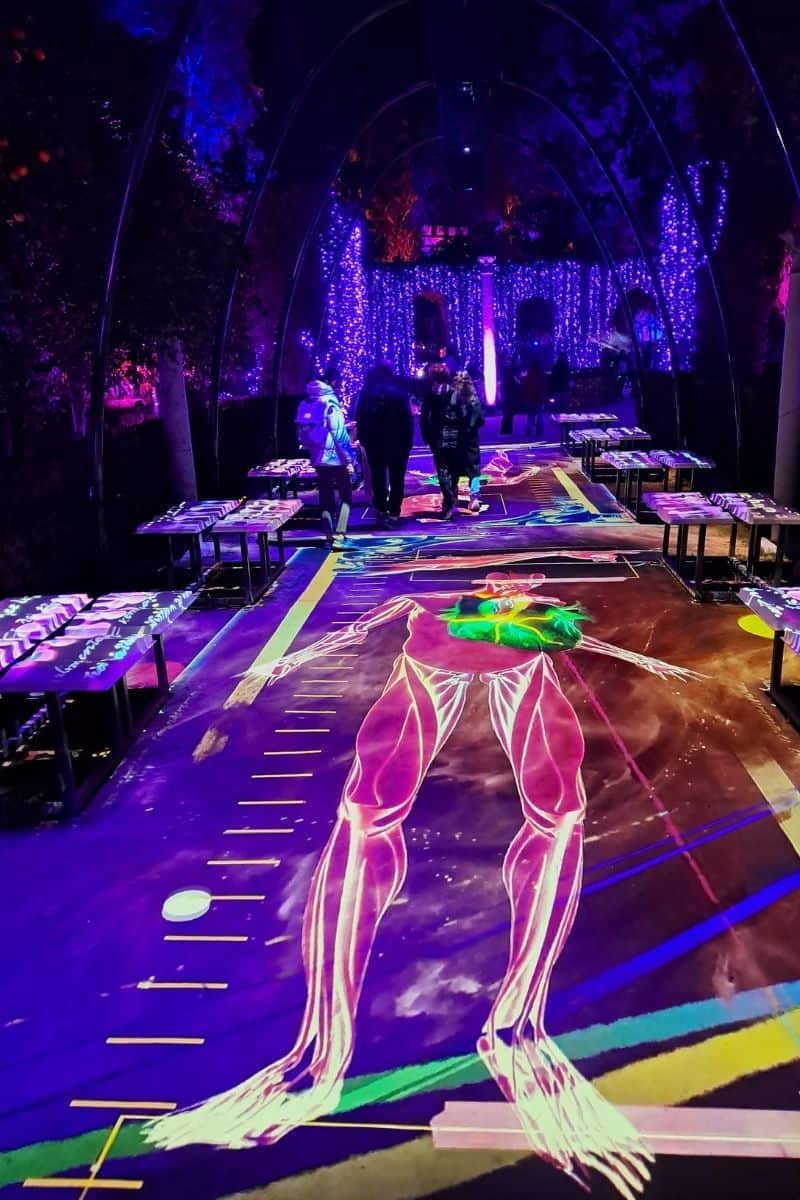
Winter illuminations: An after-dark route through the gardens with light and sound installations, projections, and fog machines. I watched horses in laser light galloping through mist, and faces projected onto the old stone walls to music in previous Naturaleza Encendida events.
Both events are popular. Check the official Alcazar website before your trip and book as early as possible.
Inside the Alcázar of Seville: FAQs
What is the most impressive room inside the Alcazar of Seville?
The Salón de Embajadores (Hall of Ambassadors). The gilded wooden dome is made from hundreds of interlocking pieces and gives you a sore neck from staring up at it. And you will. It’s the room that surprises people most, including those who’ve already visited the Alhambra.
How long should you spend inside the Alcazar of Seville?
Allow a minimum of 2.5 hours. Three hours is more comfortable if you want to cover the main rooms without rushing and still spend proper time in the gardens. The most common mistake is underestimating the gardens and running out of time.
Is the Cuarto Real Alto worth the extra cost?
For most visitors, general admission is enough. The Cuarto Real Alto adds around €5.50 and covers the private royal apartments, furnished and in active use. If you want to see the living palace rather than just the historic one, it’s worth adding. Book the slot when you buy your main ticket.
Can you photograph inside the Alcazar of Seville?
Photography is allowed throughout all general admission sections, including all palace rooms and gardens. The Cuarto Real Alto tour does not permit photos. For the best conditions, arrive at 9:30 am. The Patio de las Doncellas is much easier to photograph before the crowds arrive.
Is entry to the Real Alcazar of Seville ever free?
On Mondays, entry is free for all visitors. The free window is 4–5 pm from October to March, and 6–7 pm from April to September. There is a €1 advance booking fee, and places are limited. Check alcazarsevilla.org before your visit.
Planning What to See Inside the Alcazar of Seville? Start Here
The Alcazar is better in person than it sounds on paper. If you’re still sorting the practicalities, these three will cover most of what you need.
- Why the Alone in the Alcazar early-access tour is worth
- Alcazar Seville tickets sold out? Here’s what to do.
- Best time to visit the Alcazar of Seville
Have a question? then don’t forget to join our free Facebook Group: Seville Things To Do and ask the community.
Want to discover more about Seville? then check out these other great articles to find out more.
Done-For-You Itineraries
- One Day in Seville Itinerary
- Two Days in Seville Itinerary
- Three Days in Seville Itinerary
- Five Days in Seville Itinerary
Things To See & Do In Seville
- Best Places to Watch Flamenco in Seville
- 21 Great Things to Do in Seville
- 18 Must-See Galleries and Museums in Seville
- Best Time to Visit Alcazar of Seville
- Things to Do in Seville for Free
- Best Artisan and Flea Markets in Seville
- 23 Best Day Trips From Seville
- Where’s The Nearest Beach to Seville? [Within a 2-Hour Drive]
- 34 Instagram Spots in Seville [+ Photo Location Map]
Food & Drink in Seville
- Eat Your Way Around Seville’s Top Food Markets
- Discover the Best Tapas in Triana Neighbourhood
- The Best Flamenco and Tapas Tour in Seville
- Can You Drink Tap Water in Seville?
- Where to Find the Best Breakfast in Seville
- Where to Find the Best Coffee in Seville
Seville Travel Tips
- How To Survive Seville In Summer
- Things to Do in Seville in the Rain
- What to Wear to Seville Cathedral
- What Is Seville Famous For?
- How Many Days in Seville Do You Really Need?
- How to get from Seville Airport to the City Centre
- Where to Stay in Seville, Spain: Best Neighbourhoods
- Why Visit Seville? 15 Reasons to Visit Seville