
Things to Do in Seville: 22 Picks From a Local
There are enough things to do in Seville to fill an entire week. Most visitors only have two or three days, which means every choice counts.
I live in Seville. People message me before every trip asking what’s actually worth their time, what’s overrated, and what they’ll regret missing.
This list is the answer I give them.
You’ll find the main Seville attractions here: the Alcázar, the Cathedral, Plaza de España. But also the neighbourhood most first-timers never cross the river for, the bars worth fighting for a seat in, and a few things that only make sense at a specific time of year.
Including the Monday morning trick that gets you into the Alcázar without the crowds, and the neighbourhood most people only discover on their second visit.
Some of the links on The Seville Guide are affiliate links. If you click through and make a purchase, we may earn a small commission. You can read our disclosure policy here. We appreciate your support, thank you.
Seville Must-Sees
Short on time? Here are the six things worth prioritising above everything else:
- The Royal Alcázar: book ahead, weeks in advance if possible. This is the one non-negotiable.
- Seville Cathedral and La Giralda: one ticket covers both. Don’t skip the tower.
- Barrio Santa Cruz: walk without a plan. Avoid Calle Mateos Gago and go into the smaller streets.
- Triana: cross the bridge. Most first-timers skip it. Give it a half-day.
- A flamenco show: Casa del Flamenco for a proper seated show; La Carbonería if you want it free.
- Las Setas: go late afternoon, stay for the Aurora light show after dark.
Everything else on this list is worth your time if you have it. But those six will give you Seville.
Have a Question?
Ask in The Seville Guide Community!
Connect with fellow travellers and locals, share tips, and get the latest insights on what’s happening in Seville.
The Best Things to Do in Seville
1. The Royal Alcázar
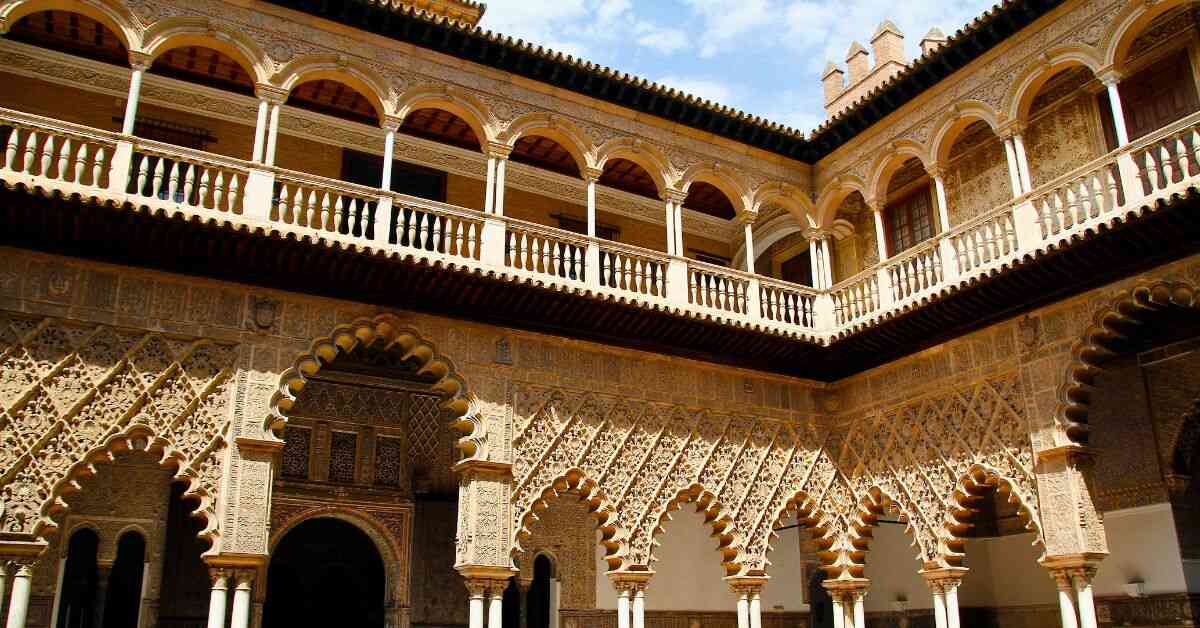
The Alcázar is the one thing in Seville you cannot leave without seeing, and the one thing you absolutely cannot turn up to without booking.
This UNESCO-listed royal palace has been in continuous use since the 10th century. It’s not a museum replica of somewhere people used to live. Spanish royals still use it when they’re in the city, which is part of what makes it remarkable.
The mudéjar architecture inside is extraordinary: tiled courtyards, carved stucco ceilings, and gardens that go on longer than you’d expect. Get the earliest entry slot to the Alcazar and allow at least two hours. The gardens alone can take an hour if you slow down properly.
Planning your Alcázar visit? Our guide to the best time to visit the Alcázar of Seville covers queues, crowd patterns, and what to skip inside.

Insider tip
For general tickets, Monday mornings are the quietest by some distance. If your schedule has any flexibility at all, that’s when to book. For the ultimate crowd-free experience, opt for the Alone in the Alcazar pre-entry tour.

2. Seville Cathedral and La Giralda
The Seville Cathedral is one of the largest Gothic cathedrals in the world and contains the tomb of Christopher Columbus. That’s usually enough to get people through the door.
What surprises most visitors is how overwhelming the interior is. The scale doesn’t hit you from outside. Standing underneath that vaulted ceiling, it does.
La Giralda, the bell tower, is on the same ticket. You climb it via a series of ramps rather than stairs, which was deliberately designed so Moorish rulers could ride their horses to the top. Worth knowing if you’re travelling with anyone who struggles with steps.
The rooftop tour is a separate ticket and a separate experience entirely. You get access to parts of the cathedral roof with views across to the Alcázar and the old town. In spring or autumn, it’s worth the extra. In July, in full sun, probably not.
Before you visit: Read our guide on what to wear to Seville Cathedral. There is a dress code, and they do enforce it at the door.
Good To Know
Buy your Cathedral ticket online in advance. The queue to buy on the day can run well over an hour between 10 am and 1 pm.

3. Plaza de España
Free to enter. Very large. And one of the most impressive public spaces in Spain.
Plaza de España was built in 1929 for the Ibero-American Exposition. The semi-circular layout, the tiled alcoves representing each Spanish province, the canal running through the middle with rowing boats for hire: it holds up.
It’s one of those Seville landmarks that exceeds the photos.
Go early morning if you want photographs without crowds. By 11 am, it’s busy. By 2 pm in summer, it’s full.
The rowing boats are worth doing if you’ve got the time. And if you’re with anyone who needs convincing this is worth the walk, it’s appeared in Star Wars: Attack of the Clones and several other films.

4. Barrio Santa Cruz
Barrio Santa Cruz is my neighbourhood. It’s what people picture when they think of Seville: whitewashed walls, orange trees, narrow lanes, and hidden courtyards behind heavy wooden doors.
The trick is to walk without a plan. The streets don’t make sense on a map, and that’s the point. You’ll find small restaurants, tablaos, and bars tucked into corners you’d never reach following a route.
If you want to learn more about Seville’s oldest neighbourhood, then it’s worth doing a guided tour of Barrio Santa Cruz with a local guide. They’ll tell you about the history and legends here; there are lots!
Calle Mateos Gago is the main drag and almost entirely tourist traps. Go left off it into the smaller streets instead.
Best time to be here: late afternoon, when the light softens and the neighbourhood fills up with locals heading out for the evening.
More on the neighbourhood
Our Barrio Santa Cruz guide covers where to walk, what to look for, and where to eat without paying tourist prices.

5. Triana
Cross the Guadalquivir via the Puente de Isabel II, and you’re in Triana, the neighbourhood that people who’ve been to Seville more than once always say they should have spent more time in.
Triana has its own identity. It has the deepest flamenco roots of any neighbourhood in the city, a thriving ceramics tradition, and the best market in Seville.
The riverfront stretch along Calle Betis is worth walking at any time of day. The bars and restaurants here have direct views across to the Torre del Oro and the old city skyline.
Give Triana a half-day at minimum: a morning at the market, lunch on Betis, and an afternoon in the ceramics shops along Calle Alfarería.
Insider Tip
The ceramic tiles you see on buildings all over the city? A large number were made in Triana. The Centro Cerámica Triana museum sits inside a former pottery factory and is surprisingly interesting for a museum about tiles.

6. Las Setas (Metropol Parasol)
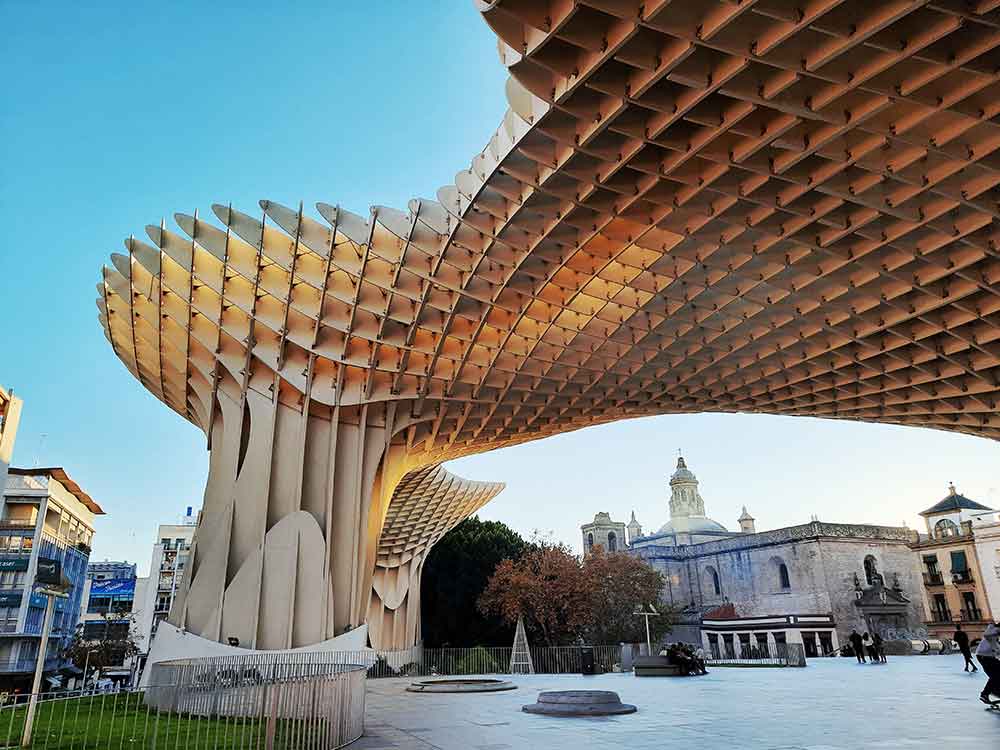
Las Setas is the giant wooden structure in Plaza de la Encarnación that looks like it came from somewhere else entirely. The locals named it the mushrooms. It’s the largest wooden structure in the world, and nothing else in Seville looks like it.
Walking the elevated walkway on top is the best spot in the city to watch the sunset, and the way to do it properly is to block out two hours rather than going up and coming straight back down.
The walkway is a figure-of-eight loop. Go around once in the late afternoon while it’s still light. Go around again as the sun drops. Stay for the Aurora light show after dark and do a third loop.
The lights shift through different colours as the structure itself becomes the display. You get three completely different versions of the same view for the price of one ticket.
Is it worth it? Honestly, there’s not much to see in the traditional sightseeing sense. But the sunset over the Cathedral rooftops is something else, and the light show is better than you’d expect. Block the two hours. Do all three laps.
Don’t Miss
What most visitors miss is the Antiquarium underneath: a free Roman and Moorish archaeological site discovered during construction. It’s better than it sounds.
Flamenco, Culture and Guided Experiences
7. A Flamenco Show
Seville is where flamenco comes from. Seeing a live performance here is not the same as seeing one anywhere else. That said, not all shows are equal.
Casa de Flamenco or the Museo del Baile Flamenco are the ones I recommend first. It’s a small venue, close enough to the stage that you feel the footwork through the floor, and it sells out most nights. Book ahead.
For a free alternative, La Carbonería is a large bar in Santa Cruz with flamenco most evenings. It’s rougher, less predictable, and occasionally brilliant. Worth going for a drink alone if you’re in the area. Cash only.
Discover more about Flamenco in Seville
Our guide to the best flamenco in Seville covers the main tablaos, what to expect at each, and how to book. We also have a separate guide to free flamenco in Seville if you’d rather keep it cheap.

8. A Tapas Tour
A guided tapas tour sounds optional until you’ve done one. In three hours, you cover more ground than most people manage solo in two days, because you’re being taken to bars you’d never find on your own and told exactly what to order.
Seville has some of the best tapas in Spain. Knowing which bars and what to order takes local knowledge.
Devour Tours runs several guided food tours in the city. GetYourGuide also has a good selection, but having done both options several times, Devour was consistently good; the ones from GYG were a bit hit-and-miss.

See Seville’s Best Food Tours
Devour Tours is my top pick for small-group tapas tours in Seville. They work with small, traditional bars and family-run places that have been around for generations, which gives the tour a much more local feel. I found this a better fit than some GYG-listed tours, where a few of the restaurants felt more modern or connected to bigger chains.
9. Casa de Pilatos
Casa de Pilatos is a 16th-century palace blending Gothic, Renaissance, and mudéjar styles in a way that feels different from the Alcázar.
Less polished, less crowded, and one of the more interesting places to visit in Seville for architecture.
The ground floor and gardens are on one ticket. The upper floor, which contains the family’s private apartments, requires a separate guided tour available at set times. Check the website before you go.
The name has nothing to do with Pontius Pilate, despite what some guides claim.

10. Torre del Oro
The Torre del Oro (Tower of Gold) has stood on the riverbank since the 13th century, originally serving as a watchtower at the entrance to the city’s port.
Entry is free, though they ask for a donation towards the building’s upkeep. Go up. The views from the top across the Guadalquivir towards Triana are some of the best river views in the city.
The inside is narrow and a bit pokey, which is part of the charm. The maritime museum is small, and the exhibits won’t take long. The view from the top is the point.

11. Archivo General de Indias
The Archivo General de Indias sits between the Cathedral and the Alcázar. Most visitors walk past it several times without going in. That’s a mistake.
It’s free, and if you have 40 minutes to spare between the two big landmarks, this is where to spend them.
The archive holds millions of original documents from the Spanish colonial period: letters, maps, records, and items from the ships that made those voyages.
I love old maps and old cartography, and the collection here is extraordinary. Considering it costs nothing to walk in, it’s one of the best-value stops in the city.

12. Bellas Artes Museum
The Museo de Bellas Artes is one of the finest art museums in Spain. Free for EU citizens, a few euros for everyone else, and worth it either way.
It’s housed in a former convent, and the building is as impressive as the collection. The Murillo paintings take up most of the second floor. The ceiling fresco in the main hall is worth seeing on its own.
Allow 90 minutes if you’re interested in Spanish Golden Age painting. 45 minutes if you want to see the building and move on.
Either way, go.

Palaces, Parks and Museums
13. Palacio de las Dueñas
The Palacio de las Dueñas is a 15th-century aristocratic palace that stayed in private hands until recently. That history shows.
It feels less curated than the official tourist sites. More like somewhere people actually lived.
Hours vary throughout the year, so check before you go. Opening hours: summer (April to September) 10 am to 7 pm. Winter (October to March) 10 am to 6 pm.
The rooms are full of family portraits, period furniture, and objects that were here when the Duke of Alba’s family occupied the building.
The gardens in the centre are very good.
Insider Tip
This place sees a fraction of the visitors the Alcázar gets. Book tickets for Palacio de las Dueñas on a weekday morning, and you may well have entire rooms to yourself.

14. María Luisa Park
Parque de María Luisa is the largest park in Seville and sits directly next to Plaza de España. It was designed for the 1929 Exposition and is full of fountains, shaded paths, and pavilions.
Go in spring. The flowers are in bloom, the temperature is manageable, and the park is nowhere near as busy as it gets in summer.
Bike hire is available in the park. Worth knowing if you’re visiting with children, or if you want to cover the ground without it feeling like a slog.

15. Museum of Arts and Traditions
The Museo de Artes y Costumbres Populares sits at the southern end of María Luisa Park in a striking mudéjar pavilion.
The facade alone is one of the prettiest in the park and worth a look even if you’re not going in.
Inside: traditional costumes, craft tools, pottery, and everyday objects from Seville’s past. I love this kind of thing, the history of everyday life, old dresses, ethnology, and I found it completely absorbing. I can see it’s not for everyone.
But if you’re walking through the park anyway, stop at the building. It’s that good-looking.

Eating and Drinking in Seville
16. El Rinconcillo
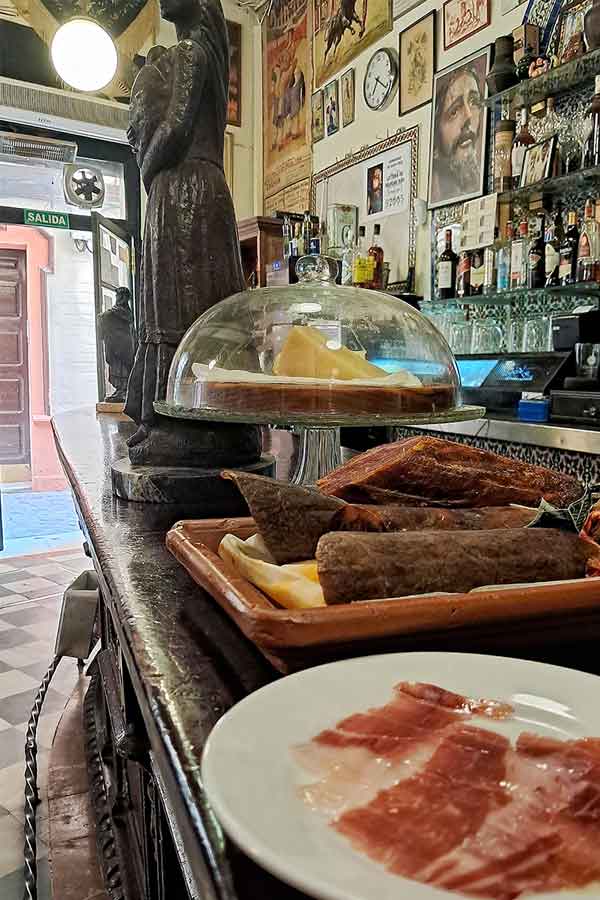
El Rinconcillo claims to be the oldest bar in Seville, dating back to 1670. Whether that’s exactly right, it’s old enough to have an atmosphere that can’t be faked.
The system here is old-fashioned: your order is chalked up on the wooden bar as you go and totalled at the end. It can feel chaotic on a first visit. Stick with it.
Order the espinacas con garbanzos (spinach and chickpeas), the cured ham, and whatever the waiter suggests. Get there before 1:30 pm for lunch or before 8 pm in the evening, when it fills up fast.

17. Seville’s Food Markets
Two markets are worth knowing about, and they serve different purposes.
Mercado de Triana is a working local market in the heart of Triana. Fresh produce, fish, meat, and a handful of small bars and tapas stalls inside. Go in the morning. It’s best before noon.
Mercado Lonja del Barranco is a converted 19th-century fish market on the riverbank, now a food hall with around 20 stalls. Less about shopping, more about eating. Good for an easy lunch with river views.
If you only have time for one: Mercado de Triana for the atmosphere, Lonja del Barranco for the convenience.

18. Rooftop Bars with Cathedral Views
The view of the Cathedral from ground level is impressive. From a rooftop, with the buttresses at eye level and the Giralda rising directly above you, it’s a different thing entirely.
EME Catedral Hotel has the most directly impressive position: the Cathedral’s buttresses practically at eye level. It’s a hotel bar, so drinks are priced accordingly. The view earns it.
Doña María Hotel is another well-placed option, slightly further back and not quite as chic as EME.
Both are open to non-guests, but go early.
At peak times, particularly around sunset, they give preference to hotel guests. You may end up queuing for a table if you arrive at the busiest moment. Get there 30 to 40 minutes before sunset rather than at it.
If the wait is too long at either of these, then check out some of these other great rooftop bars in Seville instead

Day Trips and Seasonal Highlights
19. Day Trip to Córdoba
Córdoba is the best day trip from Seville, and it isn’t close.
An hour on the high-speed train from Seville Santa Justa, and you’re in a UNESCO World Heritage city built around one of the most remarkable buildings in Europe.
The Mezquita-Catedral de Córdoba is a 10th-century mosque with a 16th-century cathedral constructed inside it. The visual contrast is extraordinary and unlike anything else in Spain.
Beyond the Mezquita, the Judería (Jewish quarter) is worth wandering, the patios (private courtyards) open to visitors in May, and the tapas around the old town are very good.
Book the train through the Omio App. The Renfe app is often glitchy. Trains run regularly, and the journey takes around 45 minutes on the AVE.
More on getting out of the city
Our guide to the best day trips from Seville covers Córdoba, Cádiz, and several other options worth considering.

20. Italica
Italica is a partially excavated Roman city about 9 km outside Seville, the birthplace of emperors Trajan and Hadrian. It’s not as dramatic as Pompeii, but it’s significantly less crowded.
The site has a large amphitheatre, well-preserved mosaic floors, and the remains of Roman streets and houses. If you’ve seen Game of Thrones, you’ll recognise the amphitheatre from the Dragonpit scenes.
Getting there is straightforward: buses run regularly from the Plaza de Armas station. Plan for a half-day rather than a full day. Check opening times before you go. To say they are random is an understatement.
Best for: anyone interested in Roman history, or visitors who’ve covered the main city sights and want something different for their last morning.

21. Feria de Abril
The Feria de Abril is Seville’s spring fair and one of the most extraordinary public events in Spain.
It takes place two weeks after Easter on a dedicated fairground in the Los Remedios neighbourhood and runs for a full week.
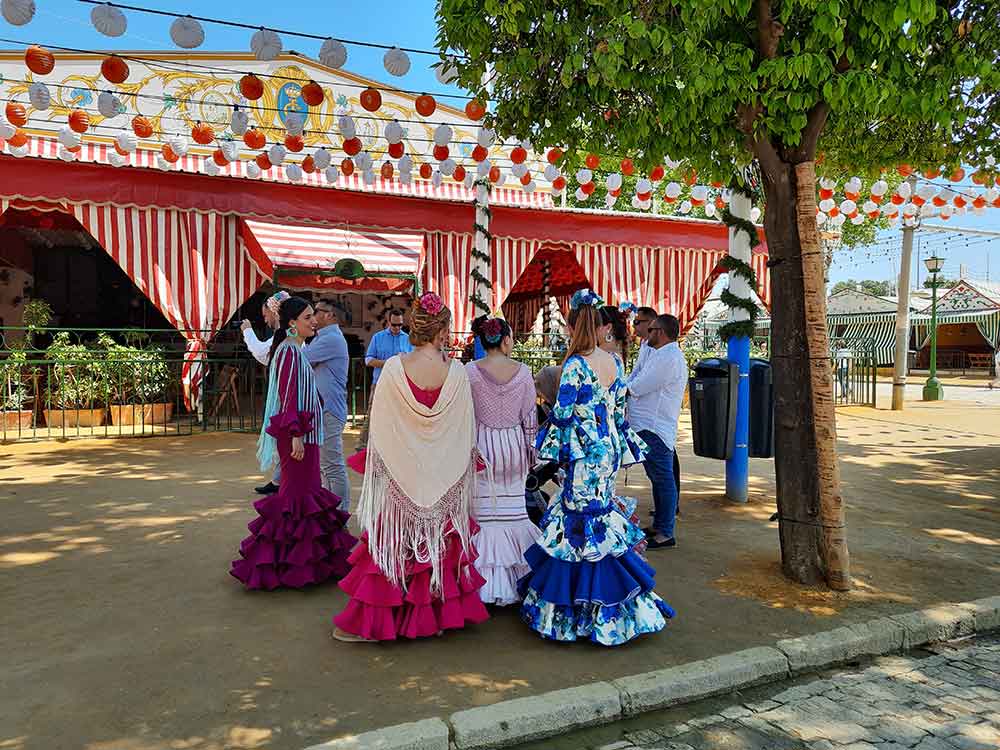
The fair is built around casetas: large canvas tents owned by families, businesses, and social clubs. Most are private, and you need to know someone to get inside. But public casetas exist, and the atmosphere on the main avenue is worth experiencing regardless.
Women wear trajes de flamenca (flamenco dresses). Men wear traditional traje corto. If you’re visiting during Feria, wearing the right outfit is part of the experience, not a costume.
The fair runs from roughly midnight to 6 am at its peak.
Sleep is not part of the schedule.
Thinking of Feria?
Read our complete guide to Feria de Abril for first-timers, where we cover what to wear, the caseta system and making the most of the celebration.
22. Semana Santa
Semana Santa (Holy Week) takes place the week before Easter. It’s unlike anything else in the world.
Every evening from Palm Sunday to Easter Saturday, cofradías (religious brotherhoods) carry enormous ornate floats through the city’s streets, accompanied by processions of penitents in traditional robes.
The city stops. Streets that are normally open close for hours. The atmosphere is solemn. Strange. And it gets to you.
It draws enormous crowds, particularly Thursday to Saturday. Accommodation books up months in advance, and prices are at their annual peak.
If you’re visiting during Semana Santa, it will define your trip. Plan around the procession routes and accept that normal sightseeing doesn’t really apply that week.

Planning Your Visit to Seville
Once you know what to see in Seville, the next step is working out how to fit it all in.
Our How Many Days in Seville guide will help you figure out the right length of stay based on what’s on your list.
SEVILLE ITINERARY REVIEW
Not sure if your Seville itinerary actually works?
Send us your rough plan, and we’ll check it from a local point of view.
We’ll look at timings, ticket slots, walking distances, neighbourhood order, and anything that might make your trip feel rushed or harder than it needs to be.
- Find out what to keep
- See what to swap or skip
- Fix awkward timings before you book
- Get honest local feedback by email
Best Things to See in Seville: FAQs
What are the must-sees in Seville?
The Alcázar, the Cathedral, and Plaza de España. Add Barrio Santa Cruz and Triana for a fuller picture of the city. A flamenco show rounds it out on a first visit.
What should I not miss in Seville?
The Alcázar is the one that justifies early booking and early arrival. La Giralda at the Cathedral is also essential. Beyond the landmarks, Feria de Abril (if you’re visiting in April) is the experience most visitors say they didn’t expect to love as much as they did.
Is Seville worth visiting?
Yes. It’s one of the most distinctive cities in Europe: walkable, warm for most of the year, with world-class architecture, excellent food, and a cultural calendar that larger cities would envy. The main risk is visiting in July or August, when the heat is serious, and some locals have left for the coast.
How many days do you need in Seville?
Three days covers the main attractions without rushing. Four or five gives you time for day trips and a more relaxed pace. Two is possible, but you’ll be moving quickly and skipping things you’ll wish you hadn’t.
Have a Question?
Ask in The Seville Guide Community!
Connect with fellow travellers and locals, share tips, and get the latest insights on what’s happening in Seville.
Plan Your Seville Trip
The big stuff is on this list because it deserves to be. But this is just the starting point.
Once you know what you want to see, the next step is working out how to fit it all in. These guides will help with that:
- Plan your itinerary:
- Our One Day in Seville guide is the fastest route through the essentials.
- For more time, see our 2-days in Seville
- and 3-day Seville itineraries.
- Where to stay: Our Where to Stay in Seville guide breaks down the neighbourhoods so you can pick the right base for how you’re travelling.
- Free options: Our Free Things to Do in Seville guide covers everything on this list (and more) that won’t cost you a penny.
- Getting out of the city: Our Day Trips from Seville guide covers Córdoba, Cádiz, and the other trips worth making.
Have a question? then don’t forget to join our free Facebook Group: Seville Things To Do and ask the community.
Want to discover more about Seville? then check out these other great articles to find out more.
Done-For-You Itineraries
- One Day in Seville Itinerary
- Two Days in Seville Itinerary
- Three Days in Seville Itinerary
- Five Days in Seville Itinerary
Things To See & Do In Seville
- Best Places to Watch Flamenco in Seville
- 21 Great Things to Do in Seville
- 18 Must-See Galleries and Museums in Seville
- Best Time to Visit Alcazar of Seville
- Things to Do in Seville for Free
- Best Artisan and Flea Markets in Seville
- 23 Best Day Trips From Seville
- Where’s The Nearest Beach to Seville? [Within a 2-Hour Drive]
- 34 Instagram Spots in Seville [+ Photo Location Map]
Food & Drink in Seville
- Eat Your Way Around Seville’s Top Food Markets
- Discover the Best Tapas in Triana Neighbourhood
- The Best Flamenco and Tapas Tour in Seville
- Can You Drink Tap Water in Seville?
- Where to Find the Best Breakfast in Seville
- Where to Find the Best Coffee in Seville
Seville Travel Tips
- How To Survive Seville In Summer
- Things to Do in Seville in the Rain
- What to Wear to Seville Cathedral
- What Is Seville Famous For?
- How Many Days in Seville Do You Really Need?
- How to get from Seville Airport to the City Centre
- Where to Stay in Seville, Spain: Best Neighbourhoods
- Why Visit Seville? 15 Reasons to Visit Seville


